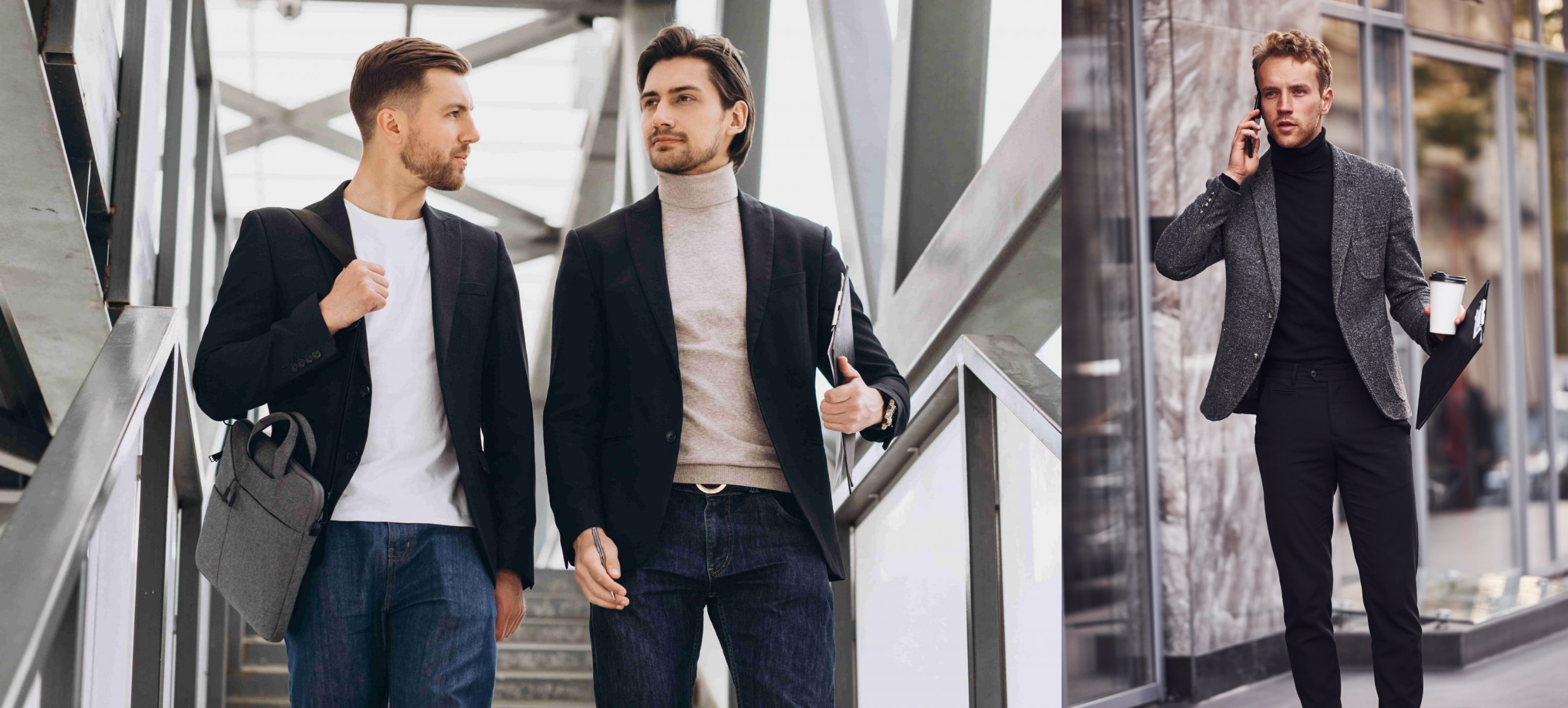
Looking sharp at work does not require a full suit every day. Business casual gives men space to look professional while staying comfortable. With the right choices you can build outfits that feel relaxed but still come across as polished. This guide takes a closer look at how to create smart casual looks with style and confidence.
The modern workplace demands versatility and polish. Yet the term Business Casual Attire for Men remains the most confusing dress code in the professional world. It is a directive that asks men to find an impossible balance between relaxed comfort and corporate authority.
Business Casual is not about relaxing your standards it is about replacing tailored components without compromising tailoring standards. It requires discernment sophistication and structure. This definitive guide deconstructs the essential rules and garments you need to own the modern professional aesthetic.

I. Defining the Modern Business Casual Mandate
True Business Casual is less about what you wear and more about the intent behind your attire. It is the unspoken rule that you should always dress for the meeting you could have not merely the desk you are sitting at.
The Foundation of Polish: The key is replacing the tie and traditional suit jacket with elevated separates. The resulting outfit must convey competence respect and attention to detail.
The Fatal Flaw: The most common mistake is confusing Business Casual with weekend wear. T-shirts sneakers and faded denim are never permitted.
II. The Structural Components: A Wardrobe Deconstruction
Mastering the code requires precise investment in the right pieces. These components form the indispensable structure of professional appearance.

1. The Outer Layer: The Unstructured Blazer
The blazer or sport coat is the cornerstone of Business Casual Attire for Men. It provides instant structure and authority that no other garment can match.
The Investment: Choose unstructured blazers built from soft sophisticated materials like textured wool blends linen or thick cotton. These fabrics drape well and resist creasing unlike stiff traditional suits.
Colour Palette: Focus on versatile neutral tones: navy grey olive or subtle windowpane checks. A navy blazer is the ultimate utility player in your wardrobe.

2. The Bottoms: The Foundation of Fit
Your choice of trousers anchors your professionalism. This is where most men inadvertently inject too much “casual.”
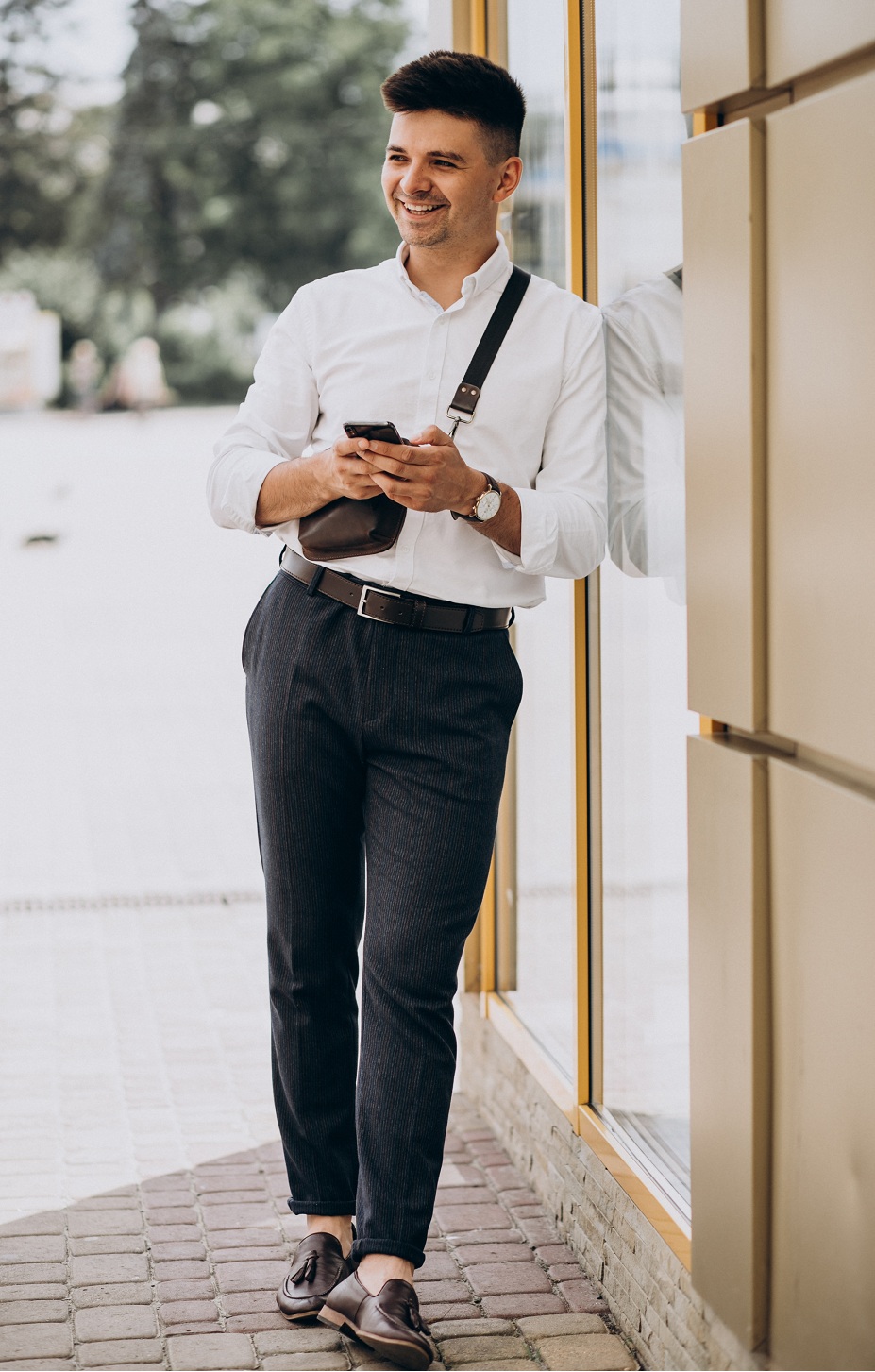
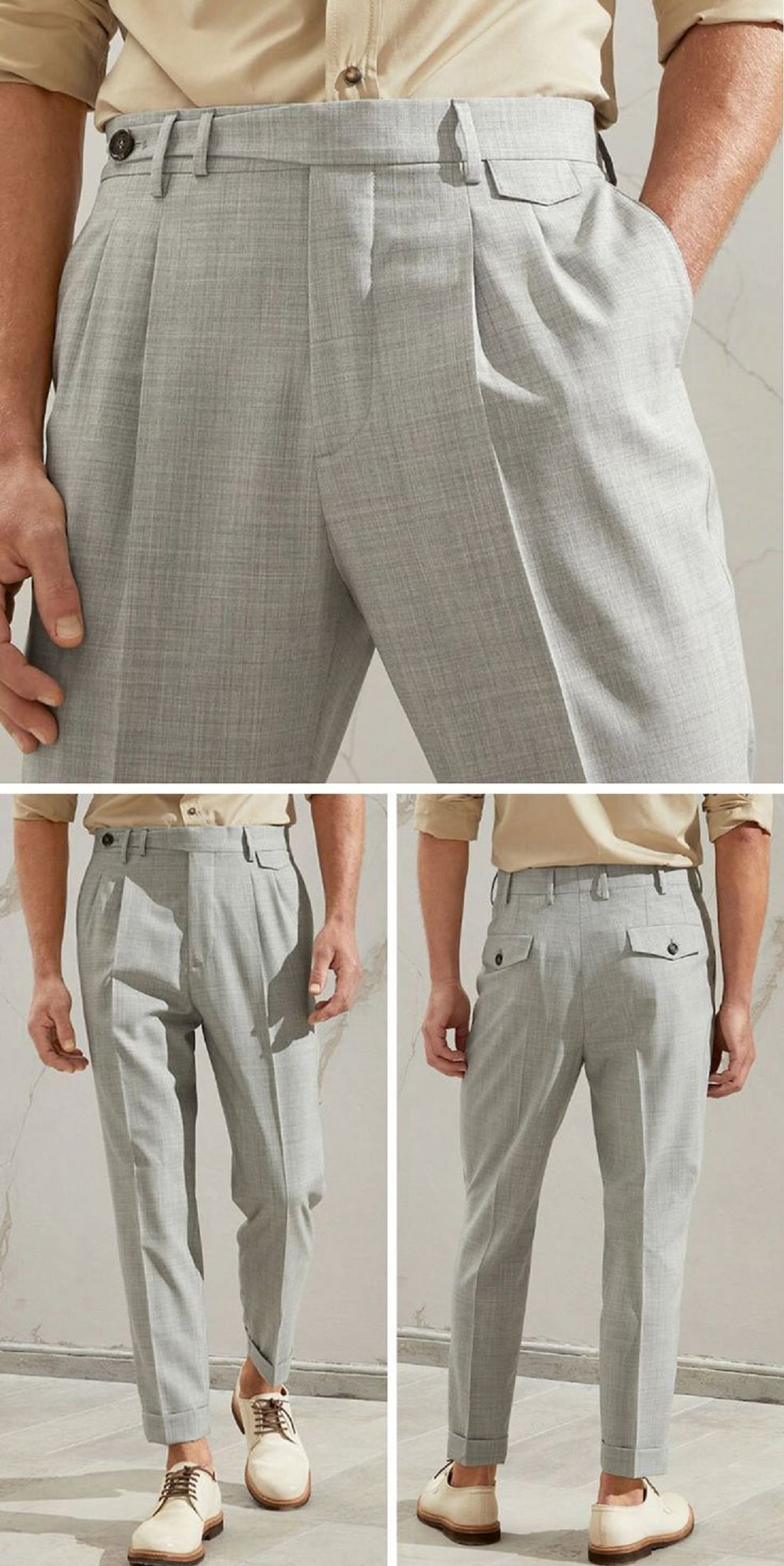
The Essential: Tailored Chinos or lightweight Wool Trousers are mandatory. They must be perfectly hemmed and fitted slim through the leg not skinny nor baggy. (For advice on achieving the perfect break and taper see our article on Tailoring Men’s Trousers at DeepuFashion.com).
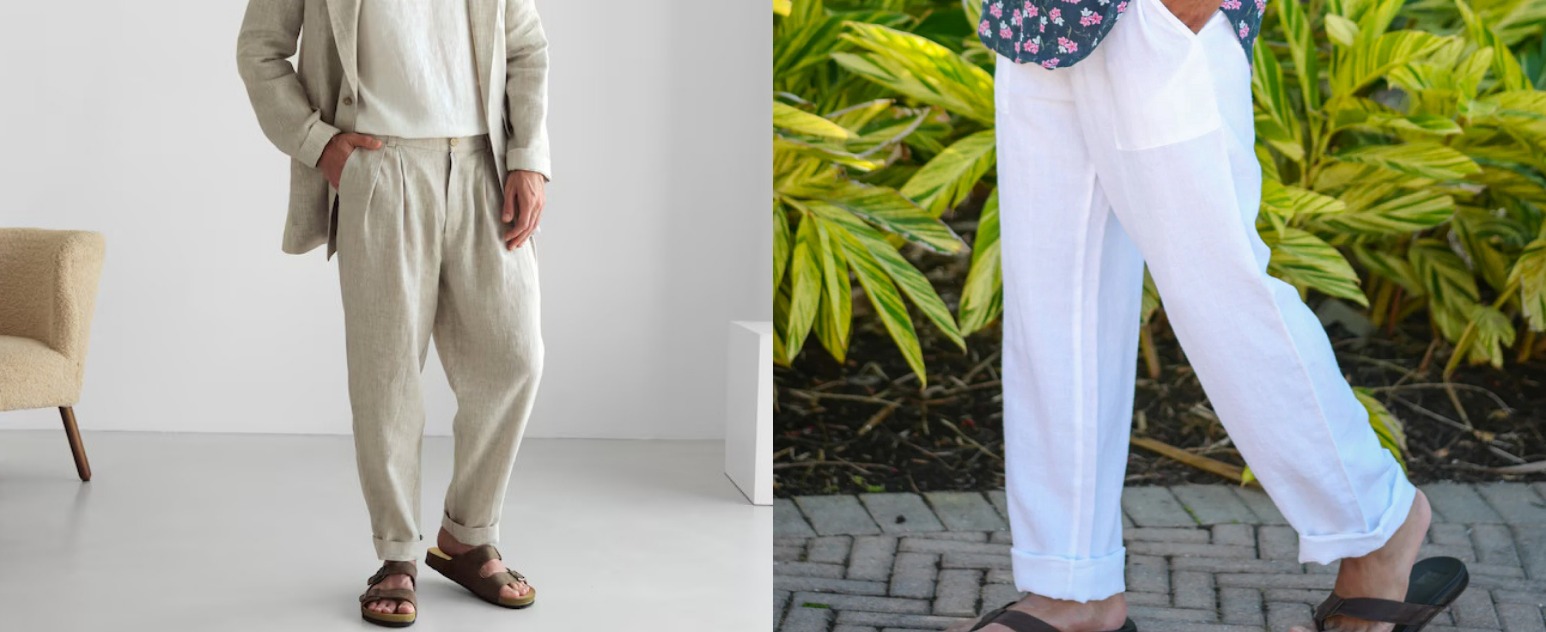
The Exclusion: While dark raw denim may be accepted in some tech environments tailored trousers project unambiguous respect. Avoid visible pleats cargo pants or any form of distressed denim.
3. The Top Layer: The Collar Rule
The collar maintains a polished frame around the neck replacing the function of the tie.

The Standard: The Button-Down Collar Shirt is the undisputed champion. Choose micro-patterns checks or light stripes over plain white or blue for textural interest. Ensure the collar points are always crisp and ironed.
The Refined Knitwear: In place of a shirt a fine-gauge knitwear piece offers immediate elegance. Options include Merino wool V-necks crew necks or the sophisticated men’s high neck sweater
The Absolute Ban: Polo shirts are generally acceptable but T-shirts and sweatshirts are entirely inappropriate.
III. The Material Scorecard: Achieving Premium Polish
True style is communicated through texture and quality. These are the elements that elevate your Business Casual Attire for Men beyond the basics.

The Fabric Hierarchy
When choosing separates, prioritize materials with natural texture and soft hand-feel. A Merino wool knit polo, for instance, immediately outranks a standard coarse cotton polo due to its subtle sheen and refined drape. Similarly, focus on flannel cotton or tweed for winter blazers and jackets.

Colour Palette Mastery
Utilize a consistent palette of muted neutrals to ensure seamless interchangeability.
Primary Base: Navy Charcoal Grey and Stone Beige.
Accent Colours: Deep Burgundy Forest Green and subdued Brown.
By staying within this restricted palette, you can create dozens of effortless outfits that look intentionally coordinated.
The Footwear Integrity
Footwear is the final judgment on your attention to detail. Your shoes must be polished well-maintained and structured.

The Non-Negotiables: Polished leather Derby shoes Loafers or suede Chelsea boots. These choices signal maturity and professionalism.
The Modern Concession: Minimalist leather court sneakers may be permissible in highly relaxed industries but they must be box-fresh white or a single dark colour. Never athletic sneakers.
IV. The Fatal Flaws: 5 Mistakes That Undermine Your Authority
To successfully master Business Casual Attire for Men you must be as diligent about what you exclude as what you include.
Visible Logos and Prints: Your clothing should speak to quality and cut not brand marketing. Avoid large visible logos or graphic prints on any top layer.
Ill-Fitting Trousers: Trousers that are too long too baggy or bunching around the ankle project sloppiness. Tailoring is non-negotiable for trousers and chinos.
Neglecting Coordination: The belt and shoes must always coordinate in colour and material (e.g., brown leather belt with brown leather shoes). Failure to do this demonstrates a lack of attention to detail.
Wearing Un-Ironed Cotton Shirts: Wearing un-ironed cotton or linen shirts destroys the ‘business’ aspect of the dress code. The shirt must be crisp.
The Wrong Outerwear: Outside the blazer, acceptable jackets are trench coats peacoats or structured macs. Avoid puffers hoodies and anything designed primarily for sportswear or intense cold.
The New Professional Standard
Business Casual Attire for Men is not a loophole for lazy dressing. It is a subtle but powerful test of your discernment. By understanding the structural integrity of the clothes—investing in quality fabrics mastering the fit and adhering to the essential collar and footwear rules—you ensure that your appearance always conveys the respect and competence your professional role demands.