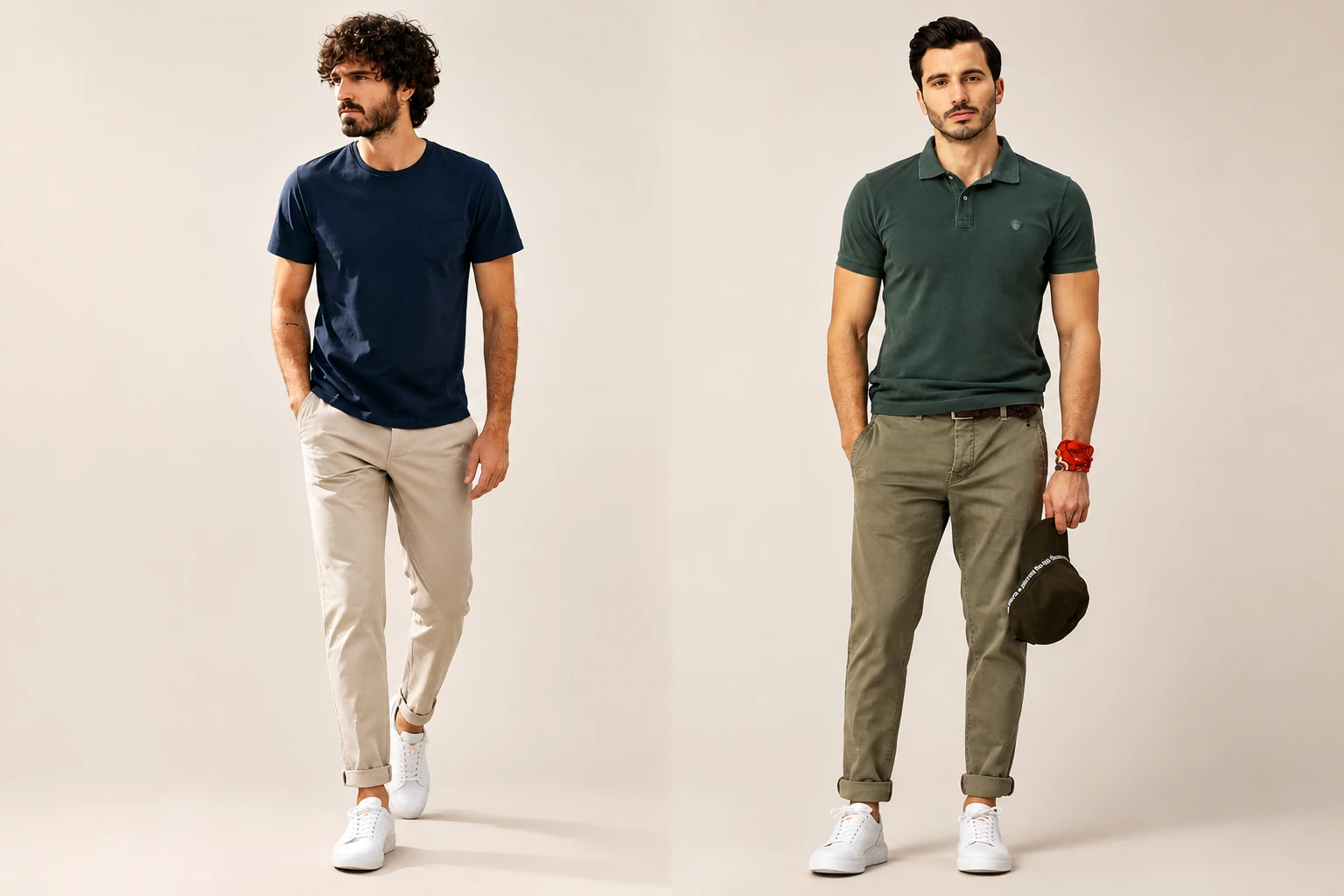
Pleated trousers had to fight their way back from a bad decade. Chinos never had that problem. Nobody staged an intervention for chino pants. Nobody wrote an article defending them either, because they never did anything embarrassing enough to need defending. They just kept showing up. Every Tuesday, every client lunch, every flight home, without getting much credit for it.
Chino pants for men are, by design, the least dramatic trouser in the closet. No pleat, no drape, no decade to live down. A trouser that never tries to impress anyone is hard to get tired of. That’s most of why it has outlasted trends built to replace it.
Here’s the real breakdown of chino pants style men actually need. What the trouser is. Where most men get the fit wrong. How it beats jeans at the office. And the shirt, shoe and color choices worth building around it.
Why Chinos Never Needed a Comeback
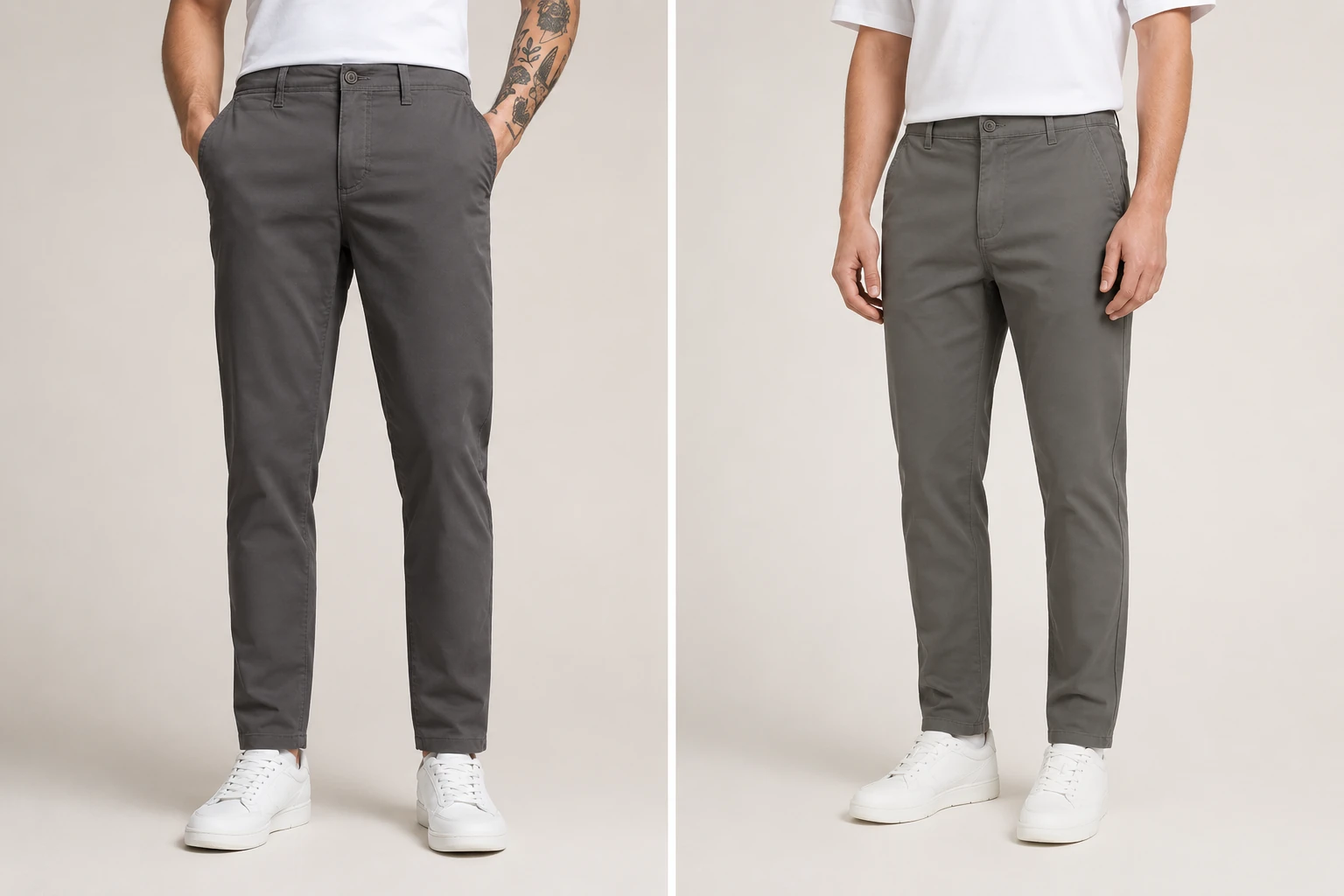
Chino pants are a cotton twill trouser with a flat front and a cleaner line than most casual pants. The name goes back to military uniforms. Soldiers wore them because the fabric held up and the style migrated into civilian closets and stayed there.
One thing trips men up more than anything else: the name. Chino and khaki pants get used as if they mean the same thing. They don’t. Khaki is a color, a warm tan. Chino is a fabric and a cut. A chino can be navy, olive, stone or black and still be a chino. A lot of what gets sold as khaki pants men buy isn’t cut from the same cloth at all. It just looks close enough on a store shelf. Once that’s clear, chinos stop being “the tan pants.” They become a whole category with their own colors, weights and fits.
They survive every closet for a simple reason. Affordable chinos sit between jeans and wool trousers. Sharper than one, more relaxed than the other, without trying to be either.
The Fit Nobody Bothers to Get Right
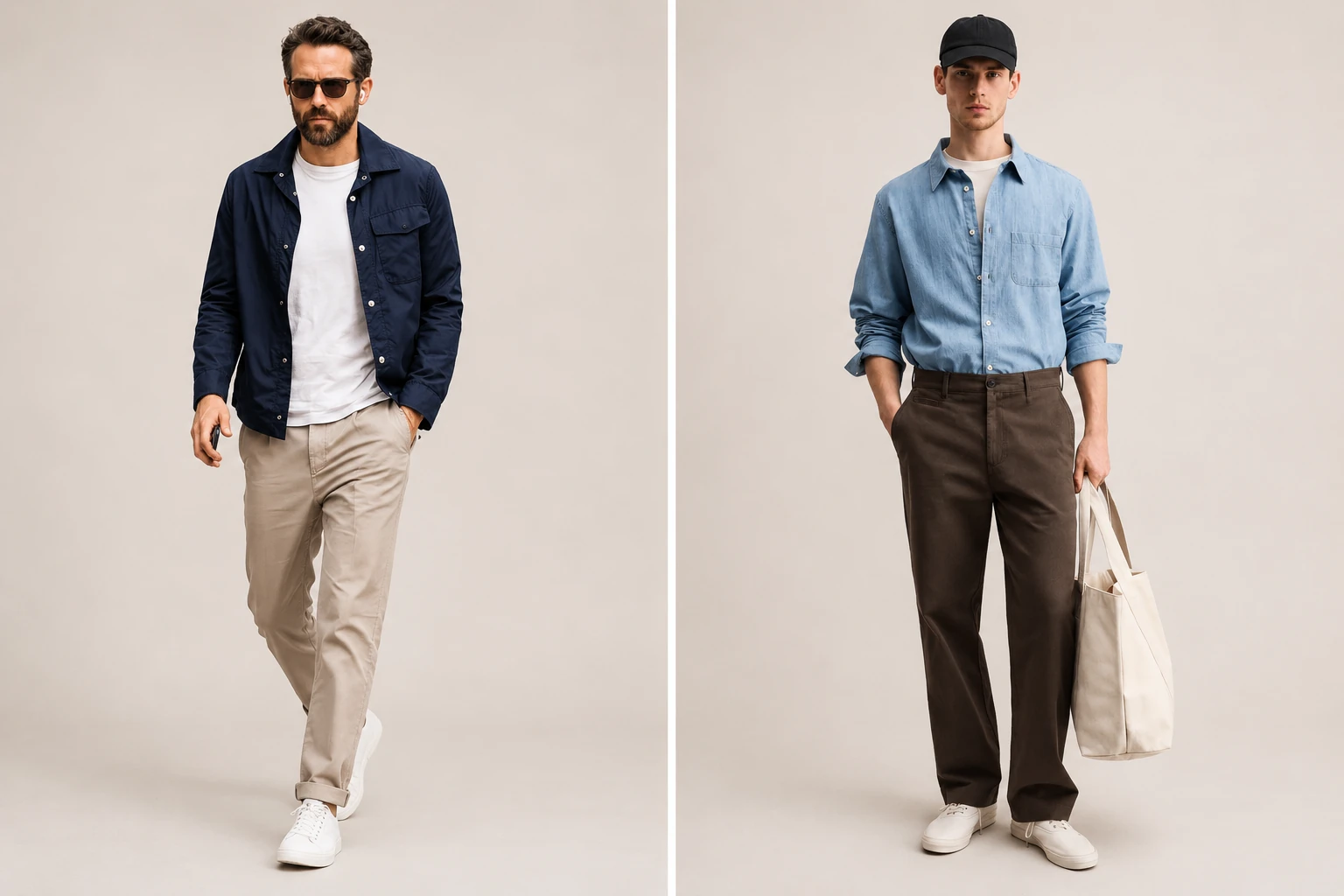
Chinos have a reputation for being simple. Because of that, most men never think about fit the way they would with jeans or pleated pants. That’s exactly where things go wrong.
Slim fit chinos taper hard through the thigh and ankle. They look sharp on a leaner build. Put the same cut on anyone carrying more size through the leg and the fabric pulls at the seat instead of following it. The trouser stops looking tailored and starts looking like it shrank in the wash. Straight fit is the safer default for most builds. It hangs evenly from hip to hem without hugging or ballooning, which is why it’s the fit worth owning if you only buy one pair.
Relaxed and athletic fits solve the opposite problem. Broader or more muscular legs need room a slim cut doesn’t have. Athletic fit in particular fixes the complaint men with bigger thighs make most: tight in one place, loose everywhere else.
Tapered chino pants are the fit doing the most work right now. They narrow gradually from knee to ankle without going anywhere near skinny. Clean enough for the office. Casual enough for a sneaker at the same time.
None of it matters if the break is wrong and it’s the detail almost nobody checks. A slight break where the hem meets the shoe reads modern. Fabric pooling on top of the shoe reads dated, no matter how well the rest of the outfit is doing. It’s usually the first thing a tailor fixes and the last thing a man thinks to ask about.
Where Chinos Quietly Win
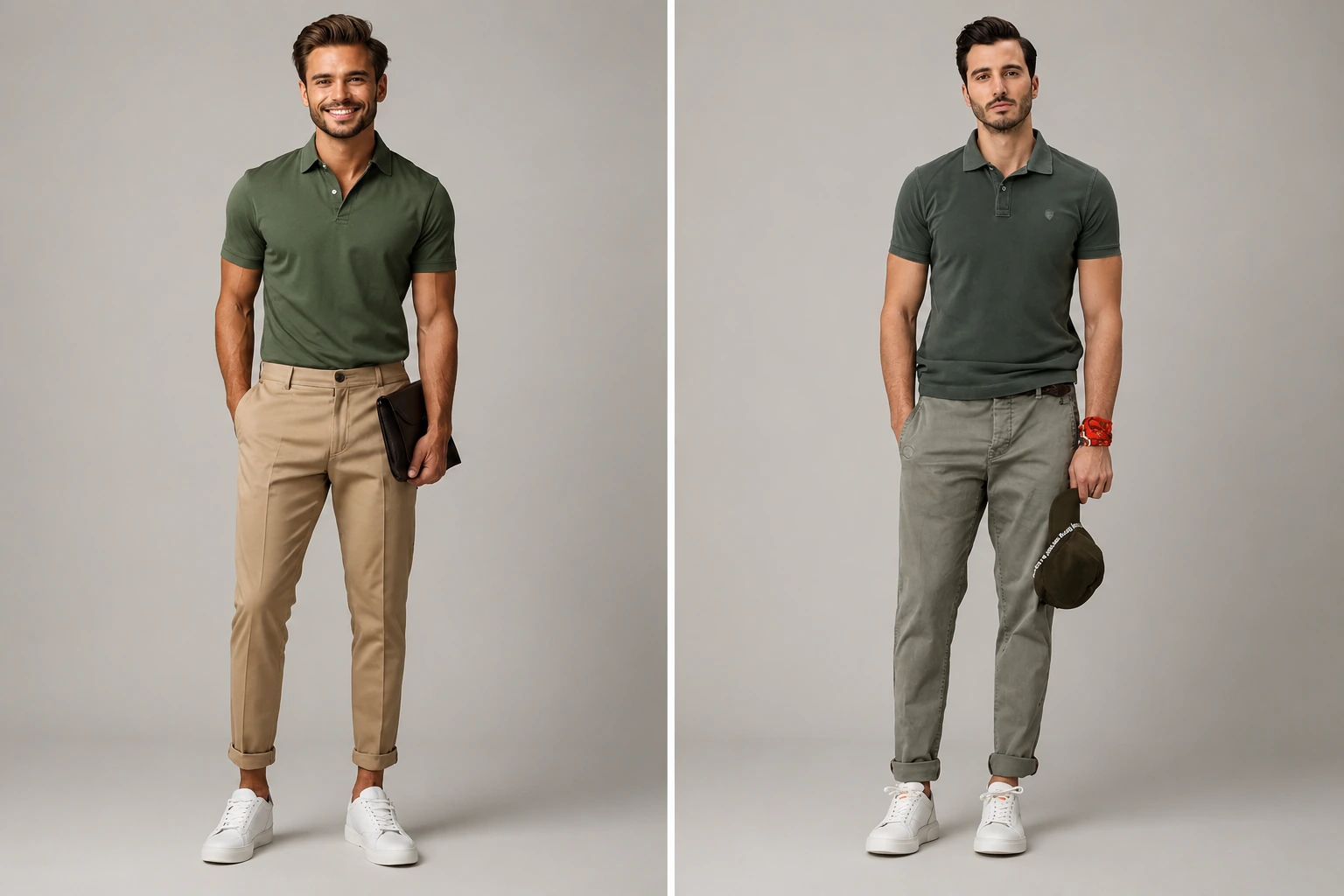
Stone or navy chinos with a button-down, sleeves rolled and clean leather sneakers or loafers covers most situations. It’s close to the default answer when an invite says “smart casual” and nothing else. Add an unstructured blazer when the setting needs more polish — dinner, a flight, a networking event. Skip the tie. Chinos were never built to carry that much formality and forcing it just makes the trouser look like it’s overcompensating.
The office is where this trouser earns its keep. Tuck a crisp shirt into navy, charcoal or olive chinos. Add leather derbies or loafers. The outfit reads finished without the stiffness of a full suit. It’s more tailored than denim and less formal than dress trousers and it survives a full day of sitting without creasing the way a cheaper fabric would. Most reliable office outfit ideas for men lean on this combination whether anyone names it directly or not. A blazer goes on top only when a client meeting calls for it.
Weekends need less thought, not more. A plain t-shirt or a chambray shirt with chinos and white sneakers covers most Saturdays with little risk of overdressing. Cuff the hem for something more relaxed. Leave it uncuffed if the rest of the outfit already feels casual enough.
Shirts and Shoes Worth Building Around
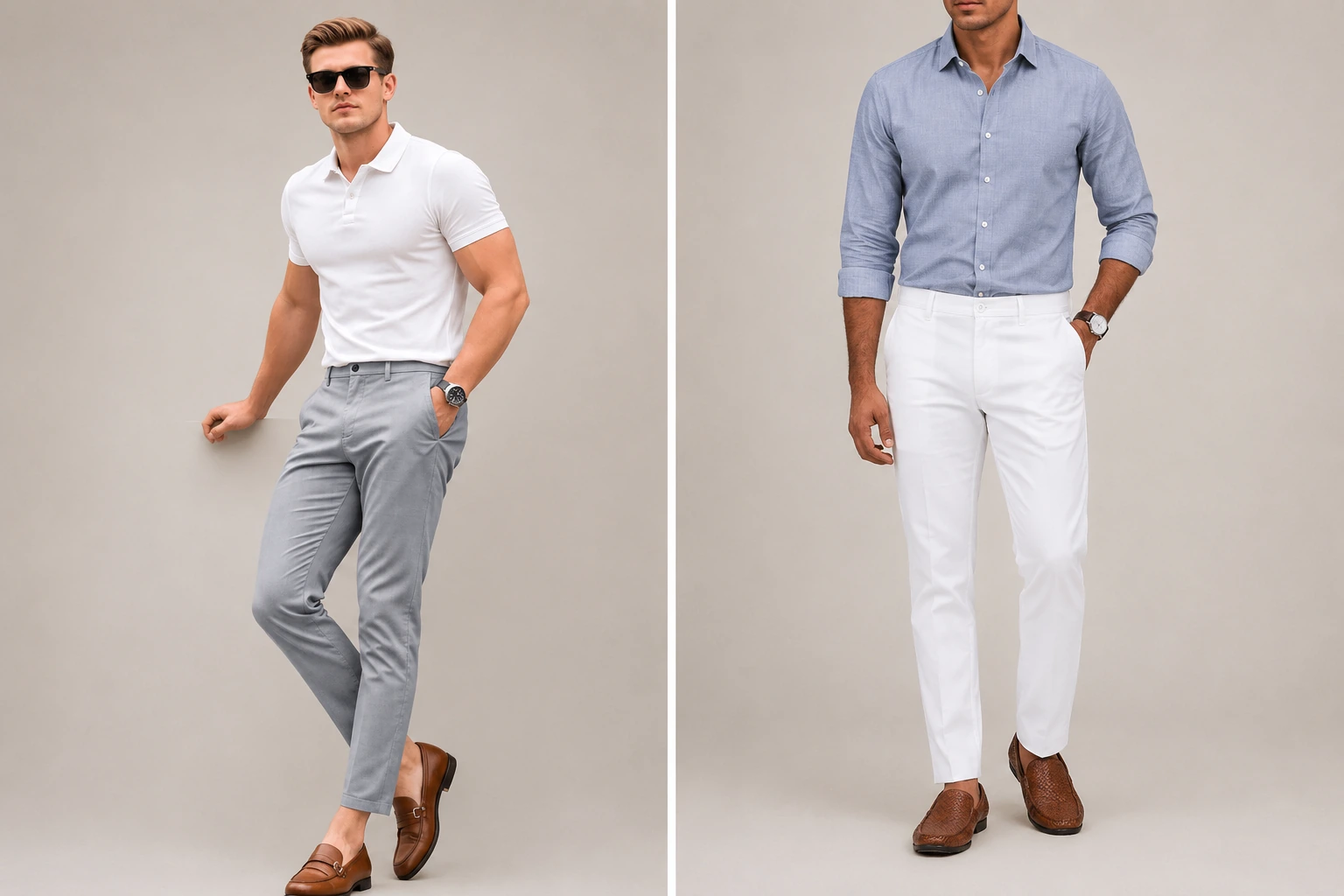
A trouser this understated puts more weight on everything worn above and below it. The shirt and shoe choice matters here more than it would with a louder pair of pants.
Loafers remain the most natural partner chinos have. Wear them penny or horsebit, sockless in summer, with fine socks once it turns cold. Clean leather sneakers are the modern smart-casual default, provided they stay low-profile. Anything chunky or heavily branded fights the quiet line the trouser is holding. Office days call for derbies or Oxfords. Colder months are where chukka boots or suede desert boots earn their place, adding weight a heavier chino fabric can support. A longer list of pairs worth owning long-term lives in the guide to the best shoes to wear with almost anything in a chino heavy rotation.
Stone or navy chinos under a white shirt is correct in nearly every setting from office to dinner. It barely gets mentioned for the same reason it works so well — it’s too obvious to talk about. Swap in a grey shirt and the same pairing softens into something a shade more relaxed. A chambray shirt brings texture without the weight of actual denim, especially strong over khaki or stone chinos on a day off. Pink is the one most men skip without trying it.
A pink shirt against stone or grey chinos reads sharp rather than loud once it’s set against a neutral trouser. The full rundown of collars and fabrics worth owning is in the guide to shirts for men.
Building a Chino Wardrobe in Order
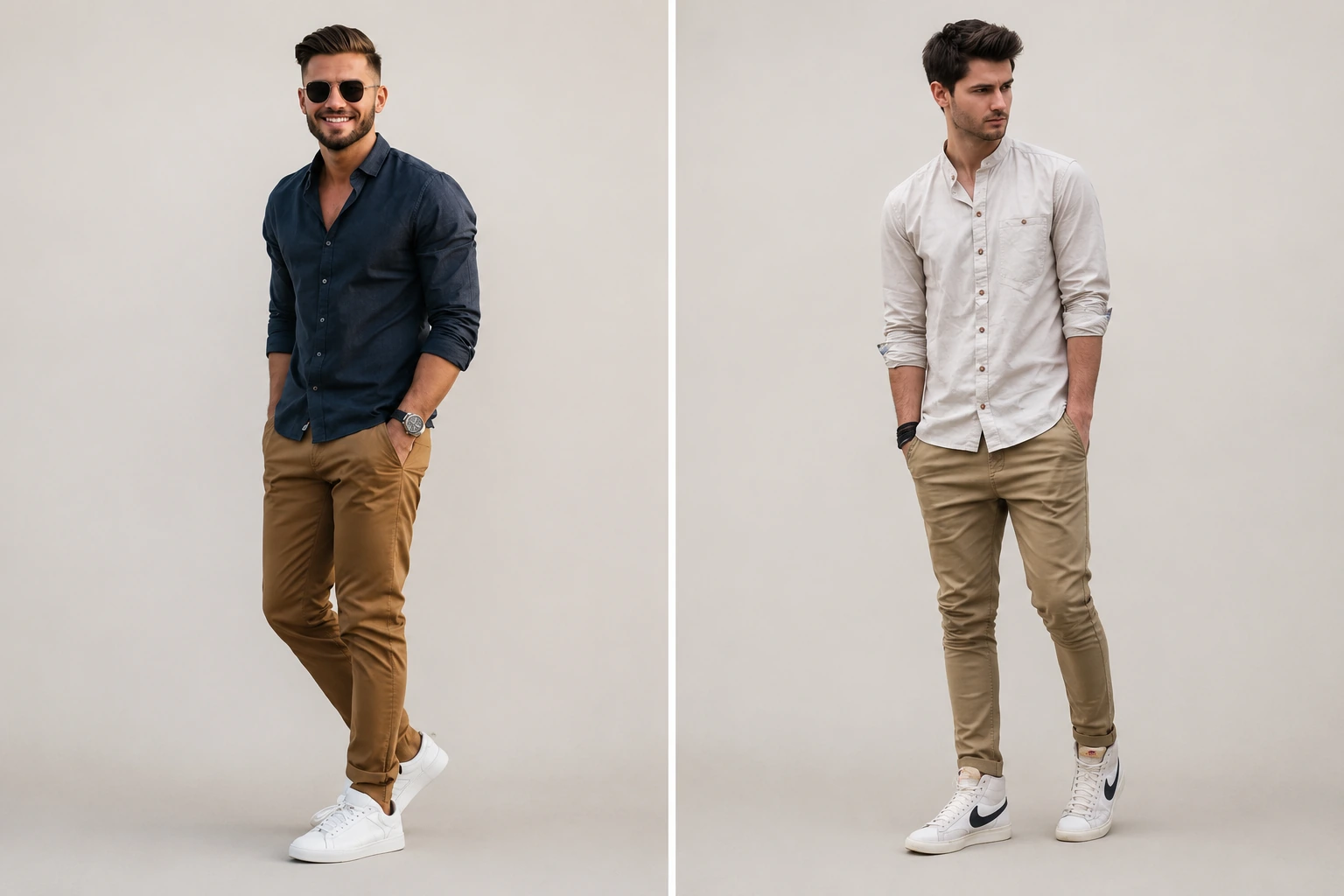
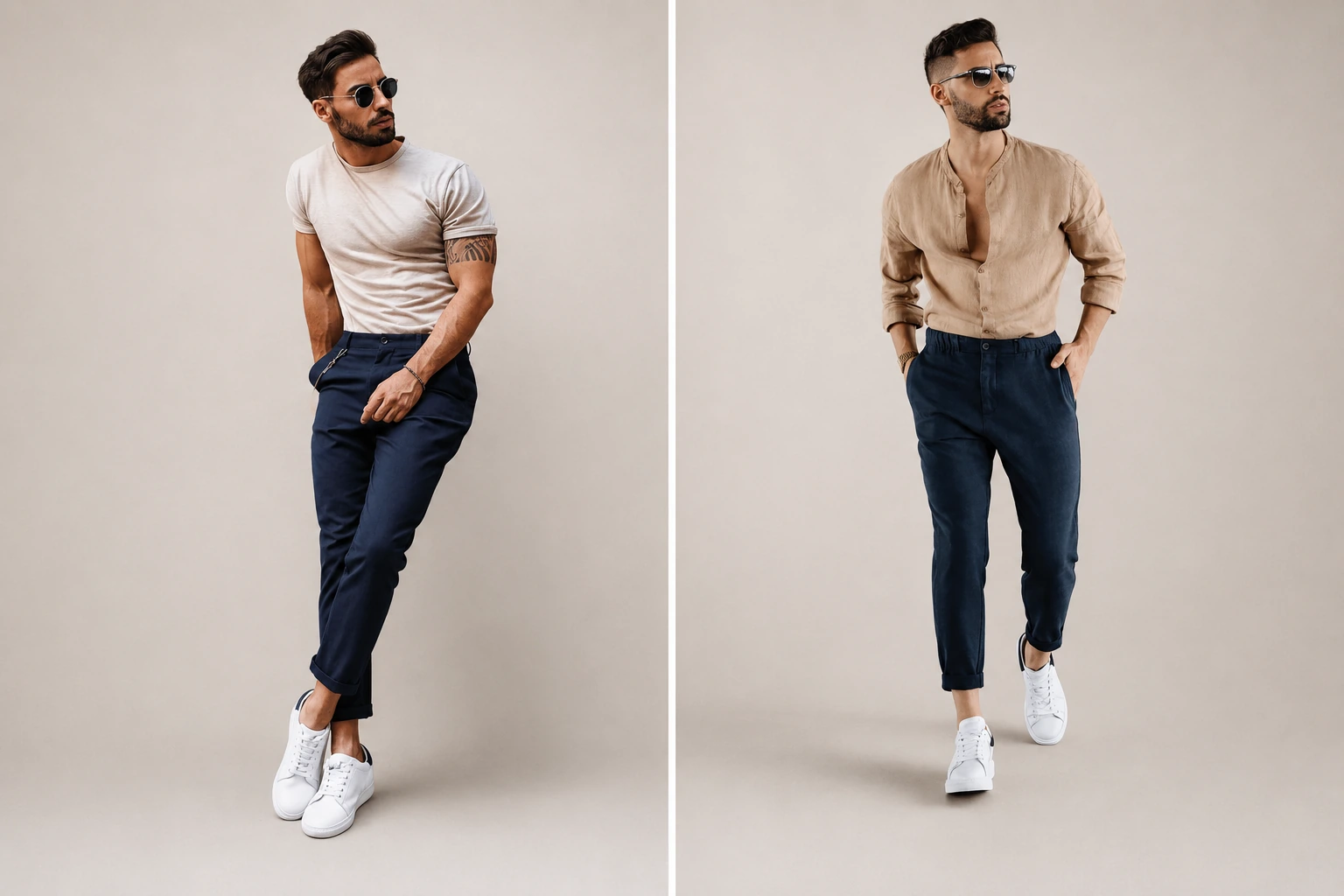
Buy navy first. It’s the most versatile color there is, pairs with nearly every shirt and reads dressier than khaki without any effort. Stone or beige is the natural second pair. It’s warm-weather appropriate and still the most recognizable chino color, even if it’s no longer the only one worth owning.
After that, the order comes down to taste more than rules. Olive splits the difference between casual and workwear. Grey is an underrated, dressier alternative to stone. Black chino pants read the most formal of the group and suit evening wear better than daytime. Anyone chasing a full monochrome look could try a grey shirt with white pants once. It reads clean and slightly editorial and needs no accessory to carry it.
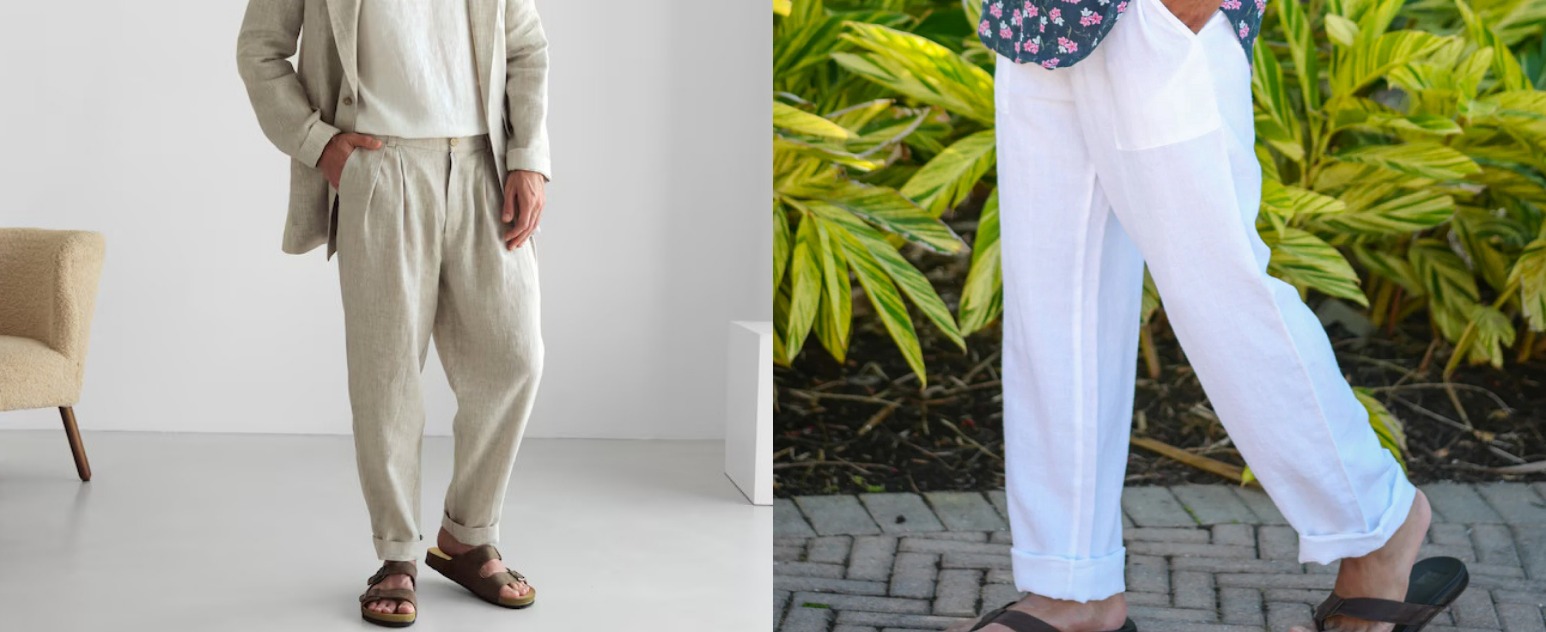
Fabric decides how far a pair of chinos travels through the year. Cotton twill is the original and still the most common, durable enough to hold a crease without complaint. Stretch cotton blends move more freely and resist wrinkling. They’re worth the cost if the same pair is doing travel duty and office duty in the same week. Linen-cotton blends are the summer answer, lighter at the cost of some structure. They pair naturally with the same palette running through most summer outfits men actually wear rather than just photograph well. Heavier cotton twill in charcoal, navy or olive is the winter answer, holding up under boots, sweaters and structured jackets.
Chinos vs. Dress Pants, Jeans and Khakis
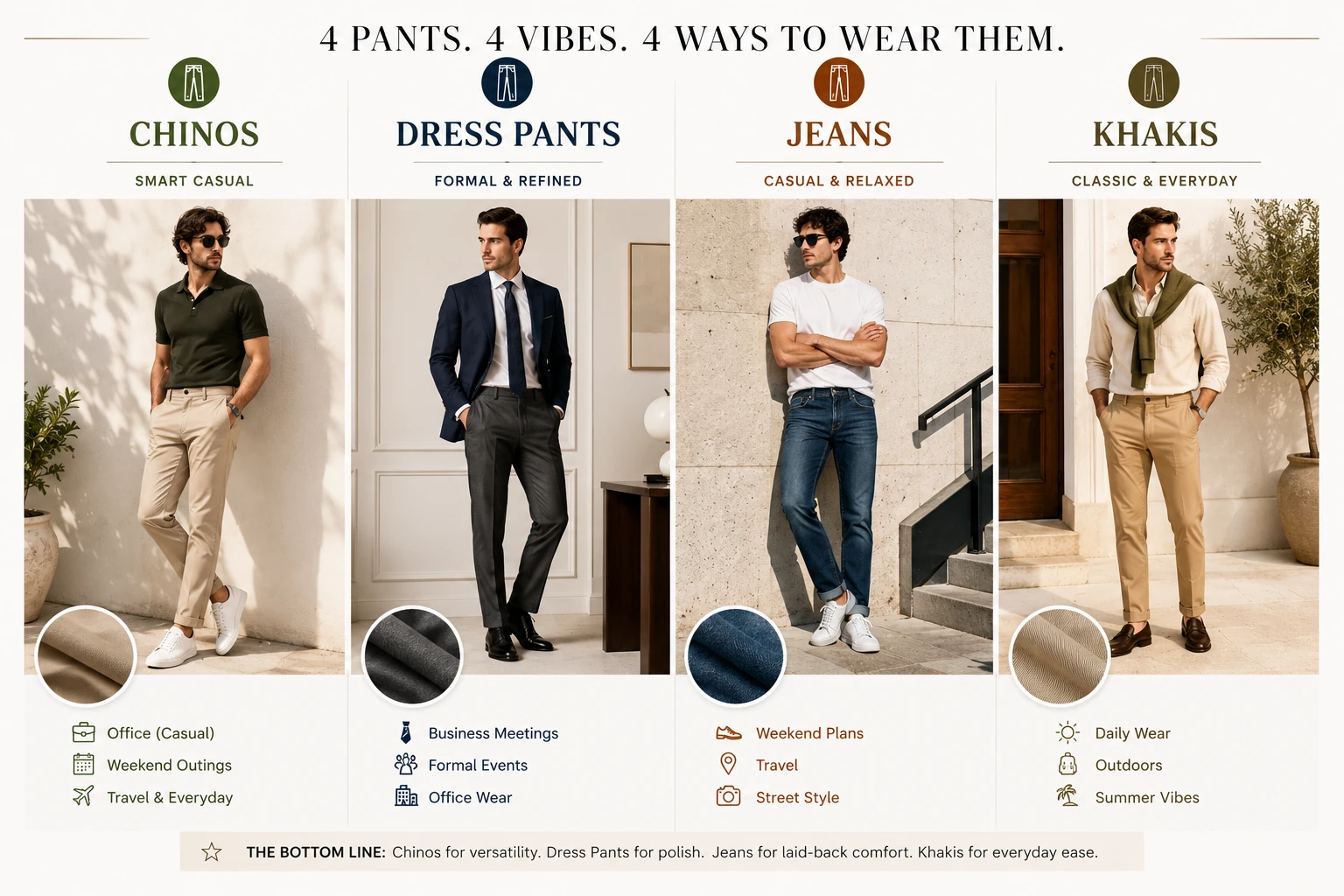
Most of the confusion men run into isn’t about how to wear chinos. It’s about knowing which trouser they’re actually holding. Against dress pants, it comes down to material and occasion — dress pants are usually wool or a wool blend, often pleated, built a step more formal than anything chinos are meant for. Against jeans, the trade runs the other way. Denim is tougher and more casual by default, but chinos dress up faster and cleaner, which is why offices that ban denim outright rarely touch chinos. Against khakis, the mix-up is mostly semantics. Khaki names a color; chino names a fabric and cut. Once that’s settled, the two stop overlapping in any way that matters when you’re getting dressed.
The Case for Owning More Than One Pair
Minimalist, understated dressing keeps circling back to chinos rather than moving past them and there’s a reason for that. A restrained wardrobe works because nothing is fighting for attention. No pleat to notice, no bold pattern, no seasonal trend attached to it — a trouser like that comes close to invisible while still looking intentional. Add a simple dress watch and a belt matched to shoe color and it does more for the outfit than almost any other accessory, precisely because the trouser isn’t competing with them. That’s not a compromise. It’s the job chinos have been doing since they left the military and walked into everyone’s closet.
Mistakes That Turn “Simple” Into “Sloppy”
Chinos ask for so little thought that they’re also where men get careless. Buying slim on a build that needs relaxed or athletic is the most common error. The fabric pulls at the thigh and the trouser reads smaller than intended, not sharper. Skipping the tailor is close behind it. Off-the-rack chinos rarely land perfectly at the waist and hem straight out of the bag and fixing both is one of the cheapest upgrades available to any outfit. Ignoring the break is the third mistake. A hem pooling on top of the shoe undoes everything working correctly higher up the leg and it’s usually the easiest of the three to fix once someone points it out.
Keeping Them Looking Right
Wash chinos inside out in cold water to protect the color. Skip the dryer’s high heat; it’s the fastest route to uneven shrinkage in cotton twill. A medium iron with a pressing cloth handles any shine that builds up. Hang rather than fold when you can — folding creates creases in places that fight the trouser’s line instead of following it.
Frequently Asked Questions
Are chinos the same as khakis?
No. Khaki is a color; chino is a fabric and cut. A chino can come in khaki, dark blue, light green or black and still be a chino.
Can chinos be worn to the office?
In most business casual environments, yes. Navy, charcoal or olive chinos with a collared shirt cover the majority of modern offices.
What shoes go best with chinos?
Loafers and clean leather sneakers for anything smart casual, derbies or Oxfords for the office and boots once the weather turns.
Do chinos work in summer?
Yes, provided the fabric shifts with the season. Lighter cotton or linen cotton blends in stone, white or pale tones are built for exactly that.
Chinos in the Bigger Rotation
Chinos are one piece in a much larger trouser rotation. Knowing when to reach for them instead of wool trousers, linen trousers, a roomier wide leg cut, or something more casual comes down to occasion more than personal taste. The full breakdown of how every trouser style fits into a modern wardrobe and where chinos sit relative to everything else, is in the guide to trouser styles for men.
Own one good pair in navy blue, one in stone and chinos stop being the trouser you forgot you were wearing. They become the one you reach for on purpose.

Deepak Bhandari has spent 10 years in personal styling, helping men dress with more confidence and less guesswork. He’s the founder of Deepu Fashion, where he writes about style, grooming and everyday outfit ideas that actually work in real life. Follow him on Instagram for daily style tips and inspiration.