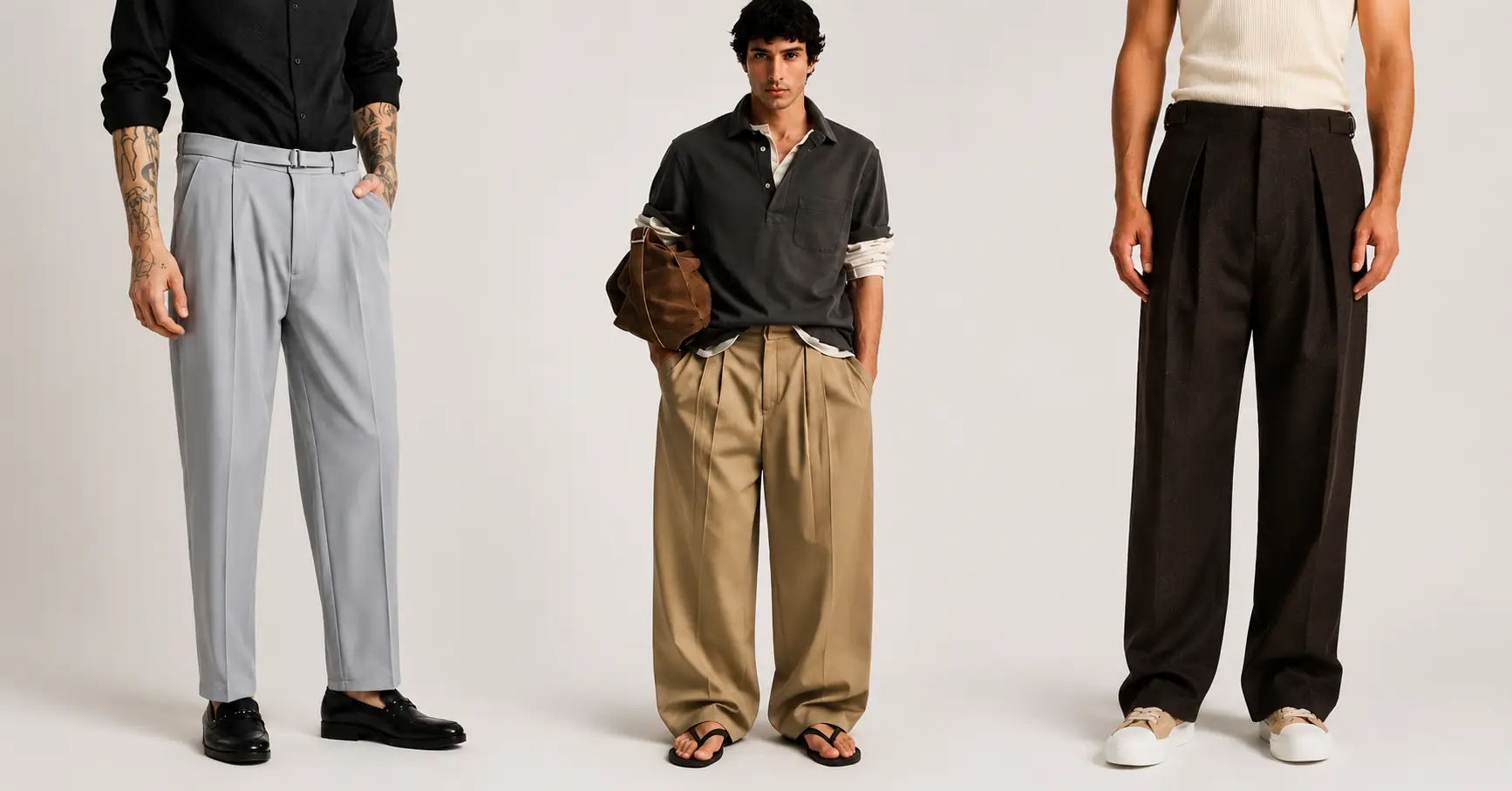
Pleated trousers have what marketers call a PR problem — meaning the reputation is worse than the actual product. Nothing wrong with the design. Nothing wrong with the fit. Just decades of men associating pleats with their dad’s office pants from 1995 and refusing to look any closer.
Here is what actually happened. Somewhere in the 90s, pleated trousers got cut badly, wear baggy and paired with terrible shoes. Men remembered the bad version and never looked back.
The good version is back. Tailors never stopped using pleats — they just stopped explaining why. This is that explanation.
Pleated trousers for men worn correctly today look sharper, fit better through the thigh and carry a quiet confidence that Dress Pants for Men in flat front cuts simply cannot replicate. Classic menswear has always understood this — pleated trousers men outfit ideas built around proper tailoring have existed in every decade, the 90s version simply executed the concept badly. The pleat was never the problem. Bad execution was.
This article breaks down exactly why the stigma exists, what actually changed in modern construction and how to wear pleated trousers in 2026 without a single trace of 1995 anywhere near the outfit.
Why Pleated Trousers Got Such a Bad Reputation
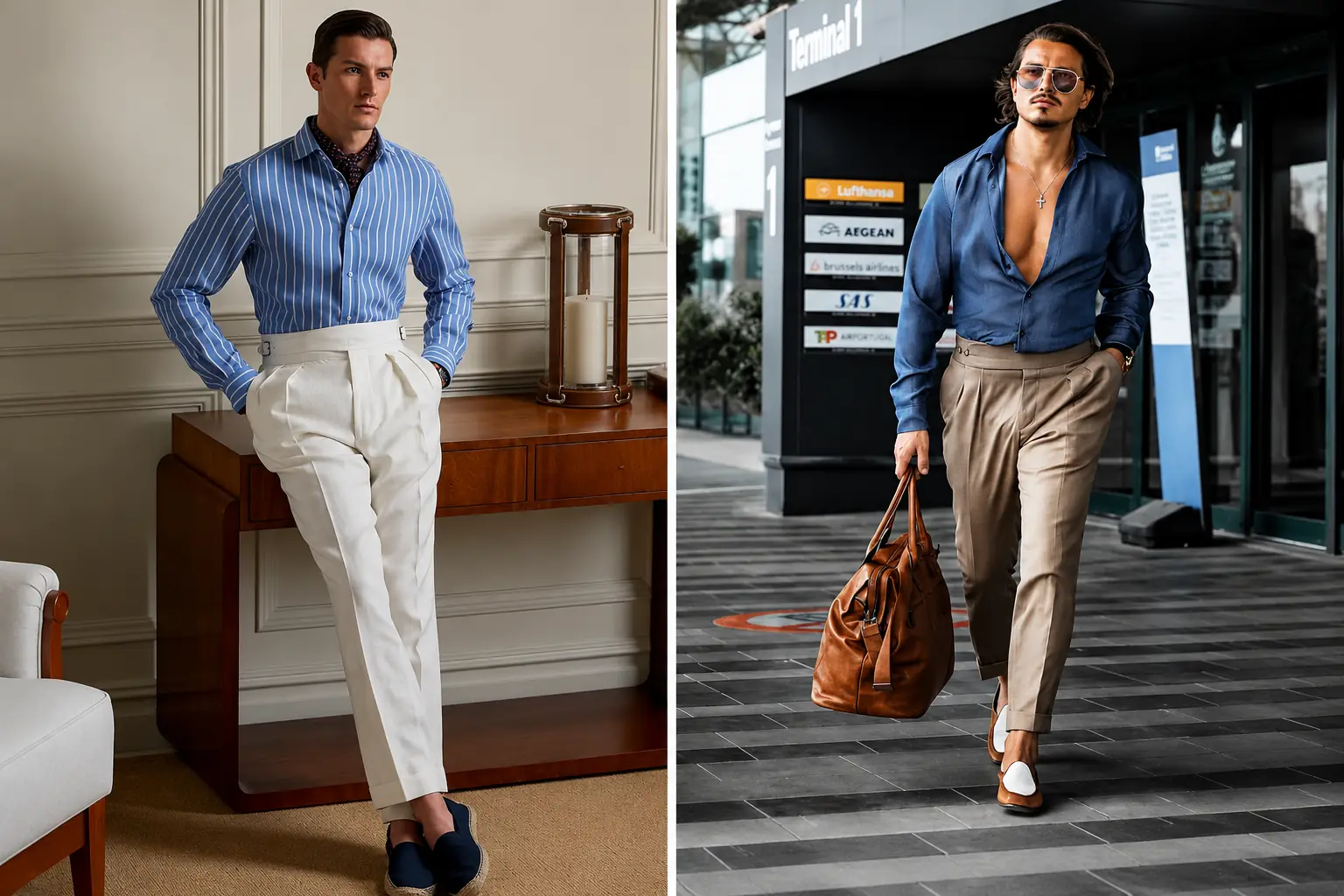
The stigma comes from one specific decade. Pleated pants men wore in the early 90s were cut with excess fabric everywhere. Wide through the seat, baggy at the thigh, often with a low rise that made pleats gape open when sitting. Add a cheap shiny fabric and oversized fit and the whole look read as sloppy rather than sharp.
Men who lived through that era associate pleats with that failure. They never separate the pleat from the bad tailoring around it. That distinction matters enormously.
A single pleat or double pleat trousers cut correctly today behave nothing like their 90s pleated pants ancestors. The retro pleated trouser and vintage pleated styles that Italian tailoring houses never abandoned are now influencing mainstream menswear directly. Rise sits higher now, fabric is lighter and the taper is deliberate. What the pleat does is exactly what it was designed to do: add room through the seat and thigh without adding visual bulk anywhere else.
There is also a generational gap at play. Men under thirty largely missed the 90s version entirely. They are discovering pleats fresh, through old money and tailored casual trends, without the baggage older men carry. That fresh perspective is partly why pleated trousers are having a genuine comeback — half the audience never had a reason to dislike them in the first place.
The Fit Truth Nobody Explains Properly
Single Pleat vs Double Pleat Trousers
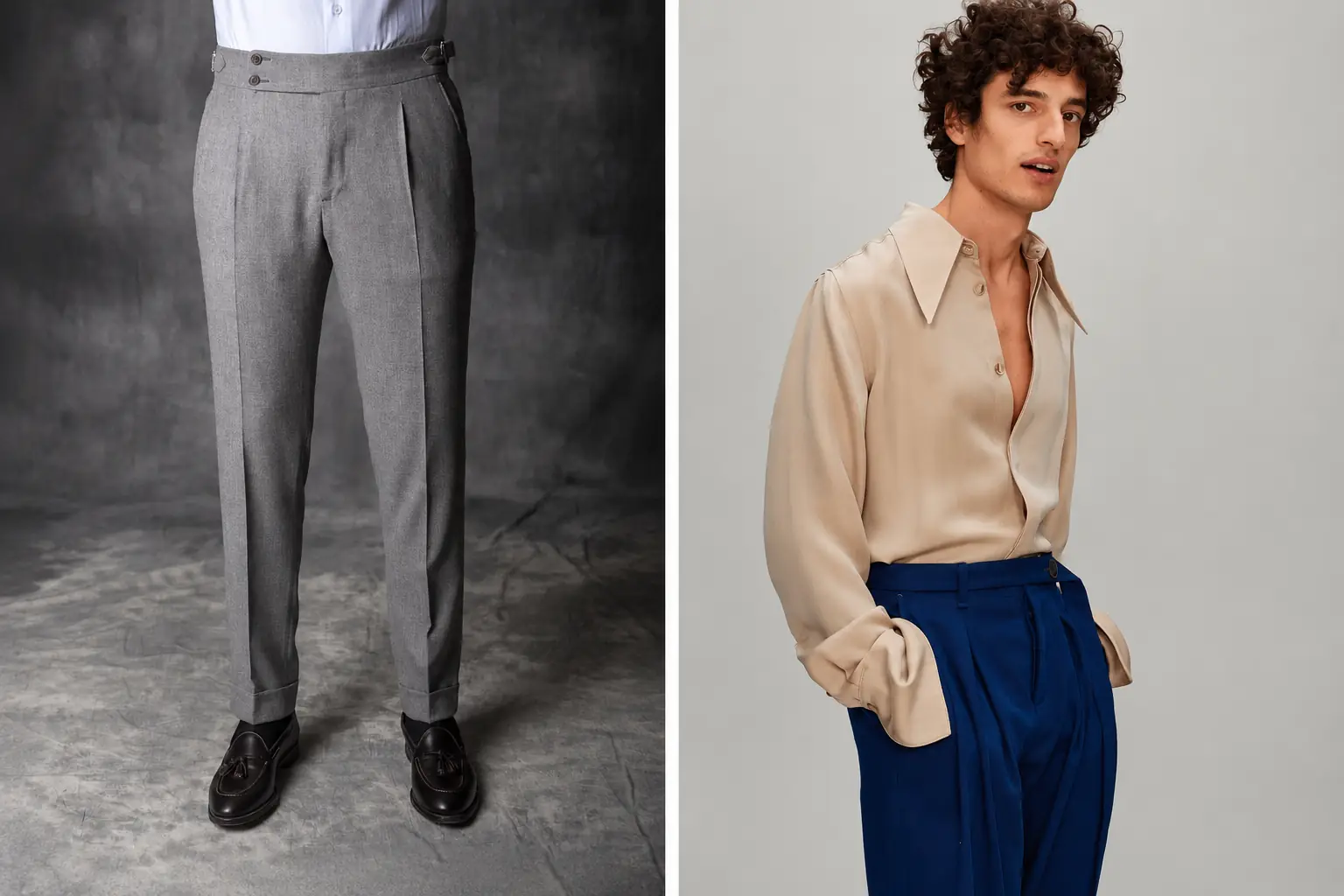
A single forward pleat creates a subtler line. Ideal for men who want the functional benefit without an obvious visual statement. Double pleat trousers suit broader builds or anyone who prefers extra ease through the seat.
Neither option is more or less formal than the other. The choice comes down to body type and how much room you genuinely need versus how visible you want the detail to be. Rule to remember: the leaner the build, the subtler the pleat. Single pleat on a slim frame looks intentional. Double pleat on the same frame can look like excess.
Pleated Trousers for Bigger Thighs
This is the detail competitors barely touch and it matters most for pleated trousers body type guidance. Pleated trousers for bigger thighs solve a constant problem. Flat front trousers pull, crease across the leg and look tight even when the waist fits correctly.
The pleat releases fabric exactly where athletic or larger thighs need it — the trouser drapes rather than strains. Men who run, cycle, lift or carry more muscle through the leg look better in pleated trousers. Regardless of what slim fit marketing claims — pleated trousers slim men can wear too, with a single pleat and tapered leg.
This is genuinely one of the most underrated fit solutions in menswear. A flat front trouser has nowhere for excess tension to go. The result is visible horizontal lines — sometimes called whiskering that make even expensive fabric look cheap. A pleat absorbs that tension at the source, giving fabric somewhere to go before it reaches the thigh.
The Rise That Makes or Breaks Pleats
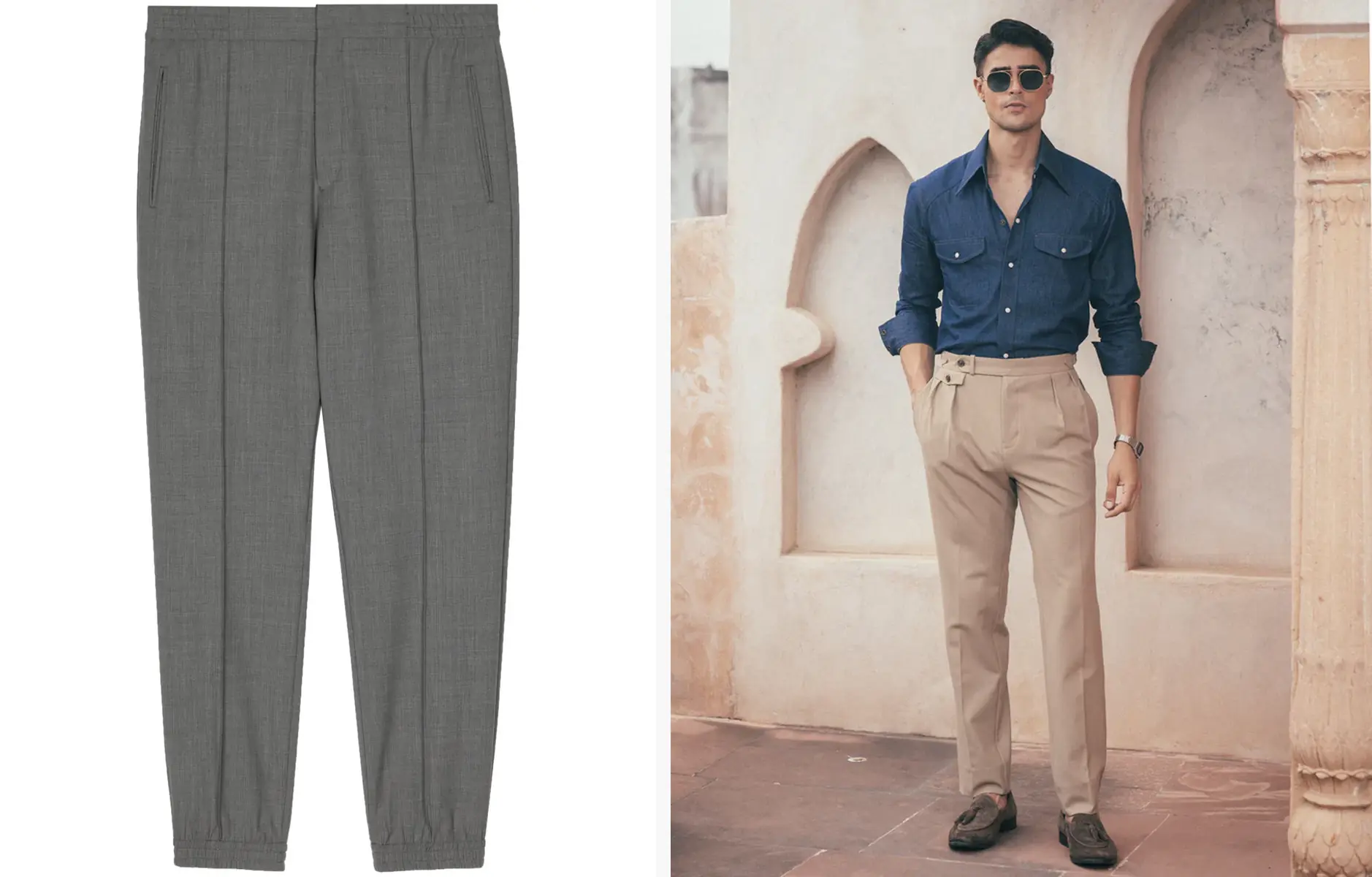
High rise pleated trousers are non negotiable. The waistband needs to sit at or near the natural waist for the pleat to fall cleanly. A low rise pulls the pleat open at the front and creates exactly the sloppy look that gave pleated pants their bad name in the first place.
Tapered pleated trousers — full through the thigh, narrow toward the ankle — give the best of both worlds. Room where you need it, a clean line where you want it. This combination is precisely what separates a modern, well constructed pleated trouser from its 90s predecessor. Volume stays where the athletic build or larger frame needs it. Everywhere else the line stays clean.
The hem matters too. A pleated trouser with too much break fabric pooling at the shoe — undoes all the careful proportion work happening higher up the leg. A slight break or none keeps the silhouette intentional from waistband to shoe.
How to Wear Pleated Trousers Men in 2026
Pleated Trousers Smart Casual Outfit
Grey pleated trousers with a white shirt, tucked and brown leather loafers is the foundation combination that works almost everywhere. The pleat adds visual interest at the waist that a flat front trouser leaves flat and uneventful.
For more personality, navy pleated trousers with a chambray shirt and tan suede chukka boots handles weekend dinners and casual Fridays equally well. The same footwear logic that works for Men’s Boots With Jeans applies here too — a substantial leather boot grounds a tailored trouser and stops the overall outfit from leaning too formal.
Pleated Trousers Business Casual
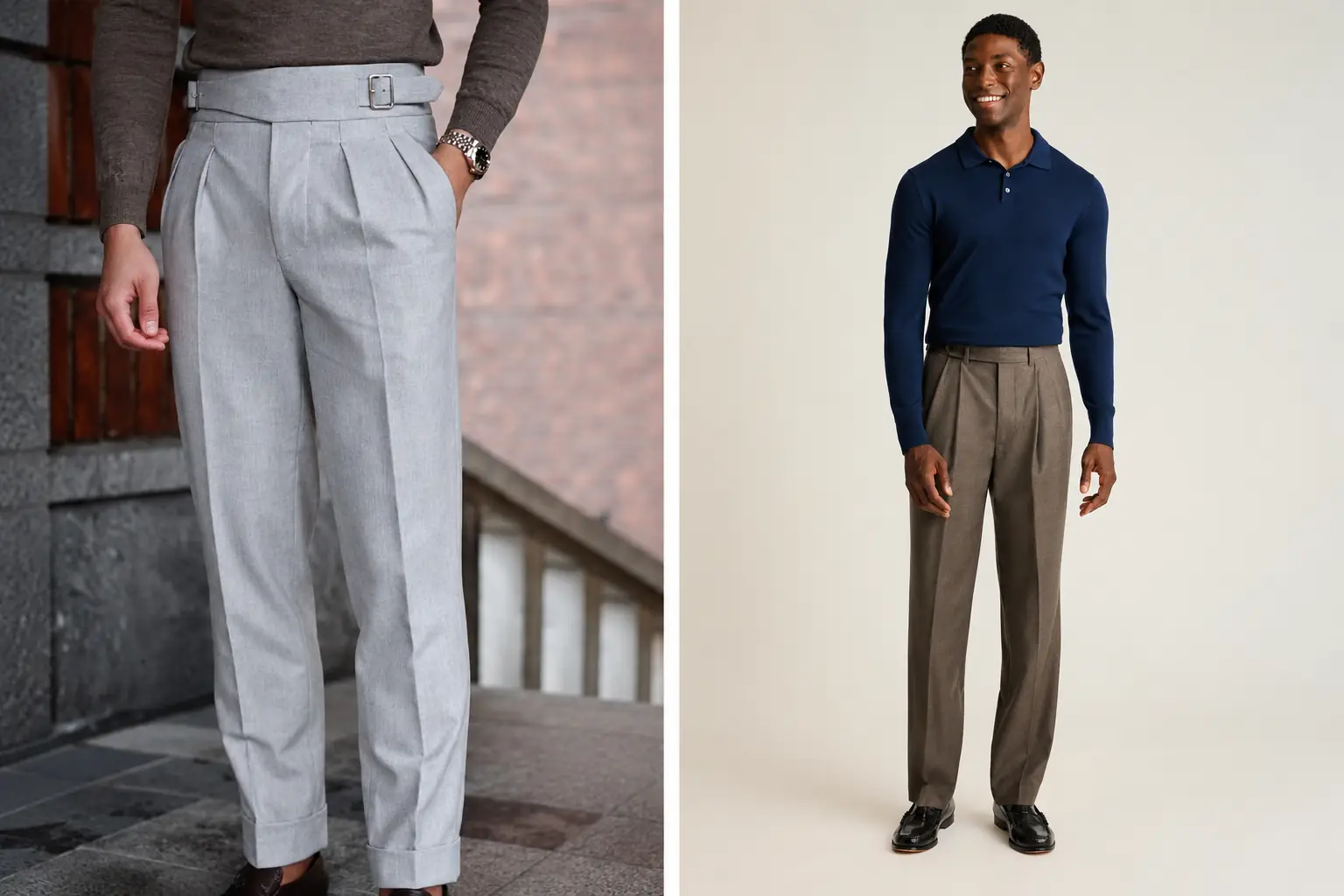
Charcoal pleated trousers in wool, paired with a pressed shirt and pleated trousers with blazer styling, cover most modern office environments. This is where pleats genuinely outperform flat front. The extra room through the seat means a full day of meetings without pulling or creasing.
A more complete Formal Outfit Ideas for Men starts with pleated trousers as the base. Add a tailored jacket and shoes matched to the formality level required.
Pleated Trousers With Sneakers Men
Yes, this works. Clean white leather sneakers with slim tapered pleated trousers in grey or stone create a contemporary pleated trousers casual outfit that has become genuinely popular in 2026. Keep the trouser tapered. Too much ankle volume fights the sneaker silhouette.
Pleated Trousers for Warm Weather
In summer, the same principles around shoes apply with lighter materials. Linen pleated trousers with leather espadrilles or minimal Summer Shoes for Men keeps the outfit appropriate for heat without losing structure.
Pleated Trousers Men — Fabric Guide
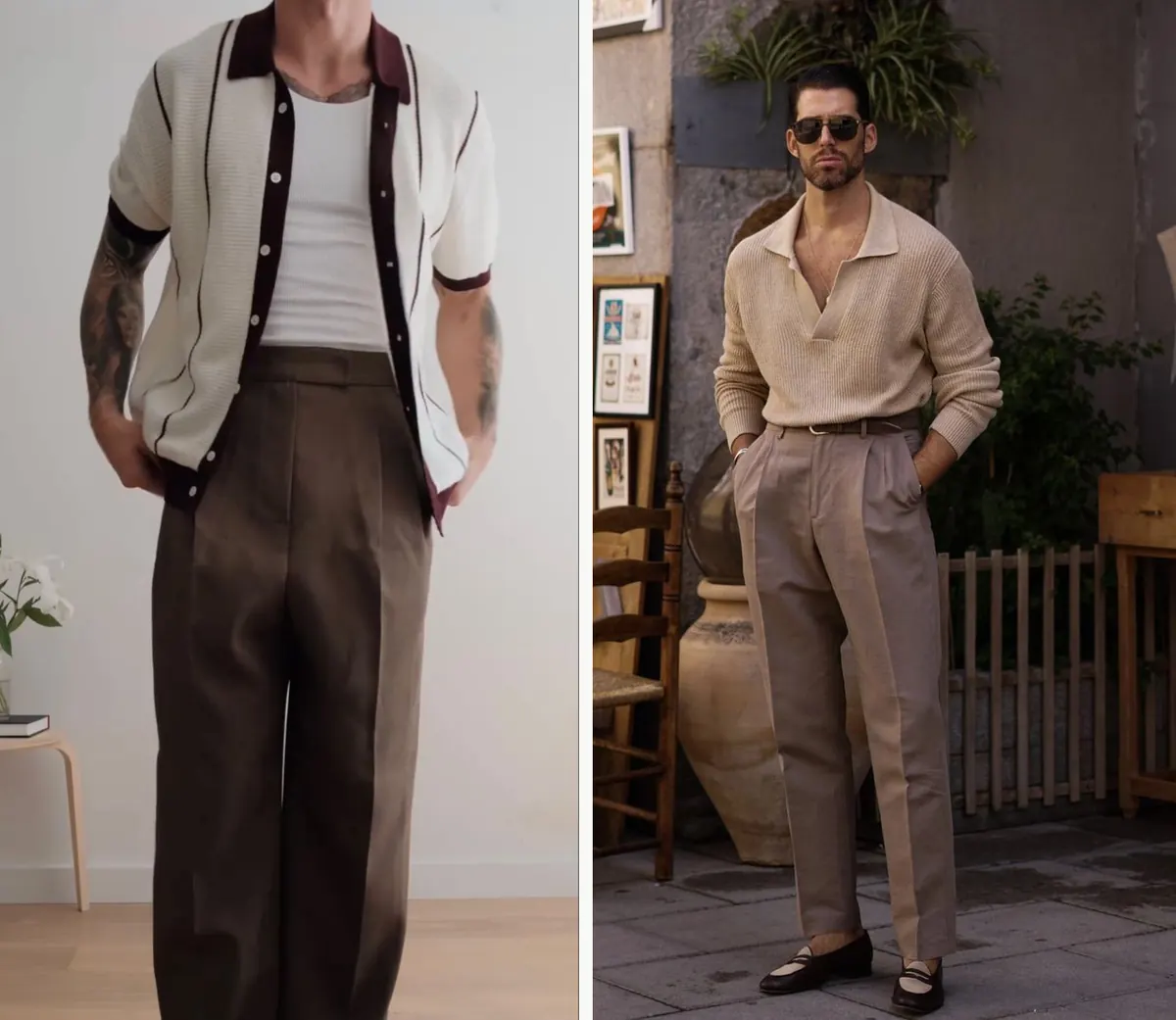
Wool pleated trousers are the classic choice for cooler months and professional settings — the same fabric that makes Wool Trousers Men such a wardrobe staple holds a pleat with structure and drape that cheaper fabrics cannot match.
Linen pleated trousers men wear in summer solve the heat problem while still delivering the room and comfort pleats are known for. The same breathability that makes Linen Trousers Men a warm weather essential pairs naturally with the pleat’s relaxed construction.
Cotton pleated trousers and flannel pleated trousers split the difference — versatile, easy to maintain and appropriate across more occasions than wool while holding more structure than linen.
Colour Guide
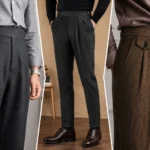
Grey pleated trousers are the most versatile starting point — work with virtually every shirt colour and shoe choice. Navy pleated trousers carry slightly more authority for professional settings. Charcoal pleated trousers men choose for the most formal occasions sit closest to traditional dress pants territory.
Beige pleated trousers and cream pleated trousers lean casual and summer appropriate, particularly in lighter fabrics.
The Old Money Connection
Old money pleated trousers sit comfortably within the old money aesthetic that has dominated menswear conversation for the past few years. The same philosophy that defines old money hairstyles applies directly here. Understated, well constructed, built on substance rather than trend. A pleat is not decoration. It is functional tailoring that happens to look refined.
This connection is not accidental. Old money style has always favoured construction details that serve a purpose over details that exist purely for visual effect. A pleat gives a trouser more room to move, more drape when standing still and more comfort when sitting. It earns its place in the garment rather than simply decorating it. That is the logic governing old money dressing broadly. Nothing on the body without a function, even when subtle.
Pair pleated trousers with old money shoes — quality leather loafers or clean Derbies and the combination reads as deliberate rather than dated. The relationship works in both directions too. If you already own quality leather loafers, pleated trousers are the next purchase that will get the most use from them.
Mistakes That Bring Back the 90s Look
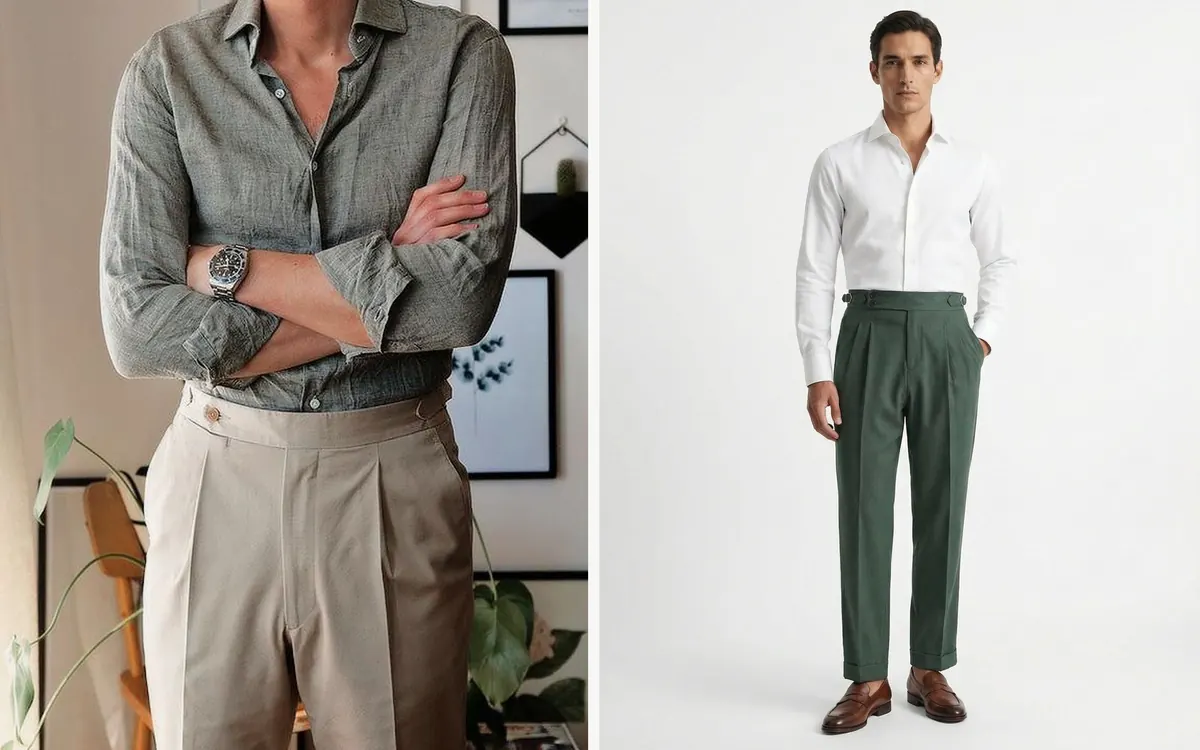
Even a well cut pleated trouser can slide back into dated territory with the wrong choices around it. A few mistakes show up repeatedly.
Going too wide through the leg is the most common one. The pleat needs to taper toward the ankle to read as modern. A trouser that stays wide all the way down recreates the exact silhouette that defined the bad version of this garment.
Pairing pleats with a chunky belt and an oversized shirt is another. The pleat works best as the standout structural detail in an outfit, not one of several competing elements. Keep the shirt fitted, the belt slim and let the trouser do the talking at the waist.
Skipping the tailor is the final mistake worth naming directly. Off-the-rack pleated trousers rarely fit perfectly straight out of the bag, particularly around the waist and seat. A few minor adjustments from a tailor — taking in the waist, adjusting the hem — make the difference between a trouser that looks borrowed and one that looks built specifically for you.
Care and Maintenance
Pleated trousers hold their shape best when hung rather than folded — folding creates creases that fight against the pleat’s intended line. A trouser hanger that clips at the hem lets fabric hang straight under its own weight. Worth the small investment, especially for wool.
A light steam before wearing restores the crispness at the waist that defines a well pressed pleat. This single step does more than almost anything else to maintain a sharp look. A pleat that softens without steaming starts looking like a fold rather than a deliberate construction detail.
Dry cleaning suits wool and finer fabrics; cotton and linen versions often tolerate a gentle hand wash in cold water, laid flat to dry rather than hung wet. Avoid high heat — it sets creases in the wrong places and shrinks natural fibres unevenly.
FAQ
Q: Are pleated trousers in style for men in 2026?
A: Yes. Pleated trousers have returned strongly, particularly within the old money and tailored casual trends, as long as the fit is modern — higher rise, tapered leg — rather than the baggy 90s cut.
Q: Do pleated trousers make you look heavier?
A: No, when fitted correctly. A well cut pleat with a proper rise actually creates a cleaner line than a tight flat front trouser pulling across the thigh.
Q: Can slim men wear pleated trousers?
A: Yes — a single pleat in a lighter fabric with a tapered leg works well on slimmer builds without adding unwanted bulk.

Deepak Bhandari has spent 10 years in personal styling, helping men dress with more confidence and less guesswork. He’s the founder of Deepu Fashion, where he writes about style, grooming and everyday outfit ideas that actually work in real life. Follow him on Instagram for daily style tips and inspiration.