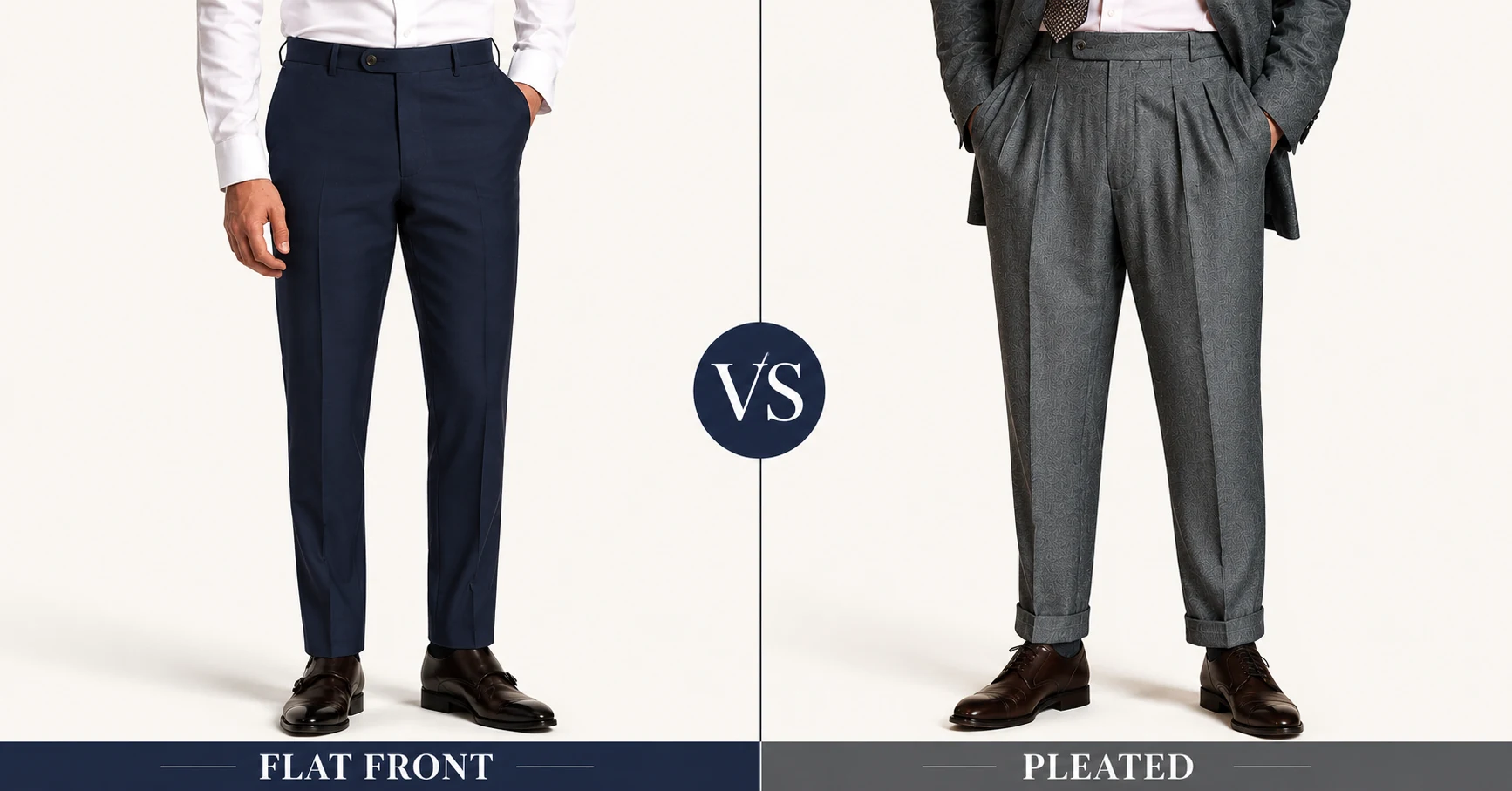
For years, choosing trousers was simple. Walk into a store, pick a slim pair with a flat front and you were wearing what almost every menswear brand recommended.
Today, that’s no longer the case.
Pleated trousers have made a strong comeback, not because fashion repeats itself, but because men’s wardrobes have changed. Comfort has become just as important as appearance. Tailoring has become softer, fabrics drape more naturally and many men are moving away from ultra skinny fits.
This shift has created one of the most common questions in menswear: when comparing flat front vs pleated trousers, which style is actually the better choice? The answer depends on your body type, lifestyle and how you plan to wear them.
The answer isn’t as simple as saying one is better than the other.
Both styles have strengths. Both have situations where they perform better. The right choice depends on your body shape, how you dress, where you wear your trousers and what you expect from them throughout the day.
Rather than declaring a winner, in this article i explains how each style works so you can decide which one belongs in your wardrobe.
Understanding the Difference
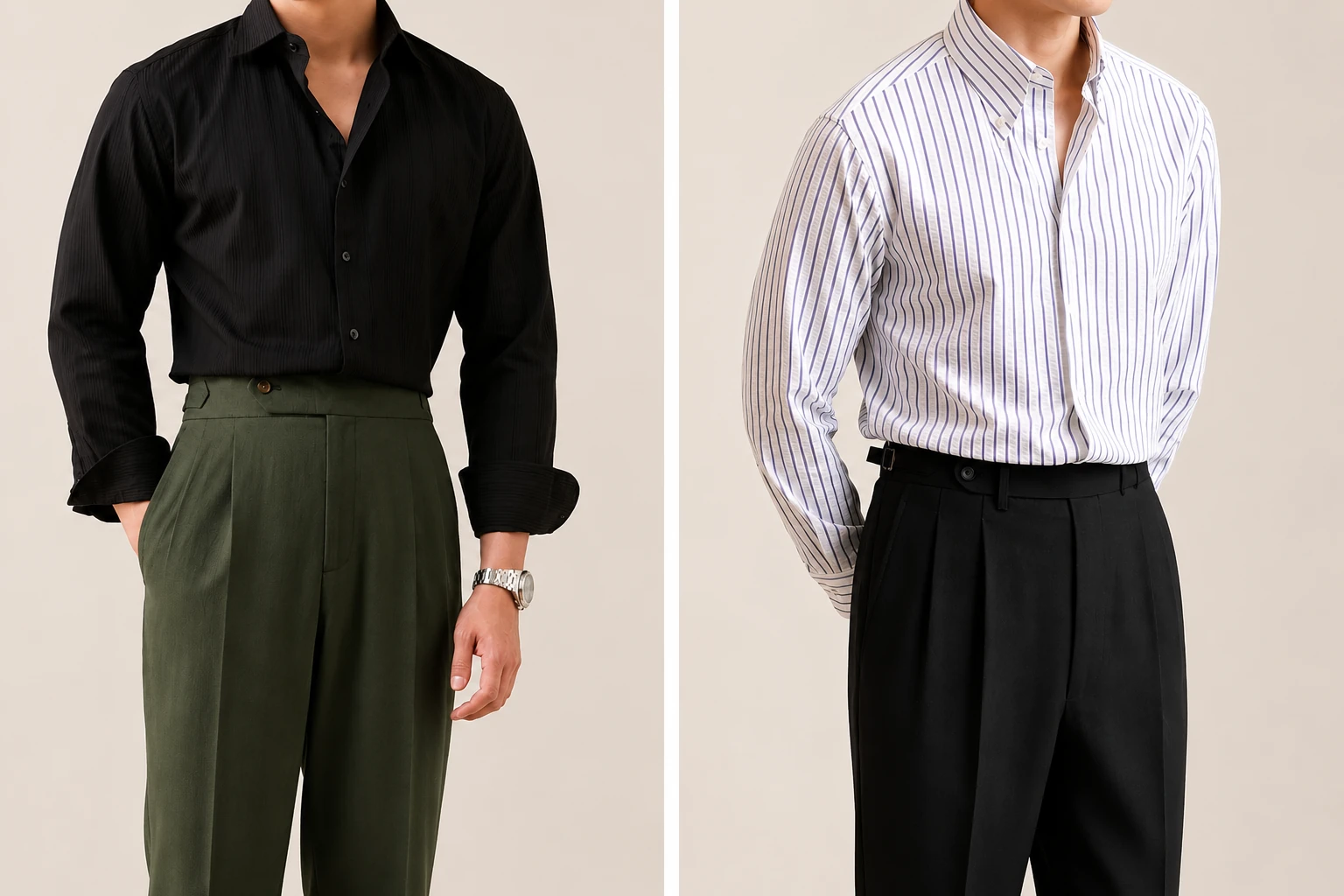
Before comparing these two styles, it’s helpful to know why pleated trousers are back in fashion. Today’s versions offer a cleaner, more tailored look than the baggy styles of the past. For a deeper look at the different pleat types and how to wear them, see our Pleated Trousers Men guide.
A flat front trouser has a completely smooth front panel. There are no folds below the waistband, creating a clean, uninterrupted line from the waist to the hem. This design became popular during the slim-fit era because it produced a sharp, modern silhouette.
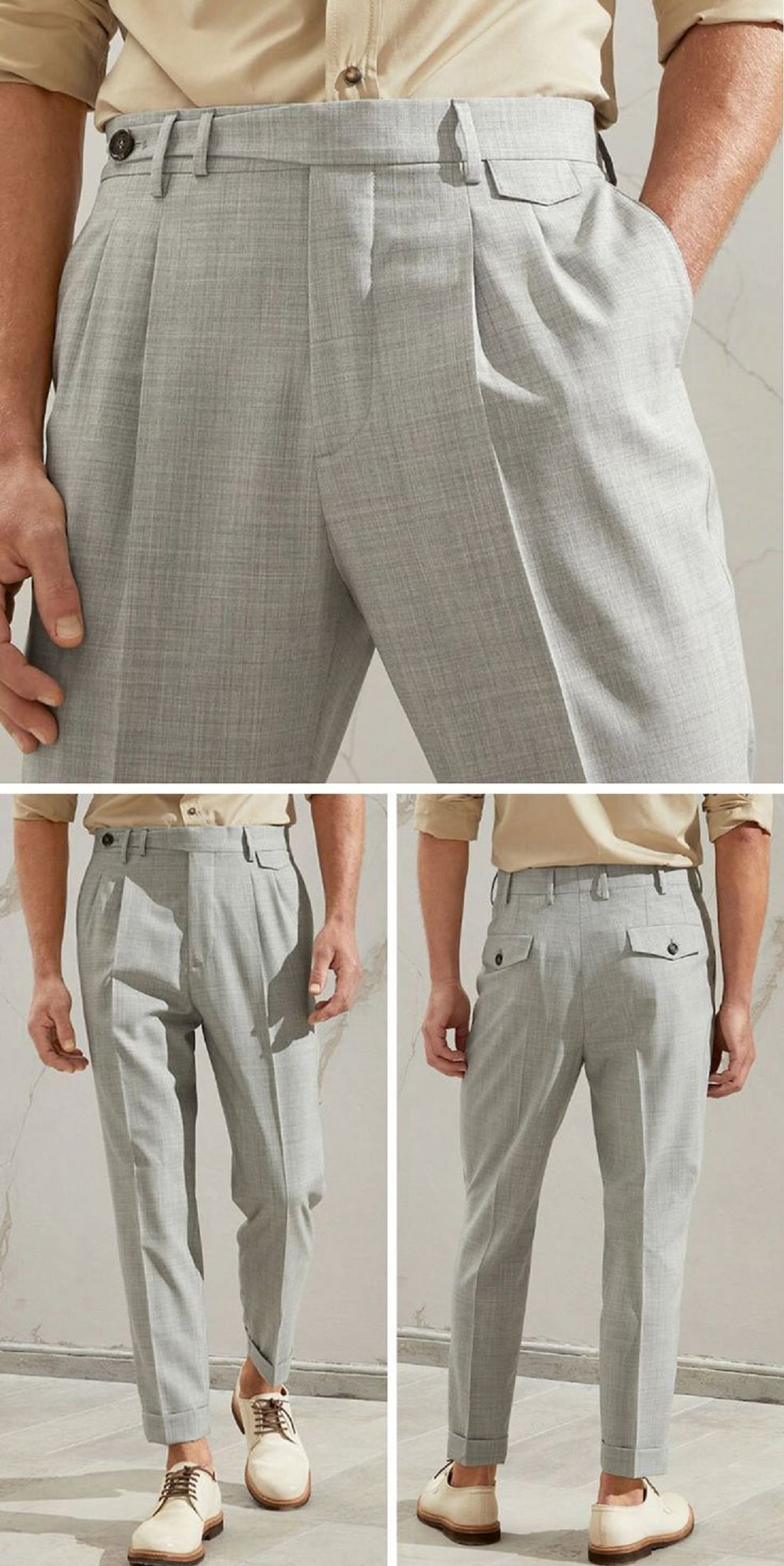
Pleated trousers include one or more folds of fabric stitched beneath the waistband. These folds expand slightly as you move, giving your hips and thighs extra room without making the trousers appear oversized.
At first glance, the difference seems minor.
Why Flat Front Trousers Became So Popular
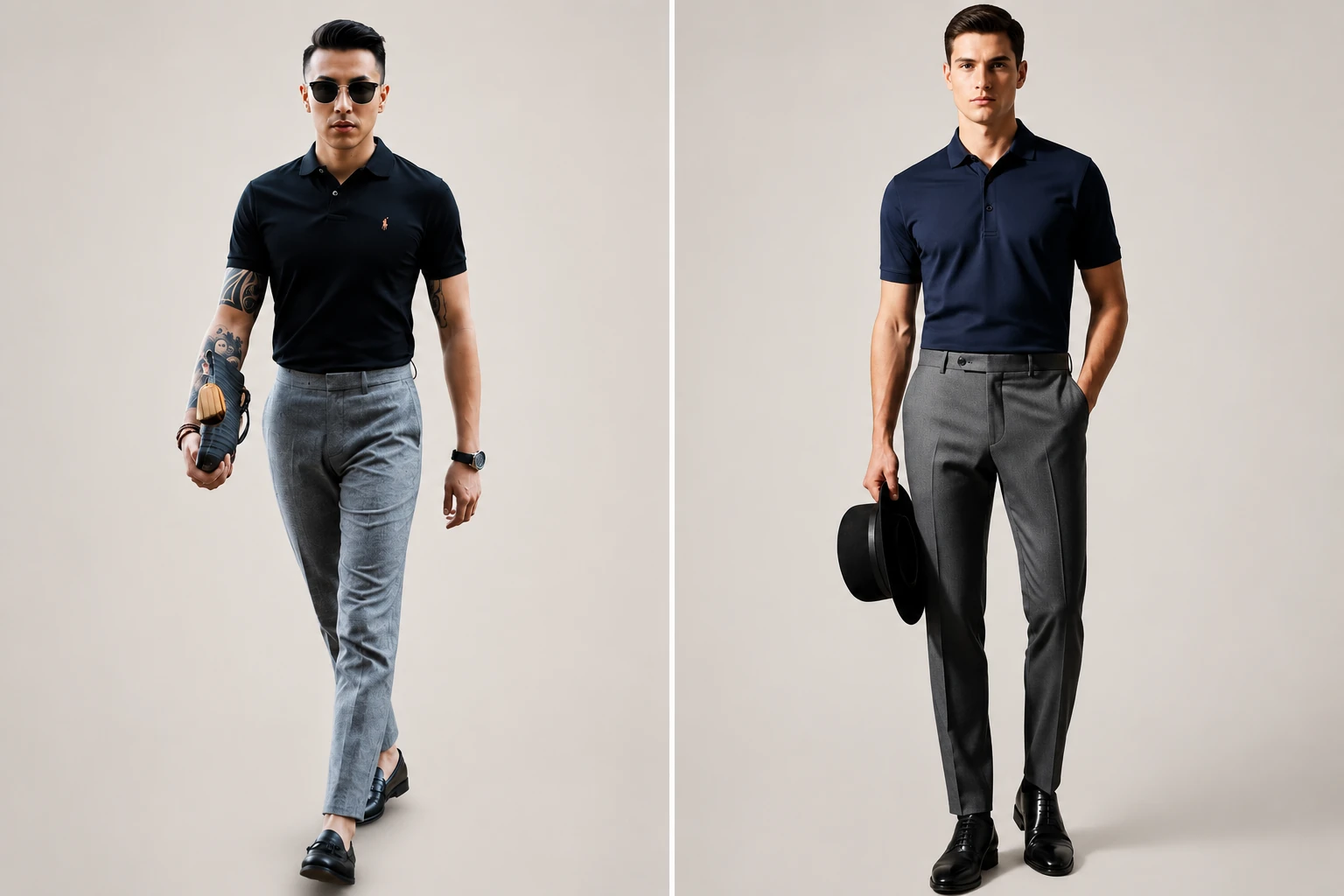
If you bought tailored trousers between 2005 and 2018, there’s a good chance they had a flat front.
Menswear during that period focused heavily on slim silhouettes. Jackets became shorter, trousers became narrower and clean lines were seen as the definition of modern style.
Flat front trousers fit perfectly into that trend.
Without extra fabric around the waist, they produced a neat profile that worked well with slim white shirts, fitted blazers and minimalist leather shoes. Many offices also preferred the structured appearance because it looked professional without drawing attention.
Even today, flat front trousers remain an excellent option for men who prefer understated clothing.
Advantages of Flat Front Trousers
Clean appearance
The uninterrupted front panel creates a sleek silhouette that’s particularly effective in formal business environments.
Easy to style
Flat front trousers work well with almost every type of tailored jacket, dress shirt, polo pink shirt and fine knitwear.
Modern aesthetic
If your wardrobe leans toward minimalism, Scandinavian style or contemporary tailoring, flat front trousers naturally complement that direction.
Where They Fall Short
The same clean design that creates a sharp appearance also reduces flexibility.
Because there are no pleats to release extra fabric when you sit or bend, flat front trousers rely entirely on their cut and fabric stretch for comfort.
When they’re tailored correctly, this isn’t a problem.
When they’re too slim, however, they can pull across the thighs, create horizontal wrinkles and restrict movement during long periods of sitting.
Many men blame the fabric when, in reality, the issue is often choosing a fit that’s too aggressive.
Why Pleated Trousers Are Back
One of the biggest myths in menswear is that pleated trousers returned because vintage fashion became trendy again.
Fashion certainly played a role, but it isn’t the whole story.
The real reason is that modern tailoring has changed.
Over the last few years, many men have started prioritising clothes that feel comfortable without looking oversized. That shift has encouraged designers to revisit traditional tailoring techniques, including pleats.
Originally, pleats weren’t introduced to make trousers more fashionable.
They were introduced to make them more wearable.
The extra fold beneath the waistband allows the fabric to expand naturally as you move. Whether you’re walking, driving, climbing stairs or sitting through a long meeting, pleated trousers adapt more easily than tightly cut flat front styles.
Modern pleats are also much cleaner than many people remember.
Forget the oversized trousers from the late 1990s.
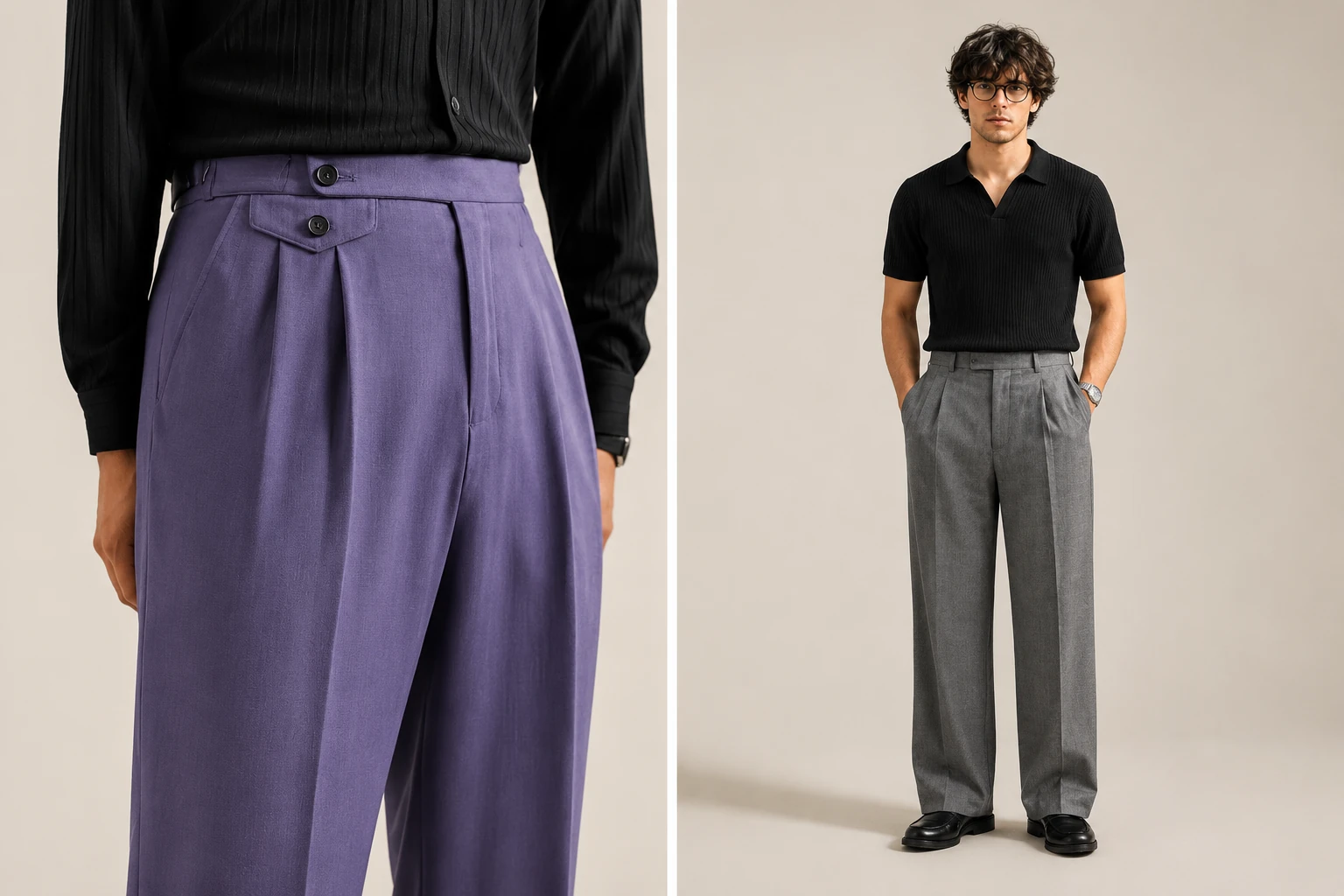
Today’s pleated trousers usually feature:
- A higher rise
- One or two subtle pleats
- A straight or gently tapered leg
- Softer fabrics that drape naturally
The result feels tailored rather than bulky.
If you’re curious about how modern pleats differ from older designs or want to understand the difference between single and double pleats, our Pleated Trousers Men guide explores the various pleat styles, outfit ideas and practical styling tips in greater detail.
That’s why pleated trousers have become a favourite among men who appreciate classic menswear without wanting to sacrifice comfort.
Flat Front vs Pleated Trousers: Side-by-Side Comparison
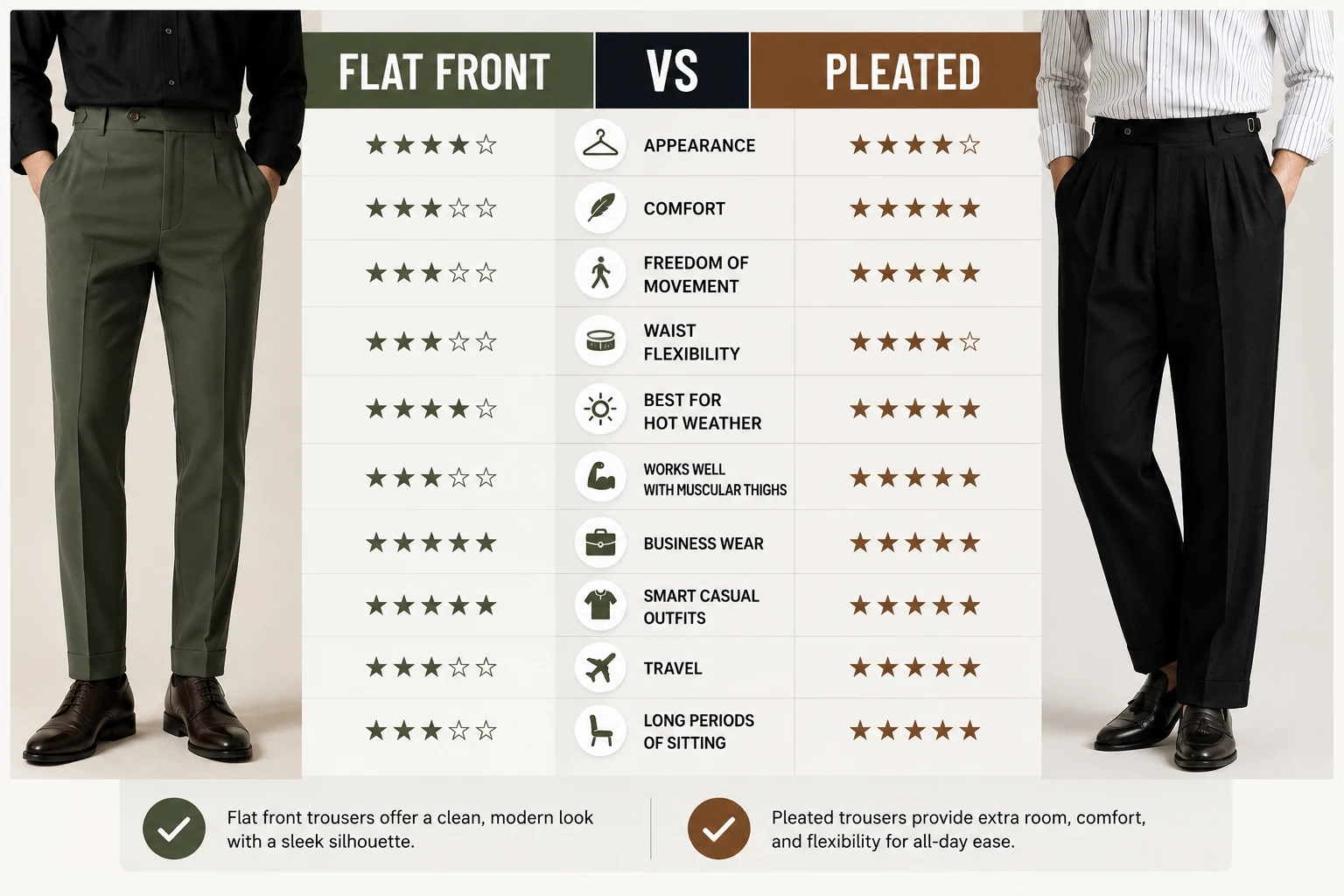
Before deciding which style deserves a place in your wardrobe, it’s helpful to compare them beyond appearance.
| Feature | Flat Front | Pleated |
| Appearance | Clean and minimal | Classic with added depth |
| Comfort | Good | Excellent |
| Freedom of movement | Moderate | High |
| Waist flexibility | Limited | Better |
| Best for hot weather | Good | Excellent |
| Works well with muscular thighs | Average | Excellent |
| Business wear | Excellent | Excellent |
| Smart casual outfits | Excellent | Excellent |
| Travel | Good | Excellent |
| Long periods of sitting | Average | Excellent |
This table isn’t meant to declare one style superior.
Instead, it highlights something many shoppers overlook:
The choice isn’t between old and modern.
It’s between structured tailoring and comfortable tailoring.
Once you understand that distinction, choosing the right pair becomes much easier.
Which Style Works Best for Your Body Type?
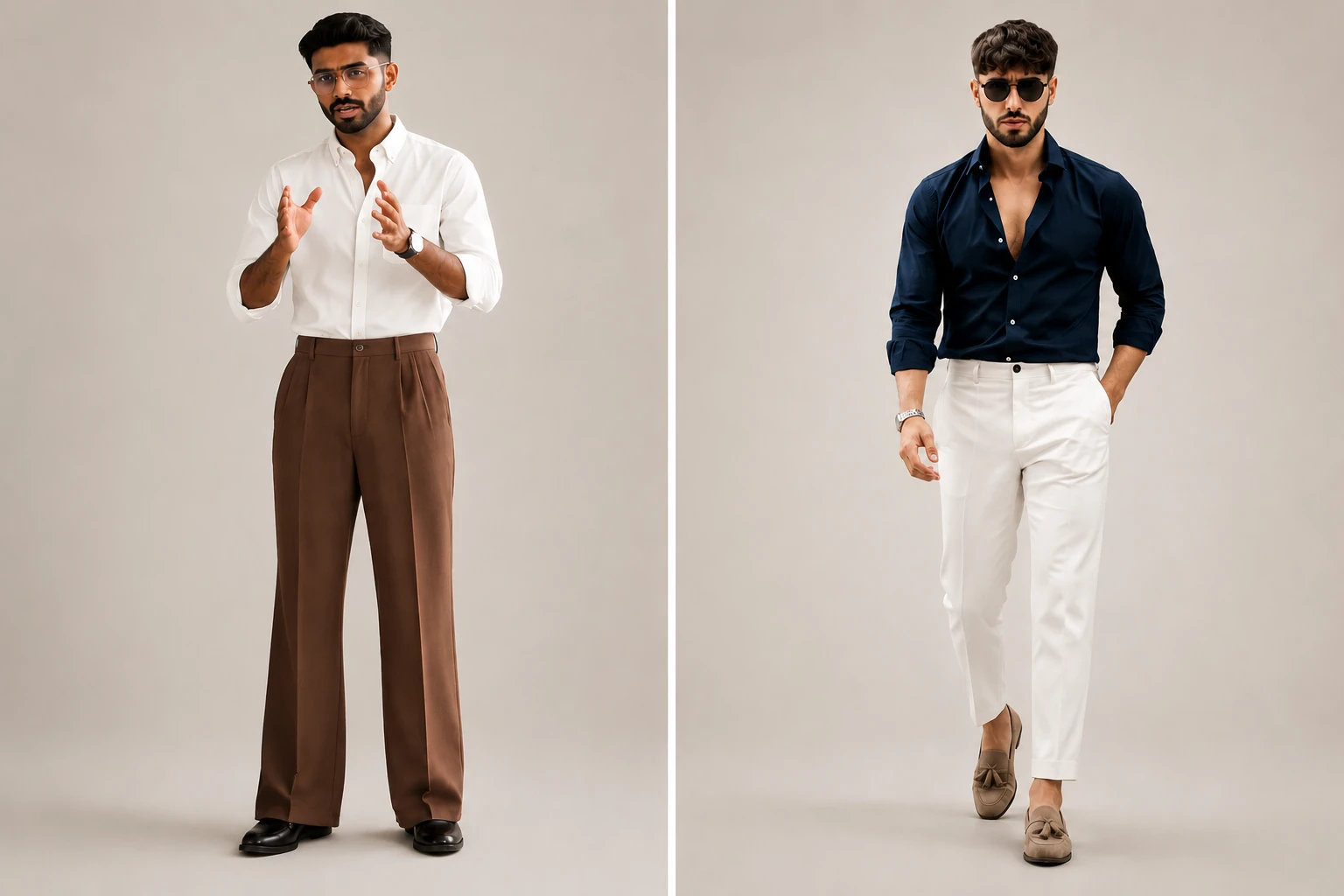
Many online guides recommend one style based solely on fashion trends.
That’s a mistake.
The way trousers fit your body matters far more than what’s currently popular.
Slim Build
If you have a naturally slim frame, both styles can work exceptionally well.
Flat front trousers emphasise clean lines and create a contemporary silhouette.
Single pleated trousers, on the other hand, introduce subtle shape around the waist without making the legs appear wider.
The deciding factor is the rest of your wardrobe.
If you wear minimalist outfits with fitted shirts and leather sneakers, flat front trousers may feel more natural.
If you enjoy softer tailoring, knit polos, loafers and textured jackets, pleated trousers often create a more balanced look.
Athletic Build
Men who cycle, play sport or spend time in the gym often develop stronger thighs and glutes than standard trouser patterns are designed for.
This is where pleated trousers usually outperform flat front styles.
The additional room created by the pleats reduces tension across the thighs and helps the fabric hang more naturally instead of pulling across the front.
A well cut pleated trouser doesn’t hide an athletic build. It complements it by allowing better movement while maintaining a tailored appearance.
Which Style Fits Different Occasions Better?
One of the biggest mistakes men make is assuming one pair of trousers can handle every situation. While both flat front and pleated trousers are versatile, each has environments where it naturally performs better.
Instead of asking which style is more fashionable, ask yourself where you’ll actually wear them.
Office Wear
If your workplace follows a traditional business dress code, flat front trousers remain a dependable choice. Their clean front creates a sharp silhouette that pairs effortlessly with dress shirts, ties and structured blazers.
However, modern offices have become more relaxed. If your workplace leans toward business casual, single pleated trousers deserve serious consideration.
They provide more comfort during long hours at your desk while still looking polished.
Recommendation
Choose flat front trousers if:
- You regularly wear a tie.
- Your office has a formal dress code.
- You prefer a streamlined look.
Choose pleated trousers if:
- You spend long hours sitting.
- You move between meetings throughout the day.
- Your office follows a business casual dress code.
Weddings and Formal Events
A common misconception is that pleated trousers are less formal.
In reality, well tailored pleated trousers have been part of classic tailoring for decades.
The deciding factor isn’t the pleat.
It’s the fabric, fit and overall styling.
For daytime weddings, pleated wool or linen trousers paired with a tailored jacket often create a sophisticated appearance that feels elegant without looking stiff.
Flat front trousers, meanwhile, produce a slightly cleaner silhouette that works exceptionally well with modern suits.
Verdict
For classic tailoring:
Pleated trousers win.
For contemporary minimalist tailoring:
Flat front trousers have a slight advantage.
Casual Outfits
Casual dressing has changed dramatically over the last few years.
Oversized hoodies and skinny jeans are no longer the only options.
Many men now build casual outfits using relaxed tailoring.
This is where pleated trousers shine.
Pair them with:
- Knit polo shirts
- Premium T-shirts
- Cuban collar shirts
- White leather sneakers
The result feels intentional rather than overly formal.
Flat front chinos remain excellent for casual wear, but pleated trousers generally create more visual interest with less effort.
Travel
Think about what happens when you travel.
You sit.
Stand.
Walk.
Carry luggage.
Sit again.
Flat front trousers can begin to feel restrictive after several hours, especially if they’re cut close to the leg.
Pleated trousers naturally expand when you move.
That additional room makes a noticeable difference during flights, road trips and full days exploring a new city.
Comfort becomes increasingly valuable once you’ve worn the trousers for eight or ten hours.
Which Fabrics Work Best?
The comparison changes depending on the fabric.
Wool
Wool drapes exceptionally well.
Single pleated wool trousers create elegant lines that move naturally as you walk.
Flat front wool trousers, on the other hand, offer a sharper business appearance.
Best choice
Office: Flat Front
Classic tailoring: Pleated
Linen
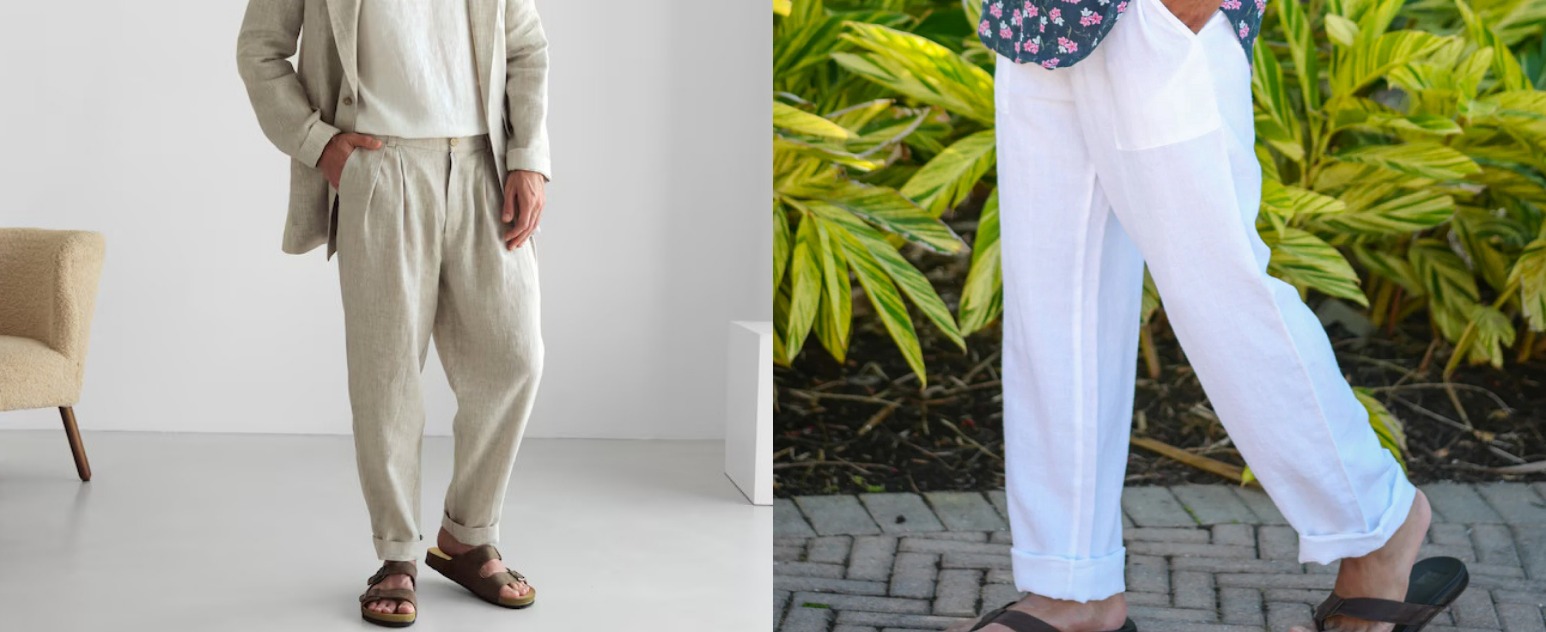
Linen pants already has a relaxed personality.
Adding pleats enhances that relaxed drape rather than making the trousers look oversized.
This explains why so many luxury summer collections combine linen with pleats.
Flat front linen trousers still work well, but pleats usually allow the fabric to move more naturally.
Cotton
Cotton is the most versatile option.
Both styles perform well.
If you’re buying your first pair, choose whichever silhouette better matches your wardrobe.
Common Myths About Pleated Trousers
Myth 1: Pleats Make You Look Older
This idea comes from oversized trousers popular during the 1980s and 1990s.
Modern pleated trousers are cut very differently.
Higher rises, cleaner lines and better tailoring have completely changed their appearance.
Age doesn’t determine whether pleats work.
Fit does.
Myth 2: Pleats Make You Look Bigger
Poorly fitted trousers create unnecessary bulk.
Properly tailored pleated trousers don’t.
In fact, many men with athletic thighs find pleated trousers create a cleaner silhouette because the fabric hangs naturally instead of pulling tightly across the front.
Myth 3: Flat Front Is Always More Stylish
Fashion trends change.
Good proportions don’t.
Some seasons favour slimmer silhouettes.
Others favour softer tailoring.
Buying trousers based only on trends usually leads to regret a year or two later.
Choose proportions that suit your body instead.
Buying Mistakes Most Men Make
Buying the Wrong Rise
Many shoppers focus on leg width while ignoring the rise.
A good rise determines where the trousers sit on your waist, how they drape and how comfortable they feel throughout the day.
Prioritising Fashion Over Fit
The best looking trousers in the shop won’t impress anyone if they fit poorly.
A reasonably priced pair that fits perfectly almost always looks more expensive than a luxury pair that doesn’t.
Ignoring Fabric Weight
Heavy wool behaves differently from lightweight linen.
The number of pleats matters less than choosing the right fabric for the season.
Buying Without Thinking About Shoes
Before purchasing trousers, ask yourself what footwear you’ll actually wear.
If most of your wardrobe consists of loafers, pleated trousers may integrate naturally.
If you mainly wear minimalist leather dress shoes for work, flat front trousers could prove more versatile.
Thinking about complete outfits prevents expensive impulse purchases.
How to Decide Which Style Is Right for You
Instead of asking which trouser is objectively better, ask these questions:
Do I spend long hours sitting?
Pleated trousers are likely to feel more comfortable.
Do I wear tailoring every day?
Flat front trousers provide a sharper, cleaner appearance.
Do I have athletic thighs?
Pleats generally offer better movement.
Do I prefer timeless tailoring over fashion trends?
Pleated trousers deserve a place in your wardrobe.
Am I building my first smart wardrobe?
Owning one excellent pair of each style gives you flexibility rather than forcing every outfit around a single silhouette.
So, Which One Should You Choose?
The debate between flat front and pleated trousers often creates the impression that one style has replaced the other.
That’s not how great wardrobes are built.
Flat front trousers remain one of the cleanest options for business clothing and modern tailoring.
Pleated trousers offer greater comfort, improved movement and a softer silhouette that works beautifully with today’s relaxed approach to menswear.
Rather than replacing one with the other, think of them as different tools.
If your wardrobe only contains flat front trousers, adding a well cut pair of single pleated trousers introduces variety without changing your personal style.
If you already own pleated trousers, a pair of flat front wool trousers still makes sense for formal business outfits.
The best dressed men rarely commit to one style.
They choose the one that suits the occasion, the fabric and the way they want the outfit to feel.
Frequently Asked Questions
Are pleated trousers more comfortable than flat front trousers?
In most cases, yes. The pleats provide extra room around the waist and thighs, making them especially comfortable when sitting, travelling or walking for long periods.
Which style is better for formal occasions?
Both can be formal. Flat front trousers create a cleaner, modern look, while pleated trousers complement classic tailoring and higher rise silhouettes.
Do pleated trousers suit shorter men?
Yes, provided the rise, leg width and trouser length are well proportioned. A modern single pleat with a tailored fit can look excellent on shorter men.
Can I wear pleated trousers casually?
Absolutely. Pair them with a quality T-shirt, Knit polo pattern or pair with grey shirt and finish the outfit with stylish sneakers or loafers.

Deepak Bhandari has spent 10 years in personal styling, helping men dress with more confidence and less guesswork. He’s the founder of Deepu Fashion, where he writes about style, grooming and everyday outfit ideas that actually work in real life. Follow him on Instagram for daily style tips and inspiration.