I bought dress shirts by chest size for years, the same way I’d buy a t-shirt. Grab a medium, move on. Every single one fit slightly wrong somewhere, collar too loose, shoulders too far down my arm and I never once connected it to the size label. It wasn’t until I measured my neck with a tape measure, out of pure frustration more than anything, that shirts started fitting right on the first try. Here’s everything I learned about dress shirt fit once I stopped guessing.
Quick answer: Collar should let two fingers slide in comfortably when buttoned, no more. Shoulder seam sits right at the edge of your shoulder bone, not halfway down your arm and not pulling toward your neck. Sleeves end at the wrist bone, not past your knuckles.
Chest and waist sit close without pulling at the buttons or ballooning out. If the fabric puffs out once you tuck it in, the fit’s too loose, that’s the blousy effect and it’s the mistake I see most.
Collar Size Is Where I Went Wrong First
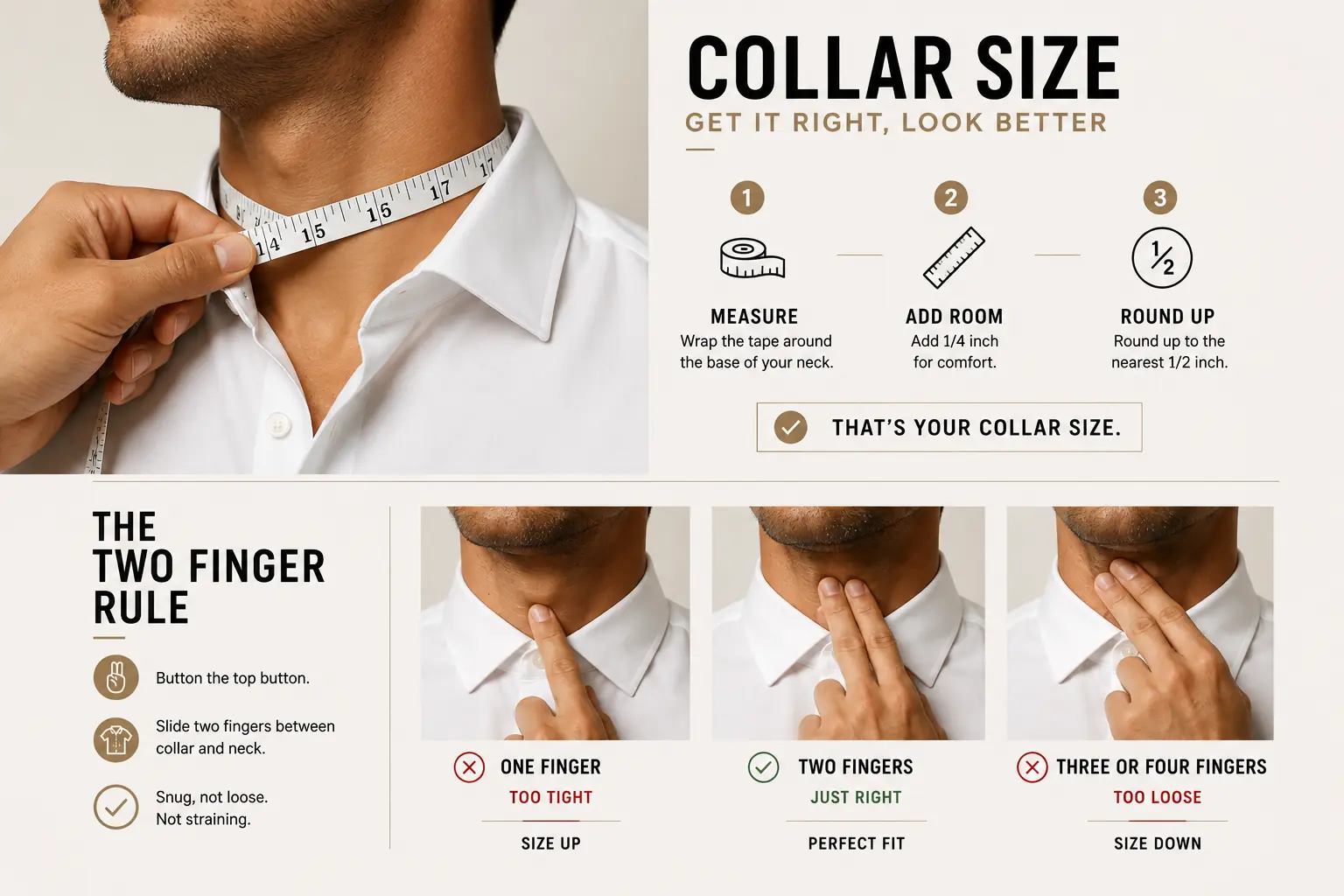
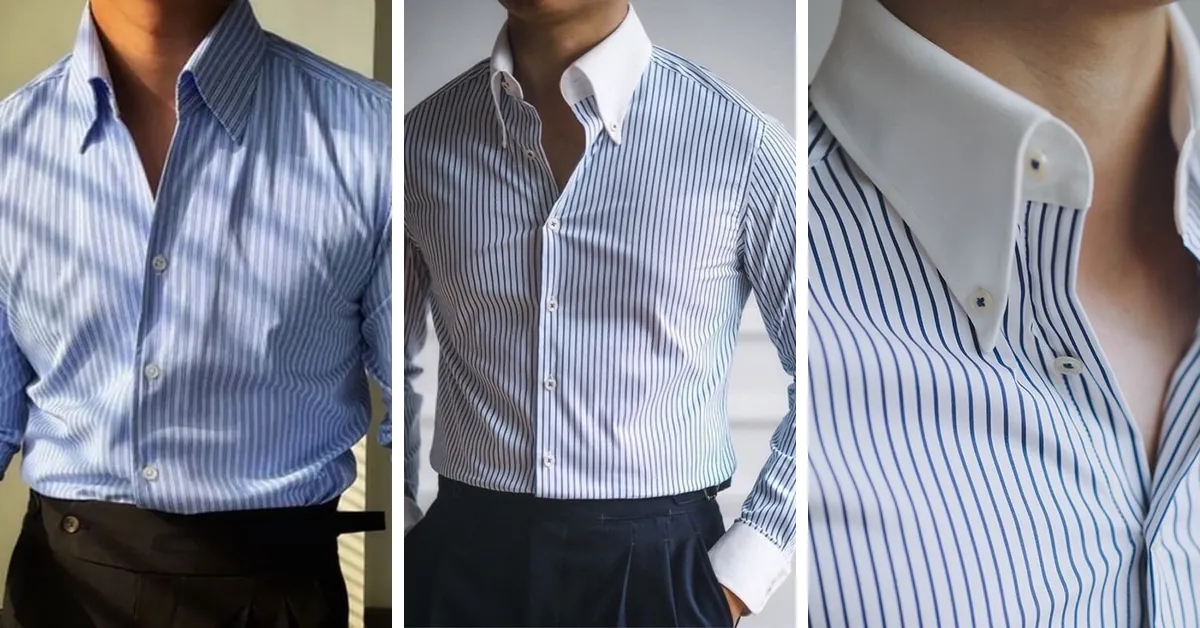
Collar size is measured in inches around your neck, not your chest, not your general “size.” Wrap a tape measure around the base of your neck, right where a collar sits, add a quarter inch for breathing room, round up to the nearest half inch. That’s it, that’s your number.
I’d never measured this in my life before I sat down and did it. Like most guys, I bought medium or large based on how t-shirts fit me, which has nothing to do with collar size. Get this wrong and the shirt looks off even when everything else about it seems fine.
The two finger rule is the quick check once you own the shirt. Button the top collar button, slide two fingers in between the collar and your neck. Snug, not loose, not straining either. One finger fitting means size up. Three or four fitting means size down.
Dress Shirt Sleeve Length Explained
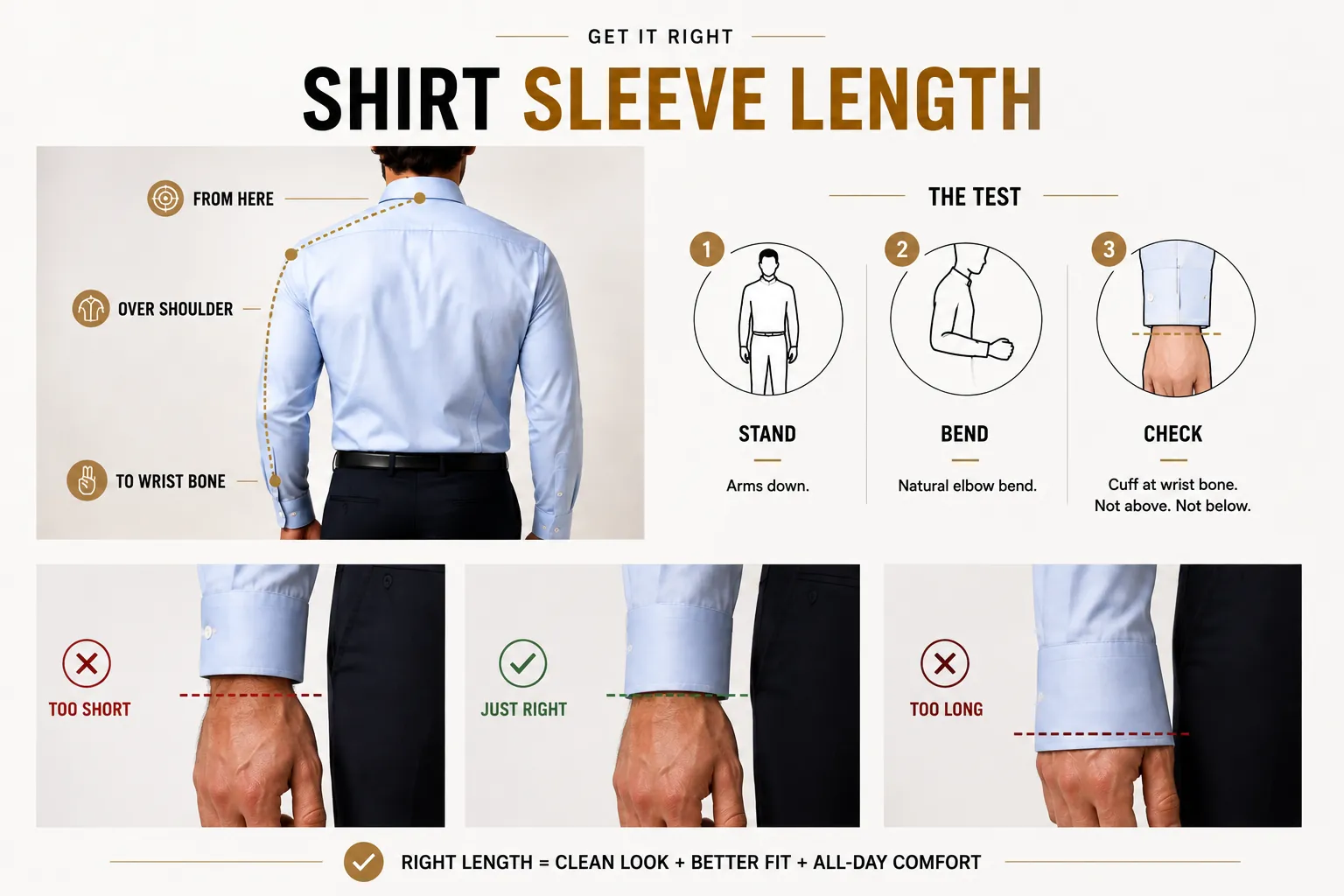
Sleeve length runs from the middle of the back of your neck, over your shoulder, down to your wrist bone. Most off-the-rack shirts only come in two lengths, something like 32/33 inches and 34/35, which is why sleeves are the hardest thing to get right buying off a shelf. Land between the two and you’re heading to a tailor either way, no way round it.
Here’s the test I use now. Drop your arms to your sides. Cuff should hit right at your wrist bone, not up your forearm, not down over your knuckles. Bend your elbow. If the sleeve rides up past your wrist a lot, too short. If it’s already bunching before you’ve even moved, too long.
Shoulder Seam and Armhole
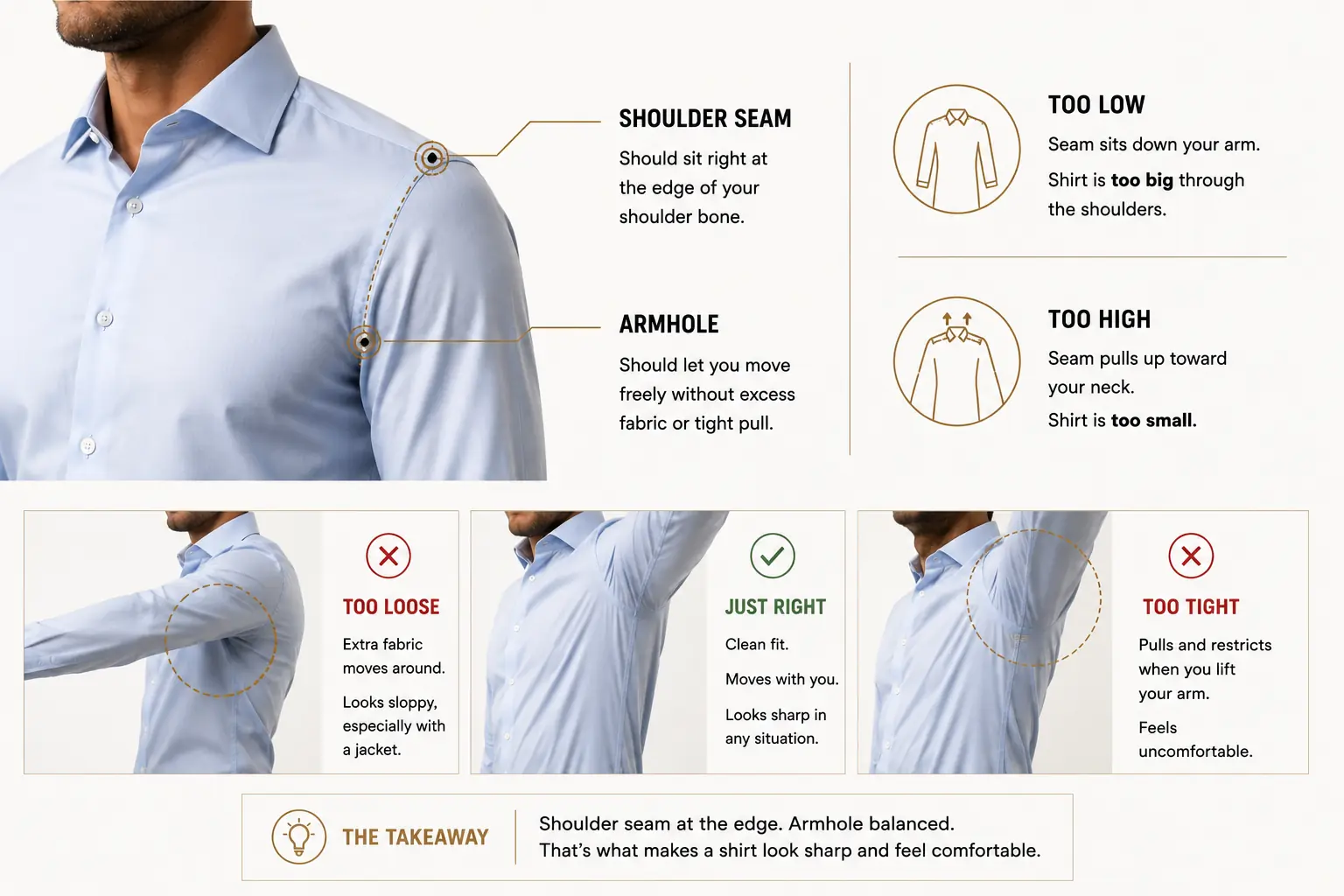
This is the one part of a shirt a tailor can’t really fix without pulling the whole sleeve apart, so I always check this before I buy, not after. The shoulder seam, where sleeve meets body, should sit right at the edge of your shoulder bone. Sits further down your arm, shirt’s too big through the shoulders. Pulls up toward your neck, too small.
The armhole matters more than I ever gave it credit for. Too loose and the sleeve moves on its own when you reach for something, which looks sloppy the second you’ve got a jacket on over it. Too tight and you feel it the moment you lift your arm above shoulder height and that happens more during a normal day than you’d think, reaching for a shelf, waving someone down, whatever it is.
Chest, Waist and the Yoke
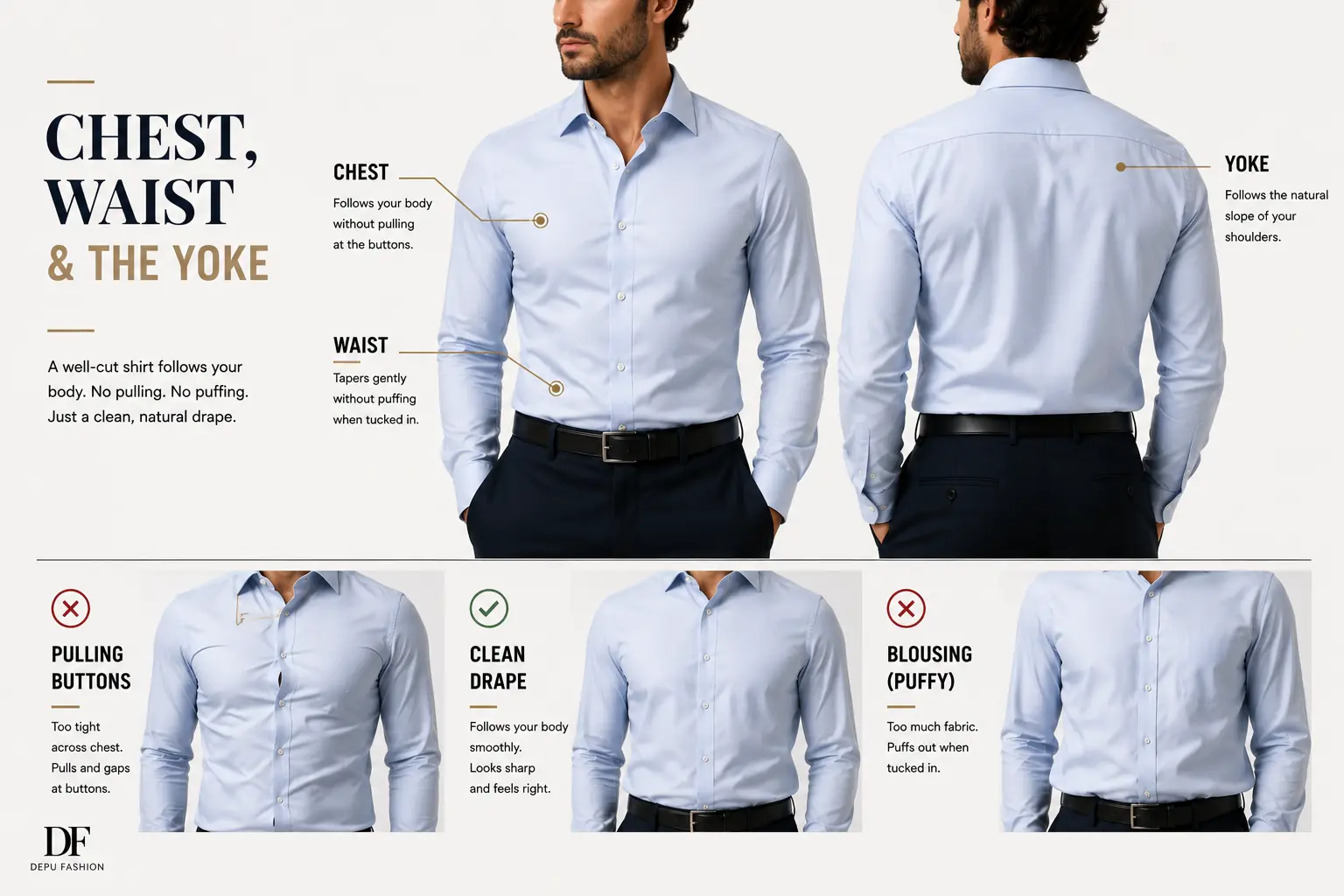
The yoke is the panel across your upper back, just below the collar. A well cut one follows the natural slope of your shoulders. A flat, boxy yoke is usually the first sign of a cheap, one-size-fits-all shirt, cut for an average build rather than yours.
Through the chest and waist, fabric should follow your body without pulling at the buttons when you sit and without puffing out once tucked in. That puffing is the blousy effect I mentioned earlier and it’s what makes a decent shirt look borrowed from someone twice your size.
Tapered Fit vs Slim Fit vs Regular Fit
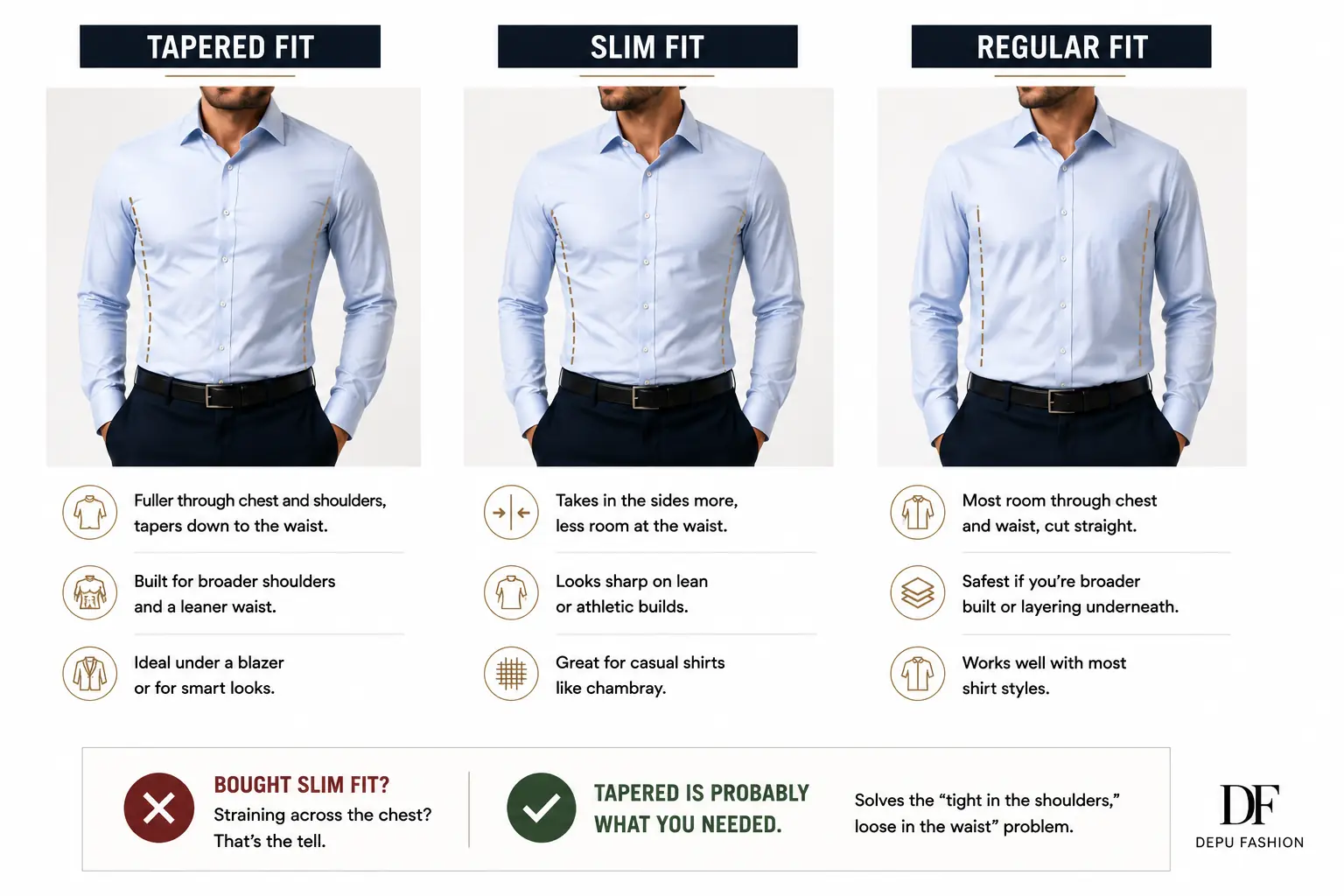
These three get thrown around like they mean the same thing. They don’t.
Regular fit gives the most room through chest and waist, cut fairly straight. Safest if you’re broader built or want to layer underneath, works well with most of the 13 shirt styles you’ll come across.
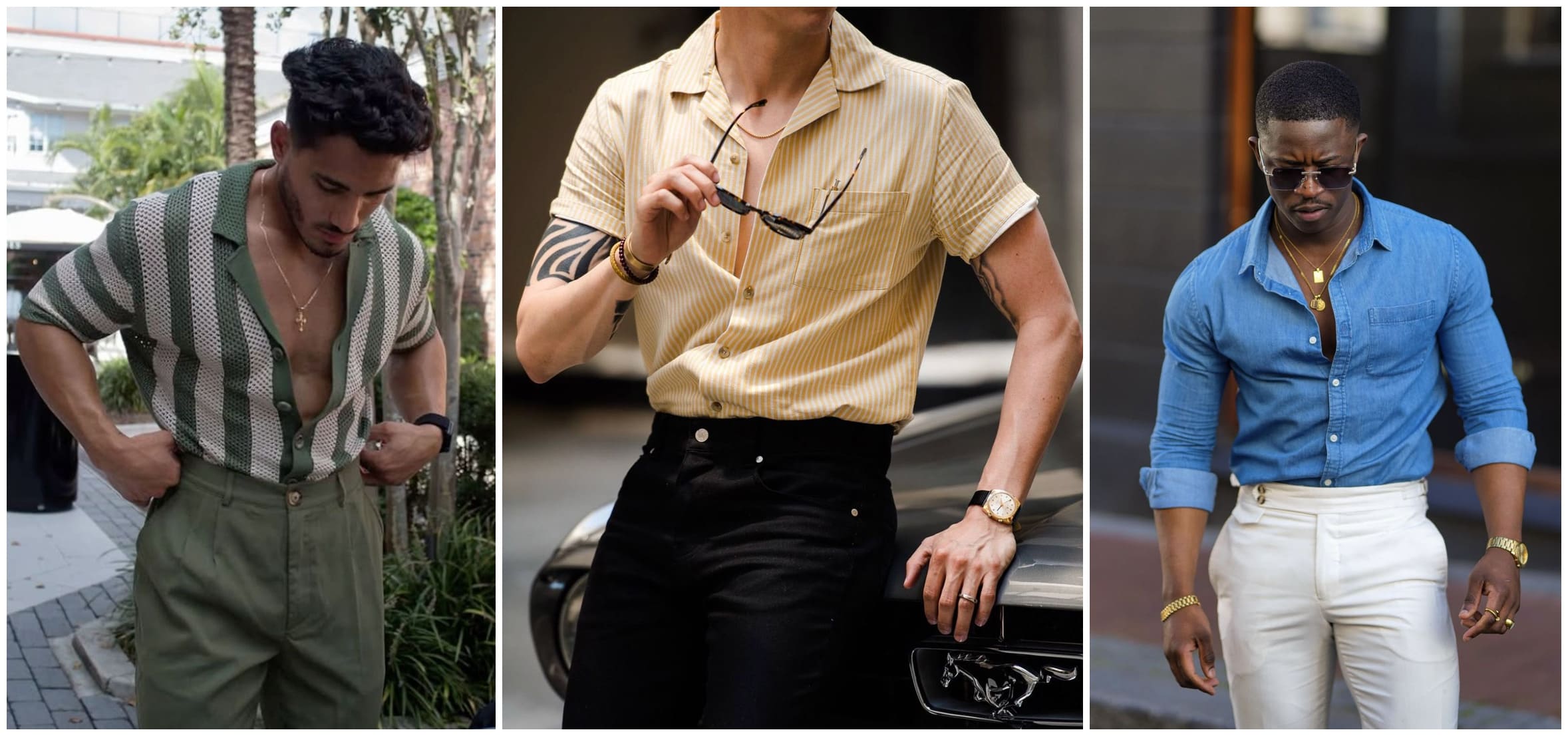
Slim fit takes in the sides harder, less room at the waist. Looks sharp on leaner builds, but I’ve seen it pull at the buttons on anyone with more chest or shoulder width. This is usually the fit I’d reach for on something like a chambray shirt, where a closer cut suits the casual, textured fabric.
Tapered fit starts fuller through the chest and shoulders, then narrows down to the waist, built for guys with broader shoulders and a leaner waist. It’s the newer term in menswear and honestly the one most likely to fix the “tight in the shoulders, loose in the waist” problem slim fit alone never quite solves. It’s also the fit I’d pick for a pink shirt or anything you’re planning to wear under a blazer, since the shape holds up better once you add a layer on top.
Bought slim fit to deal with waist room and ended up straining across the chest instead? That’s the tell. Tapered is probably what you needed all along.
Length: How Far Down It Should Go
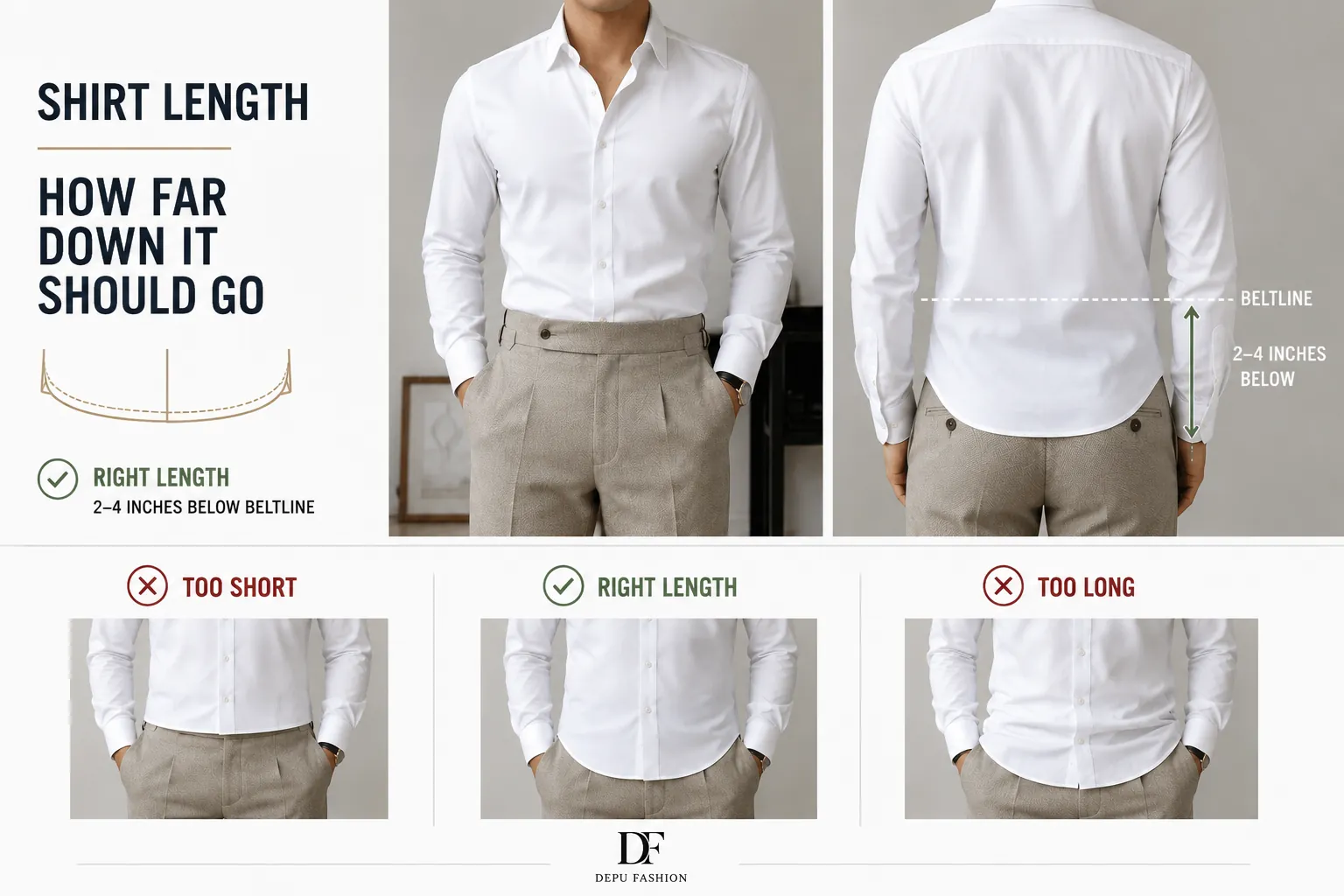
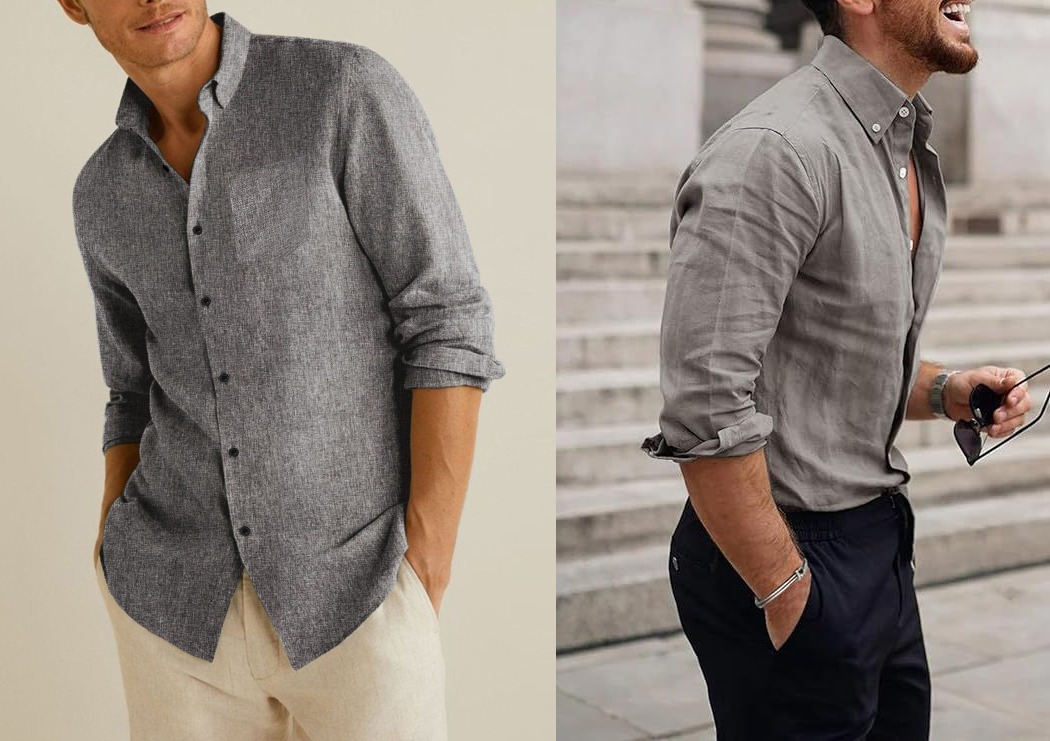
A dress shirt meant to be tucked in should sit several inches below your beltline, with a rounded bottom rather than a straight one. A straight hem usually means the shirt was built to be worn untucked, closer to a Cuban collar shirt than a true dress shirt and that’s a completely different way of styling it worth knowing the difference between.
Too short and it works its way out of your trousers by lunch, whether you’ve got it tucked into wool trousers or a pair of chinos. Too long and it bunches under your waistband, adding bulk nobody needs, especially with something roomier like wide leg trousers.
Mistakes I Made So You Don’t Have To
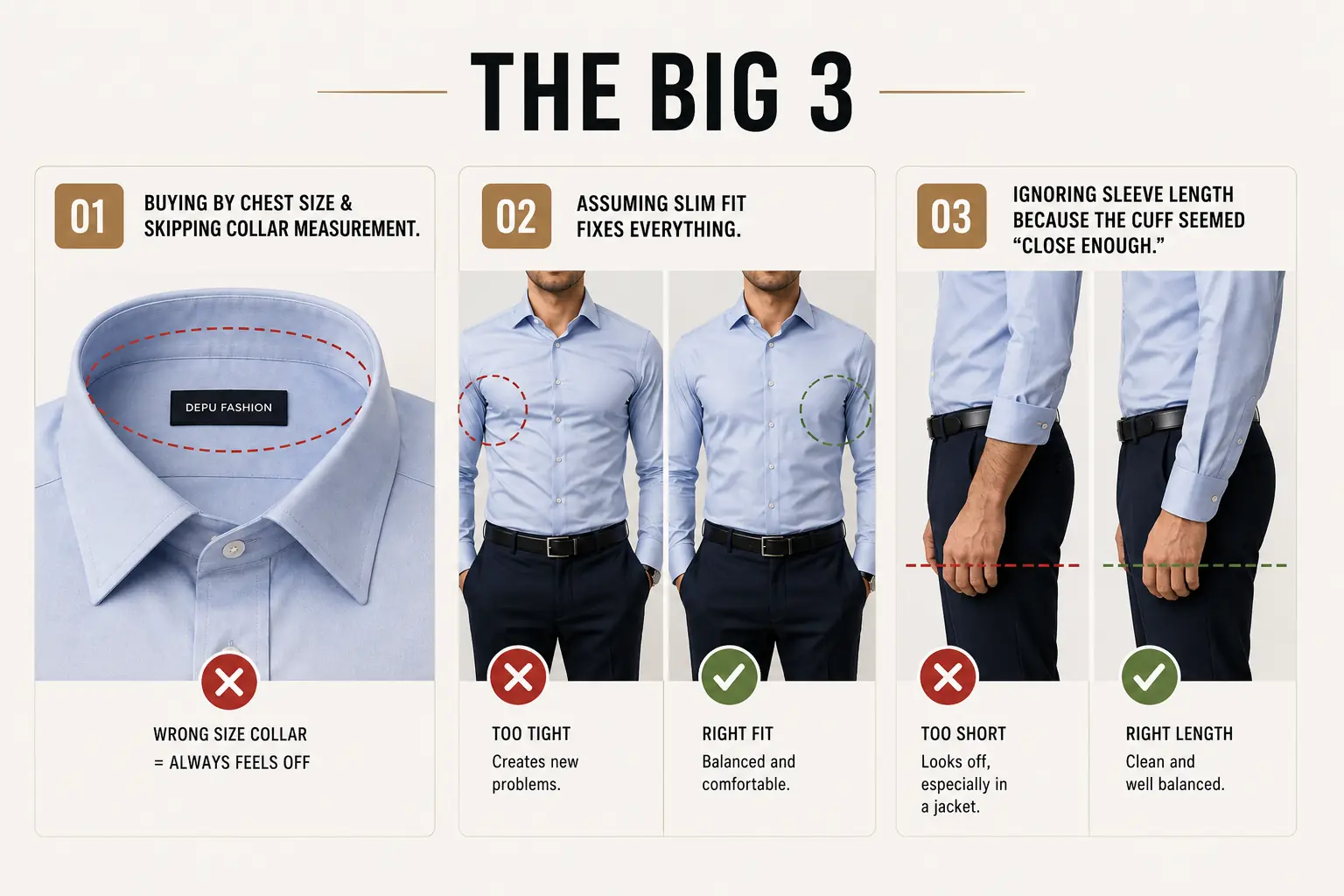
Buying by chest size and skipping the collar measurement completely, that was me for years and it’s the one that causes most of the “something feels off but I can’t say what” moments.
Assuming slim fit fixes everything. It solves waist room, not shoulder width and forcing a slim cut onto a broader frame just moves the problem from your waist to your chest.
Ignoring sleeve length because the cuff seemed “close enough.” An inch off changes how the whole shirt reads, especially under a jacket, where an inch of extra cuff or bare wrist is the first thing anyone notices.
Frequently Asked Questions
How should a dress shirt fit around the collar?
Snug enough that two fingers slide in comfortably when the top button’s closed. Not loose enough for three, not so tight you can barely fit one.
What’s the difference between slim fit and tapered fit shirts?
Slim fit is narrower everywhere, chest and waist both. Tapered keeps more room through the chest and shoulders, then narrows toward the waist, built for broader shoulders rather than a lean frame all over.
How do I know if my dress shirt sleeves are too long?
Drop your arms to your sides. If the cuff goes past your wrist bone toward your knuckles, they’re too long. Should end right at the wrist bone.
Can a tailor fix a dress shirt that’s too big in the shoulders?
Not really, not without taking the sleeve apart completely, which usually costs more than it’s worth. Shoulder fit is one of the few things worth getting right when you buy, not after.
What is the blousy effect on a dress shirt?
It’s when extra fabric through the chest and waist puffs out once tucked in, instead of following your shape. It’s the biggest sign a shirt’s too loose overall.
Where This Fits Into Your Wardrobe
Getting the fit right on a dress shirt changes how every colour and combo looks on you, whether it’s something as simple as a white shirt or a grey shirt worn with white pants. Building a wardrobe from scratch? Our capsule wardrobe guide covers where a well-fitted shirt sits among everything else worth owning. If you’ve got darker skin, our guide to shirt colours for dark skin is worth reading alongside this one, since fit and colour decisions usually go hand in hand.
A well fitted shirt in plain white or light blue will always beat an expensive shirt that’s the wrong size. Get the collar, shoulders and sleeves right first. Everything else, colour, fabric, pattern, gets a lot easier to decide once the fit’s already sorted.

Deepak Bhandari has spent 10 years in personal styling, helping men dress with more confidence and less guesswork. He’s the founder of Deepu Fashion, where he writes about style, grooming and everyday outfit ideas that actually work in real life. Follow him on Instagram for daily style tips and inspiration.