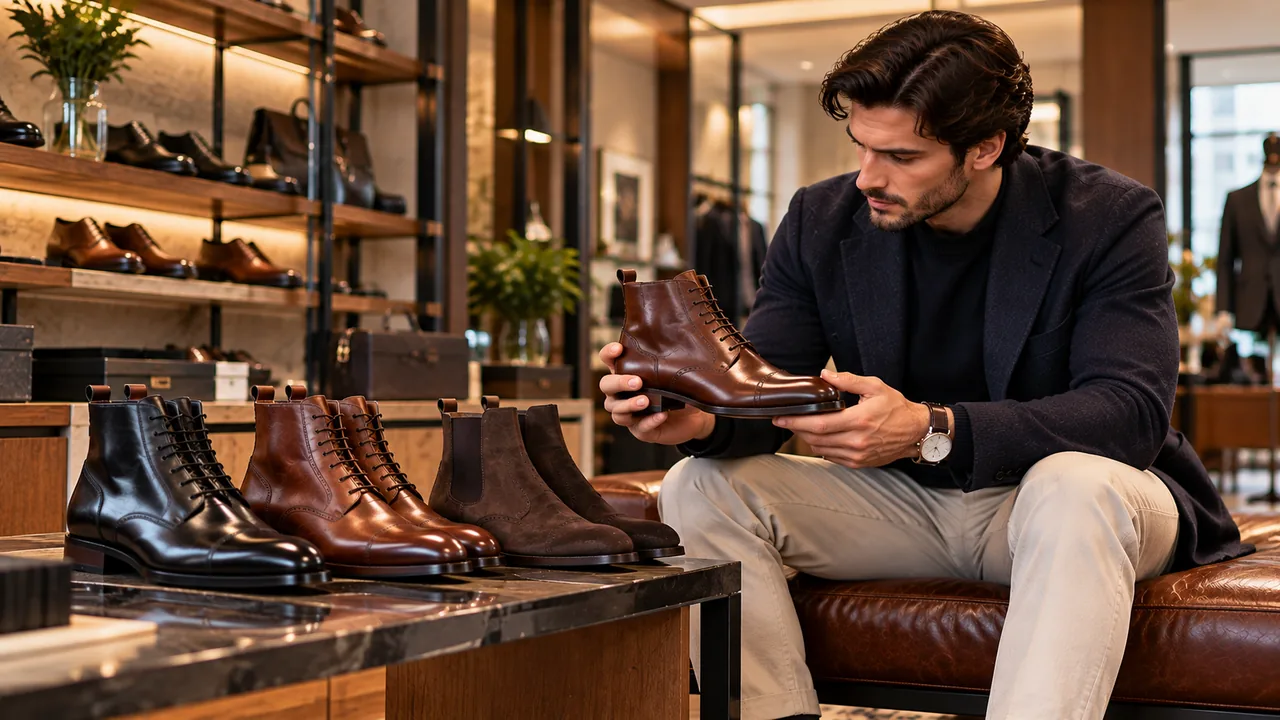
Dress boots have been around for a long time, but most men still don’t know what separates a dress boot from a regular boot. Is it the leather? The sole? The shape? Or just the fact that it covers the ankle?
Dress boots for men come down to a few things that are easy to overlook: the sole, the shaft height, the leather and how the boot fits with the clothes you already own. Get those right and choosing the brand becomes much easier.
What Makes a Boot a Dress Boot
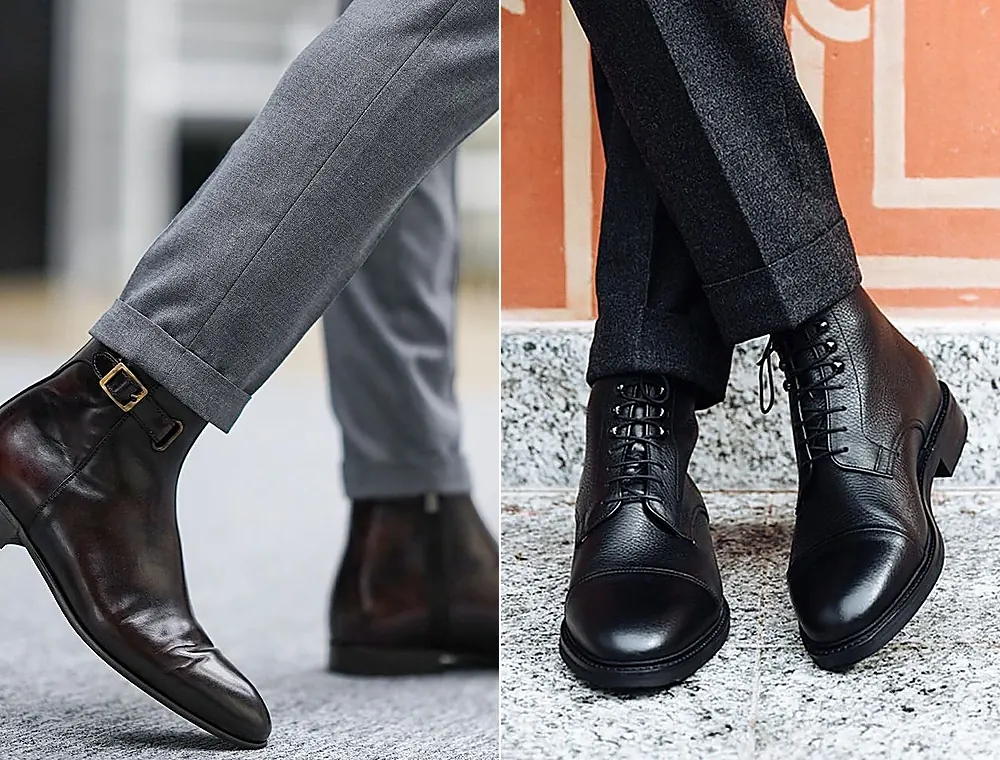
There is no single definition of a dress boot, which is why you will find different answers depending on who you ask. The closest thing to a standard is smooth leather, a shape similar to a dress shoe and a low profile sole rather than a thick or heavily treaded one.
Chelsea boots sit in an interesting spot here. They started as a casual style, but they can look much smarter when made from smooth leather with a slim sole. A pair like this can work as a dress boot in many situations.
Why a Boot Instead of a Shoe
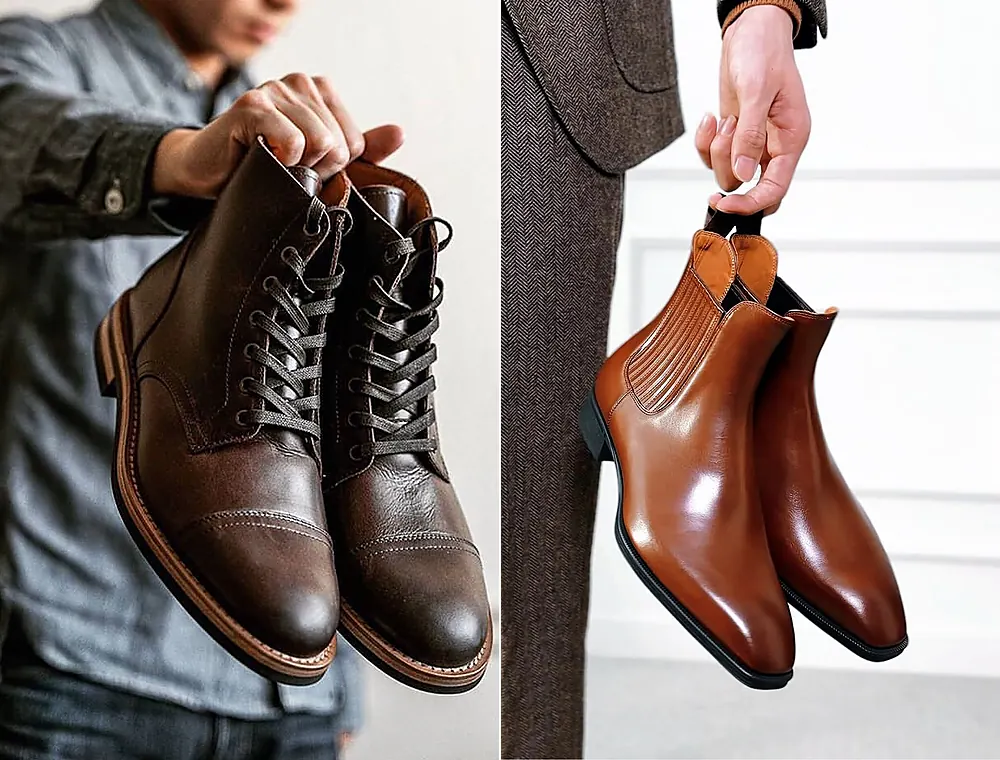
Weather is the obvious answer and it is a real one. A boot covers more of the foot and ankle, which helps in rain, cold or slush that would make a low dress shoe less practical.
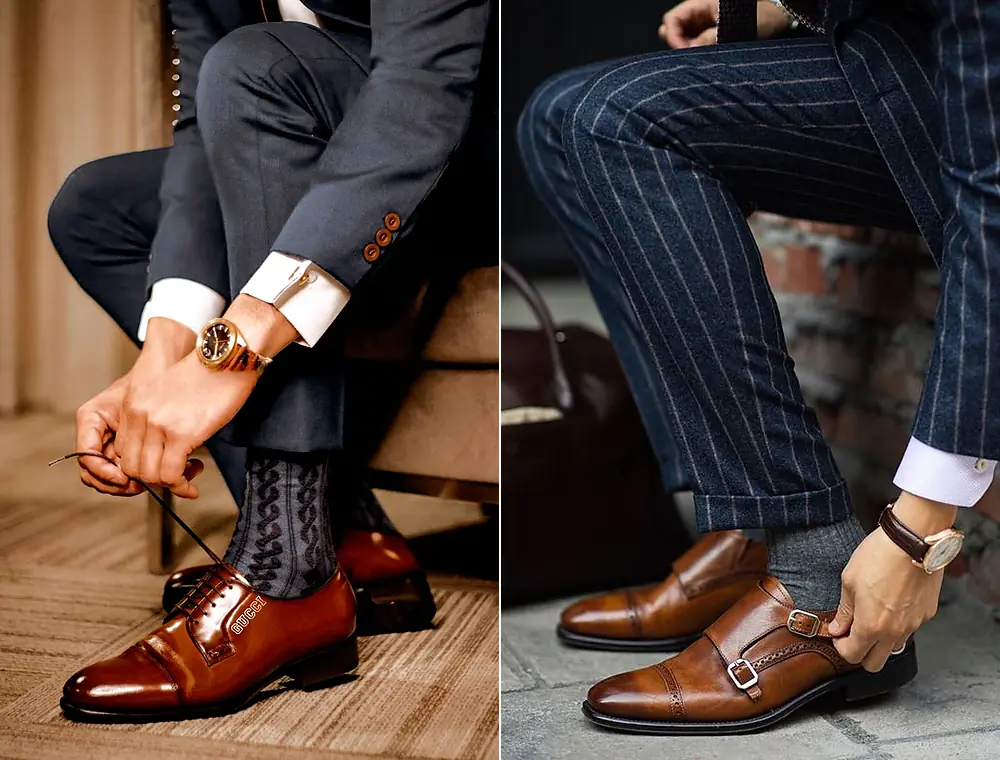
The less obvious reason is how the boot looks with trousers. When you sit down in a suit, the trouser leg rides up and shows more of your sock. A dress boot covers more of the ankle, so you see less of that gap.
Why the Sole Matters
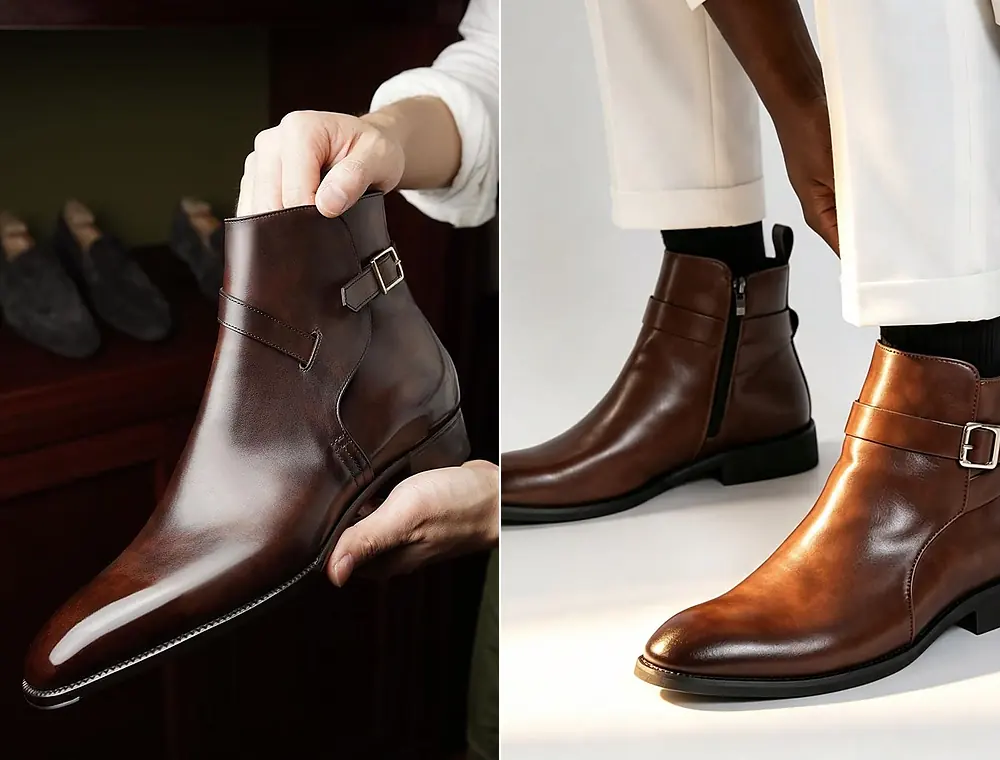
A classic dress boot needs a low profile sole, ideally leather or a thin rubber sole, because a thick treaded sole can make tailored trousers look heavier. Put a commando style sole under dress pants and the whole leg can look bottom heavy.
The easiest way to check this before buying is to compare the boot with a proper dress shoe. If the sole is much thicker or more aggressive, it is better suited to casual clothes than trouser pants.
The Core Styles to Know
There are a few main types of men’s dress boots. Each one has a different look and works with different outfits.
Chelsea Boots
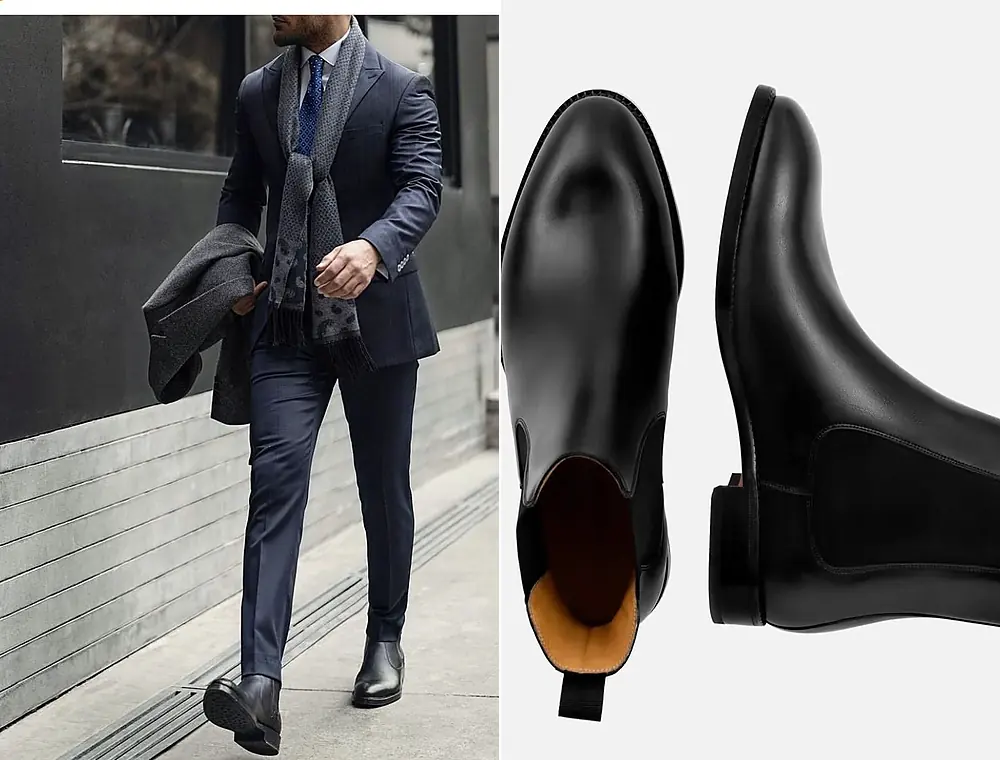
Chelsea boots have no laces and use elastic panels on the sides. They have a clean shape and you can wear with both casual and smarter clothes. In smooth leather with a slim sole, they can dress up with suit trousers as well as with jeans.
Chukka Boots
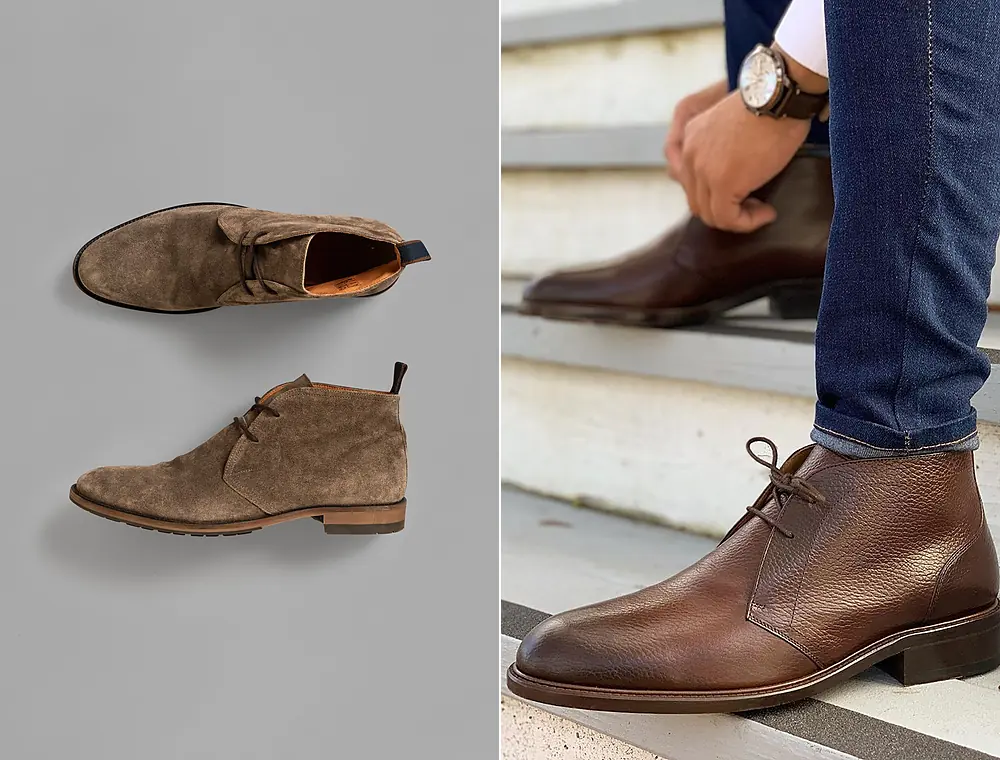
Chukka boots usually have two or three eyelets and come up to the ankle. They are generally more casual than the other styles here. They looks perfect especially with chinos, wool trousers and dark denim jeans.
Derby and Balmoral Boots
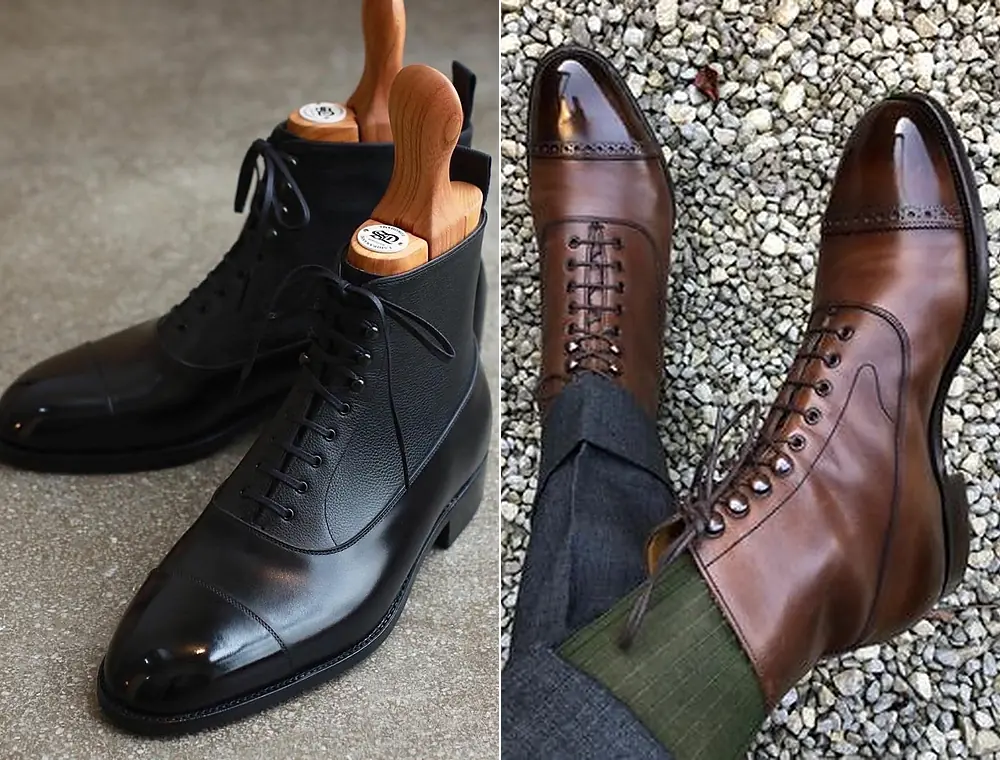
These are similar to dress shoes but have a taller shaft. Derby boots use open lacing, which gives your foot a little more room. Balmoral boots use closed lacing and have a cleaner front, similar to an Oxford. This makes them a more formal choice.
Brogue Boots
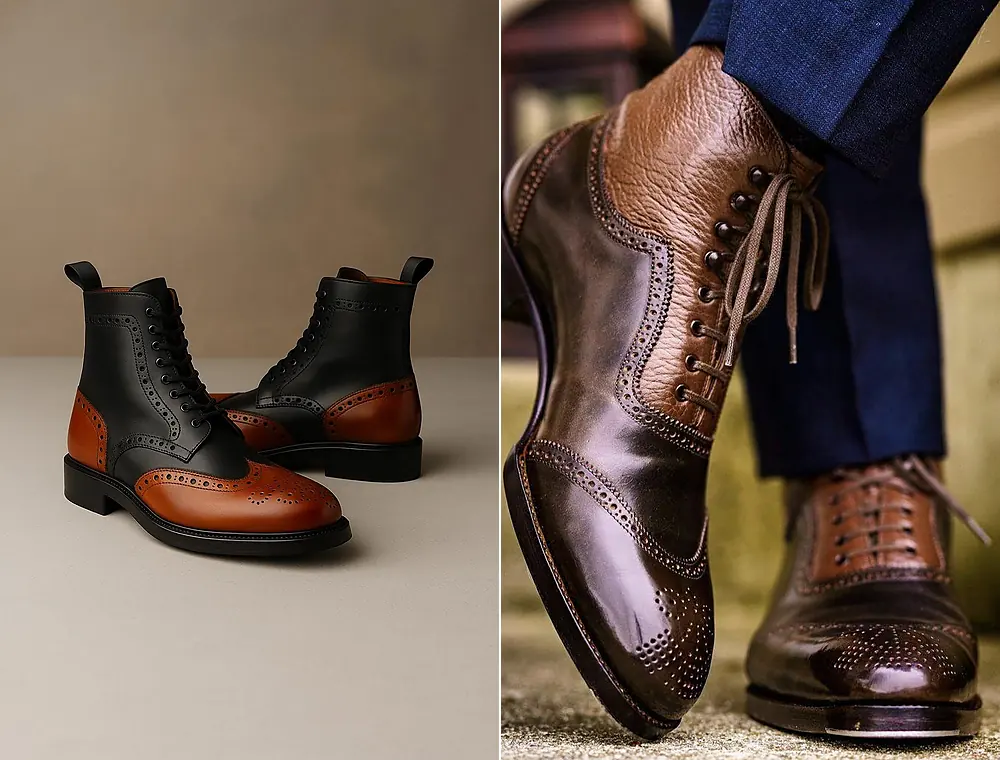
Brogue boots have decorative holes punched into the leather. You can find brogue detailing on different boot styles, including Chelsea, Derby and Balmoral boots. The extra detail gives the boot a different look, but it does not automatically make it casual.
How Should Dress Boots Fit?
A dress boot should feel secure around the heel and ankle without squeezing your foot. Your toes should have enough room to move, but your foot should not slide around inside the boot.
Try the boots with the socks you normally wear. Walk around for a few minutes and check the heel, instep and toes before deciding on the size.
Don’t size up just because it is a boot. The right size boots should feel secure without putting pressure on your toes or making your heel move around too much.
Cap Toe or PlainToe?
A cap toe boot has a stitched piece of leather across the front of the toe. It adds a little more detail and usually looks more formal.
A plain toe boot has a cleaner front with no extra piece across the toe. It looks simpler and can work with many outfits.
If you plan to wear the boots mainly with suits or formal trousers, a cap toe can make sense. For jeans and everyday trousers, a plain toe is an easy option.
Matching the Boot to the Outfit
For a office outfit, dark leather Derby can work with tailored fit trousers, a fine gauge sweater and a blazer. Keep the boots simple so they do not stand out too much from the rest of the outfit.
For something like less formal, a suede Chelsea boot in tan or brown pairs with wool trousers a tucked shirt and a softer blazer. Types of jackets for men has more detail on different jacket styles.
For a weekend outfit, chukka boots go well with chinos or a plain sweater. They are one of the easiest styles here to wear with everyday clothes.
Jeans deserve their own mention here, since they are one of the most common ways to wear boots. Men’s boots with jeans breaks that combination down further, including which boot shapes work best with different jean fits.
How to Care Your Dress Boots
A good pair of leather dress boots can last for years with basic care. Rotate between at least two pairs so the leather has time to dry out between wears. A cedar shoe tree helps the boots keep their shape while they are not on your feet.
Condition the leather when it starts to look dry, following the care instructions for that particular leather. Suede needs a different approach. Use a suede brush to remove dirt and a water repellent spray before the first wear, since suede can pick up stains more easily than smooth leather.
Start With One Good Pair
One well made pair that suits how you dress most days is more useful than several boots you bought just because they looked good. Get the sole and the leather right and putting the rest of the outfit together becomes much easier.
If the rest of the outfit still needs sorting, dress shirt fit for men is a solid next stop, since a boot only finishes an outfit that already fits well everywhere else.

Deepak Bhandari has spent 10 years in personal styling, helping men dress with more confidence and less guesswork. He’s the founder of Deepu Fashion, where he writes about style, grooming and everyday outfit ideas that actually work in real life. Follow him on Instagram for daily style tips and inspiration.