Most people dread the cold arriving. I look forward to it, mostly because of what’s hanging in my closet waiting for the temperature to finally justify it. I don’t own one cardigan, I own several and each has a different job depending on how cold it gets.
A cardigan sweater is one of the few pieces of clothing that gets more useful the more layers your life throws at it. It works over a t-shirt, under a jacket, in place of a jacket or dressed up enough to sit next to a suit. Few garments cover that much ground.
A Sweater Named After A Losing General
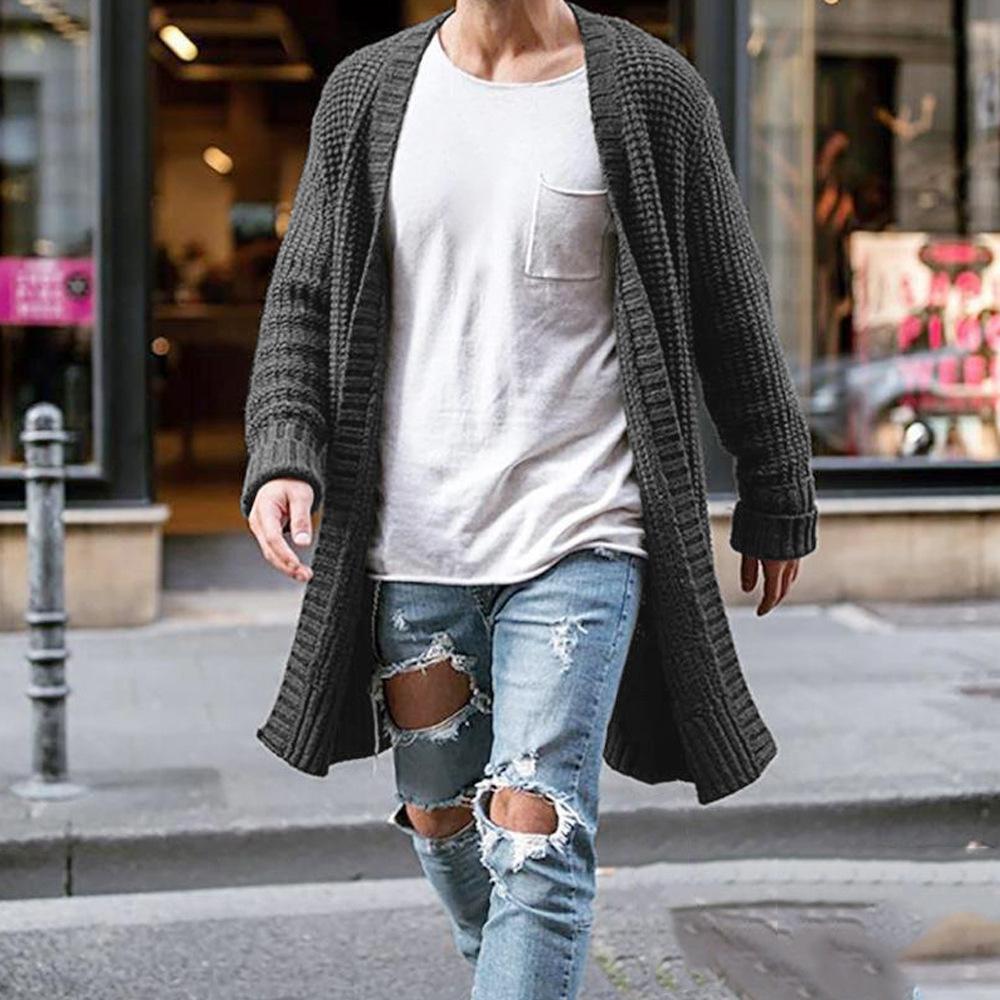
The cardigan takes its name from James Brudenell, the 7th Earl of Cardigan, a British cavalry officer during the Crimean War. In 1854 he led a doomed charge across open ground straight into Russian cannon fire, an event later immortalized in the poem The Charge of the Light Brigade. Casualties were heavy. Legend has it the Earl returned to his private yacht for dinner that same evening.
The knitted wool coat his soldiers wore in that campaign became the template for the garment that later carried his name, though the original had little in common with what hangs in stores today. It was often fur-lined and trimmed, built purely to survive brutal cold, not to look good doing it.
By the 1920s Coco Chanel had pulled the cardigan into women’s wear and college teams in America were stitching letters onto them for campus wear. Somewhere in that stretch of history, it also picked up a reputation as something soft, unisex, maybe even a little old-fashioned. None of that squares with a garment built for soldiers standing in Crimean winter.
What Separates A Cardigan From A Sweater
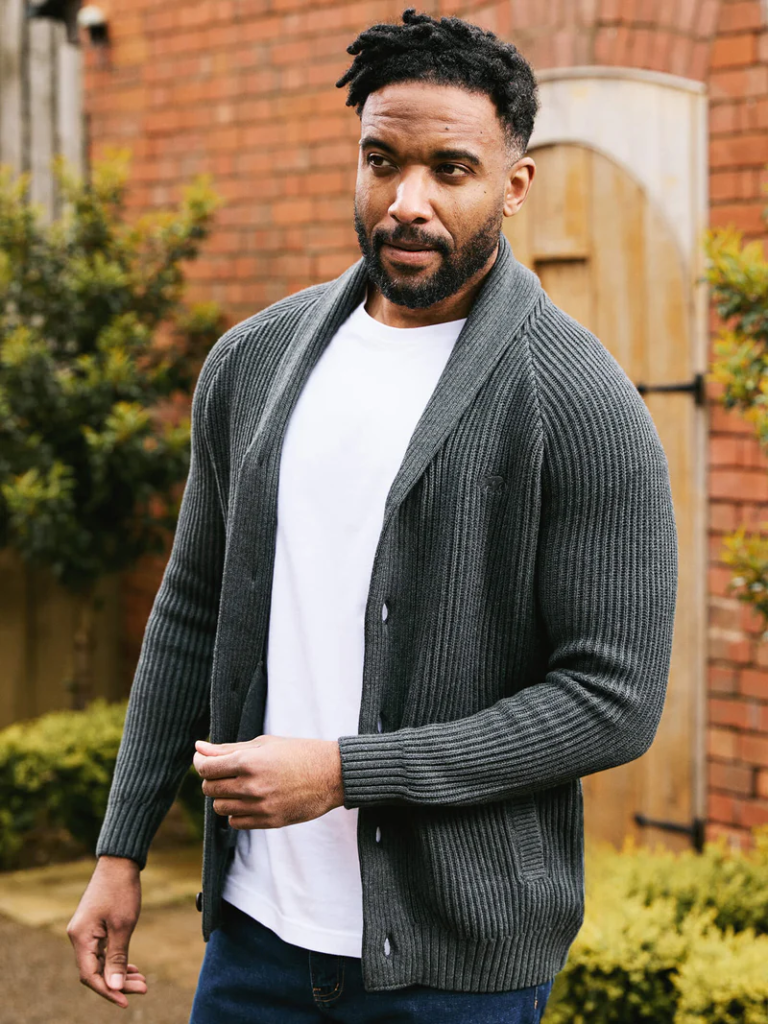
A pullover sweater goes over your head and commits you to one look. A casual cardigan opens at the front, usually with buttons, sometimes a zipper, which is the entire reason it can do so much more.
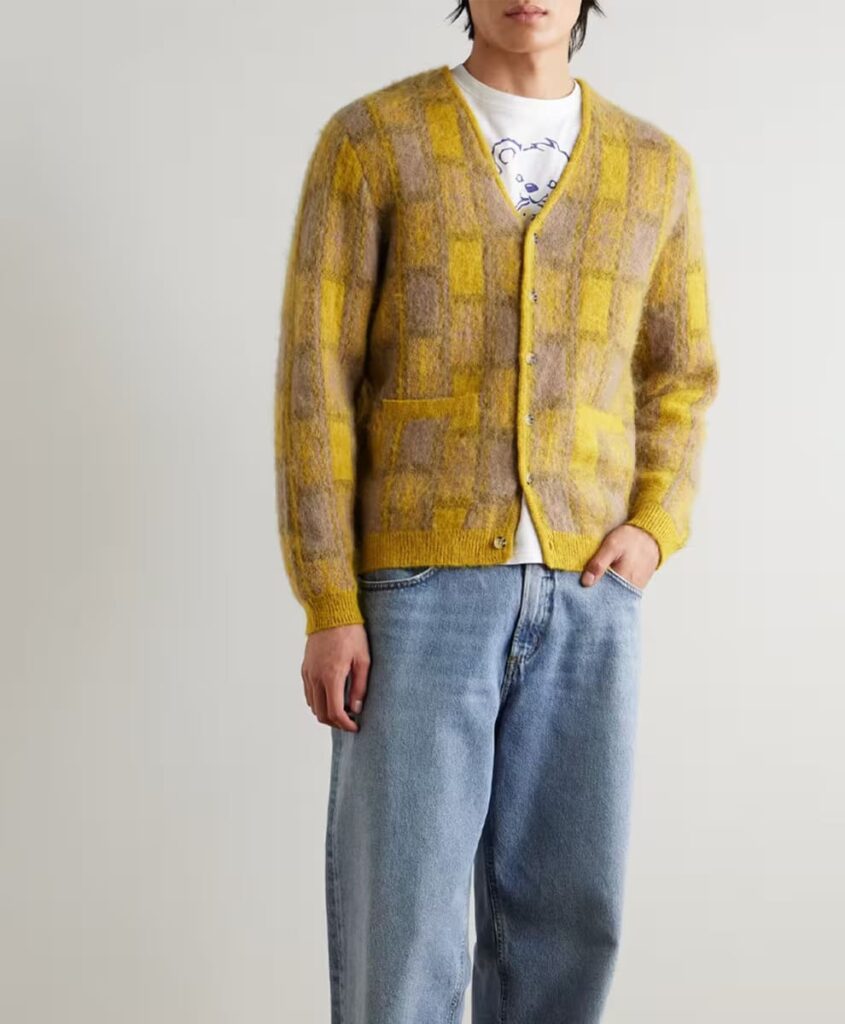
Most cardigans share a handful of traits: a V-neck, no lapels, no chest pocket, full sleeves without buttoned cuffs and often two side pockets that are functional rather than decorative. Knits range from a fine, lightweight gauge good for layering indoors, to a thick cable knit built to replace a fleece jacket outright.
Six Ways To Wear One, From Laziest To Sharpest
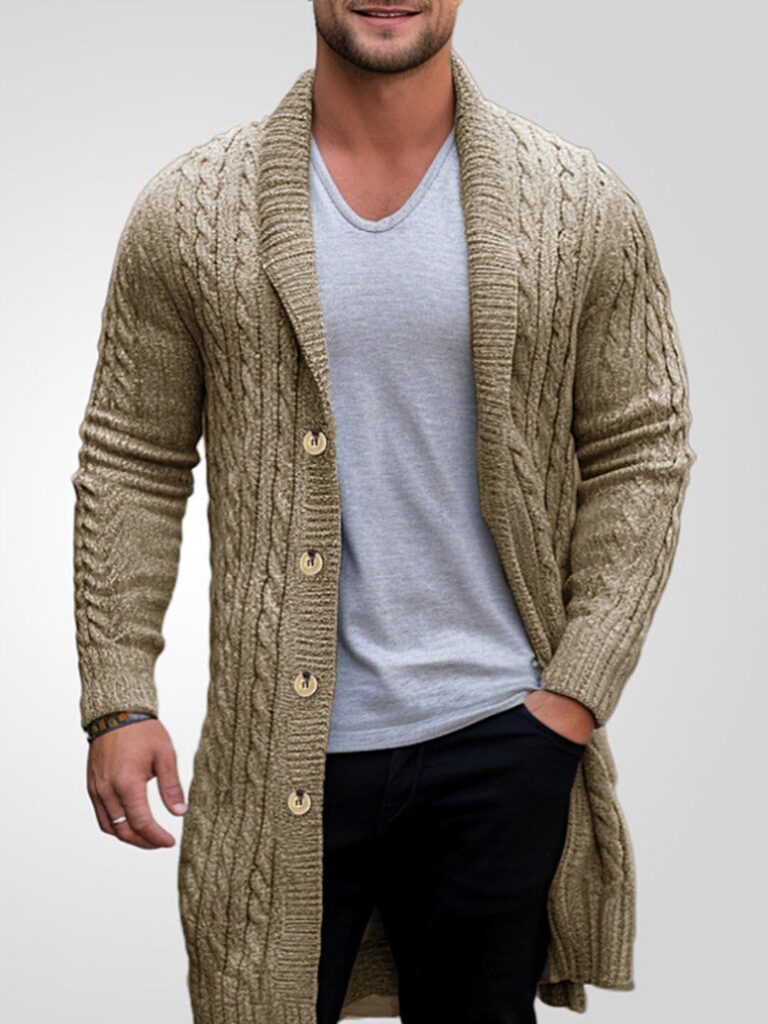
The same cardigan can move through nearly every level of dress code depending on what surrounds it. Here’s the progression, roughly in order of formality.
- Over a plain t-shirt with jeans. The lowest-effort version and still a solid one. Wear it open for a relaxed drape or buttoned up for something a little more deliberate.
- Over a henley or crewneck. Slightly more textured than a t-shirt without adding any real formality. This combination alone has kept more than one Hollywood stylist employed.
- With an oxford or collared shirt. Swap the knit shirt for something with a collar and the whole outfit reads more put together, without trying much harder. Works with chino pants, jeans or tailored trousers underneath.
- With a dress shirt and trousers as a blazer substitute. This is where the cardigan starts doing real work. A snug-fitting cardigan over a dress shirt, paired with sharply tailored trousers, functions as legitimate business casual. Choose a lightweight merino for the shoulder seasons and save the chunkier knits for the deep cold.
- Underneath a blazer or sport coat. Worn as a mid layer, a thin cardigan adds warmth without the bulk of a heavier sweater and a little collar and cuff peeking out from under the jacket looks intentional rather than accidental.
- In place of a waistcoat, under a full suit. A lightweight V-neck cardigan can stand in for a vest under a suit jacket and it still looks sharp with the jacket off. It’s a small swap that changes very little on the surface and quite a lot in how the outfit feels to wear.
Getting The Fit Right
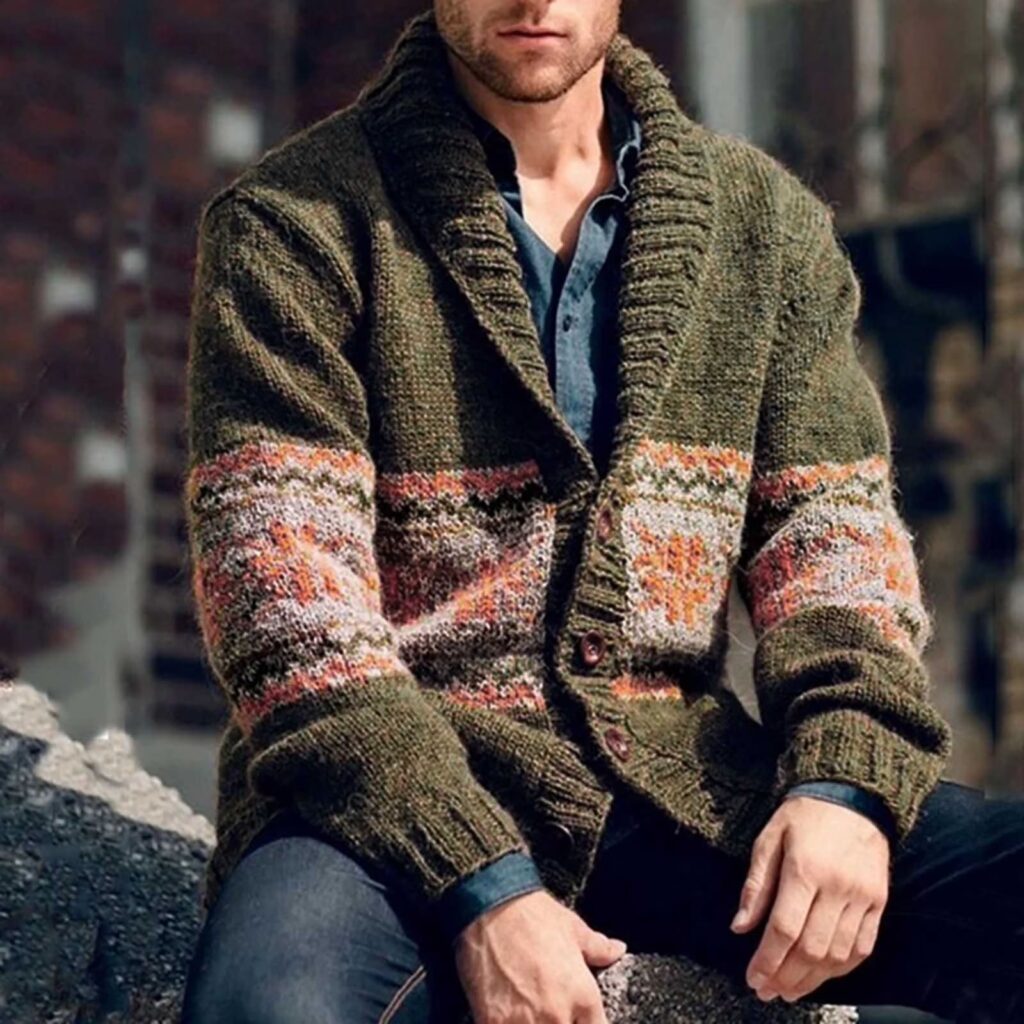
Fit matters here more than most people expect from something knitted. The shoulder seams should sit right at the edge of your shoulder, not partway down your arm. The hem needs to reach past your waistband when buttoned, otherwise the whole thing looks borrowed from someone smaller. A slightly loose drape at the chest is fine and even flattering, but sagging the moment you bend forward is a sign it’s the wrong size.
If you’re on the shorter side or have a shorter torso than average, standard sizing on most cardigans will run long in the body and sleeves. Look for brands that offer shorter proportions rather than sizing down and ending up tight through the chest.
Judging Quality Before You Buy
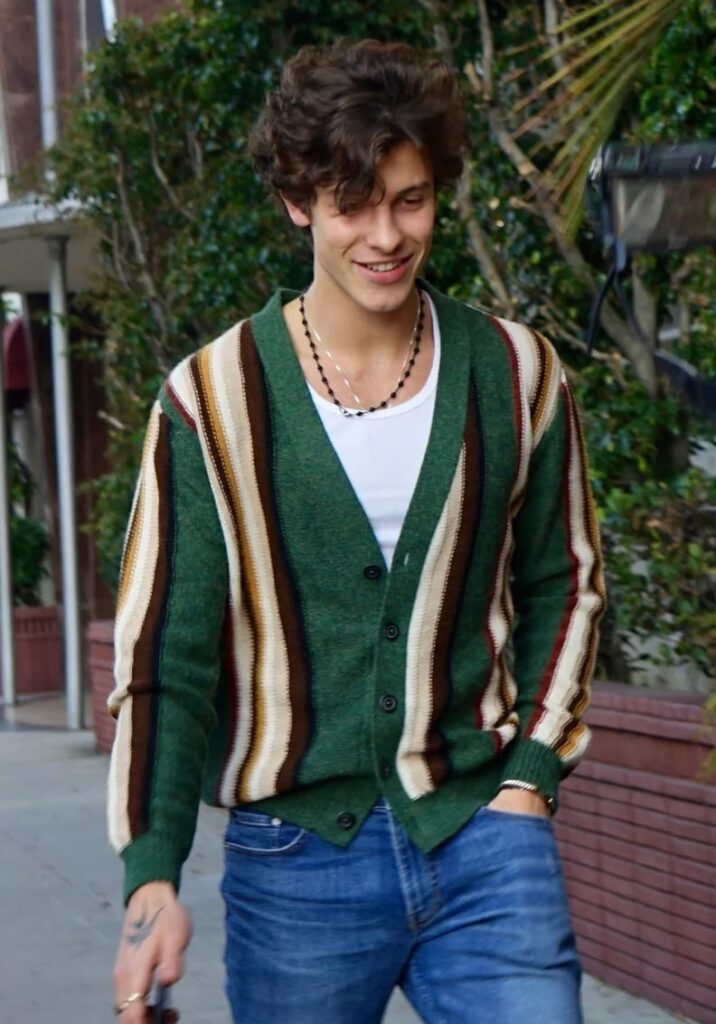
Run your hand across the knit. Anything scratchy enough to need a shirt underneath at all times loses half its versatility. Check the seams for looseness and look closely at the surface for early pilling, the small balls of fiber that form on cheaper wool after a handful of wears.
Buttons matter more than people assume. Horn, wood or a simple matte finish read as intentional. Shiny plastic buttons are usually the fastest way to spot a cardigan that was made to be cheap rather than to last.
Yarn thickness is described in ply, how many threads are spun together. Two-ply is common in cotton and holds up fine for lighter knits. For wool or cashmere, three-ply and up generally means a warmer, more durable casual outfit, though a high ply count alone doesn’t guarantee quality if the construction around it is poor.
Matching The Knit To The Weather
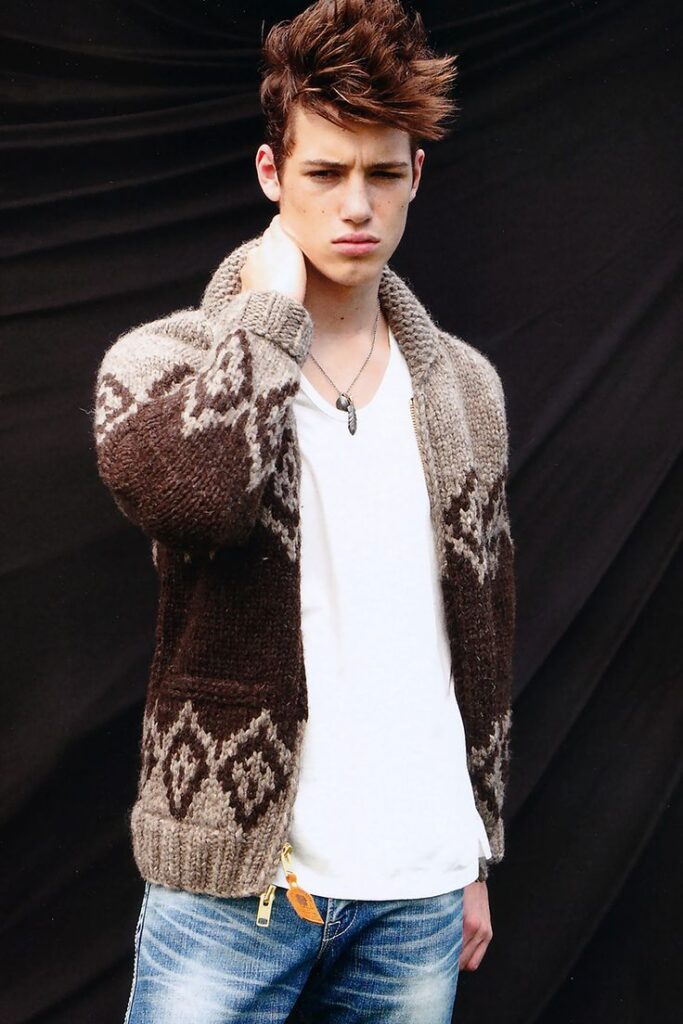
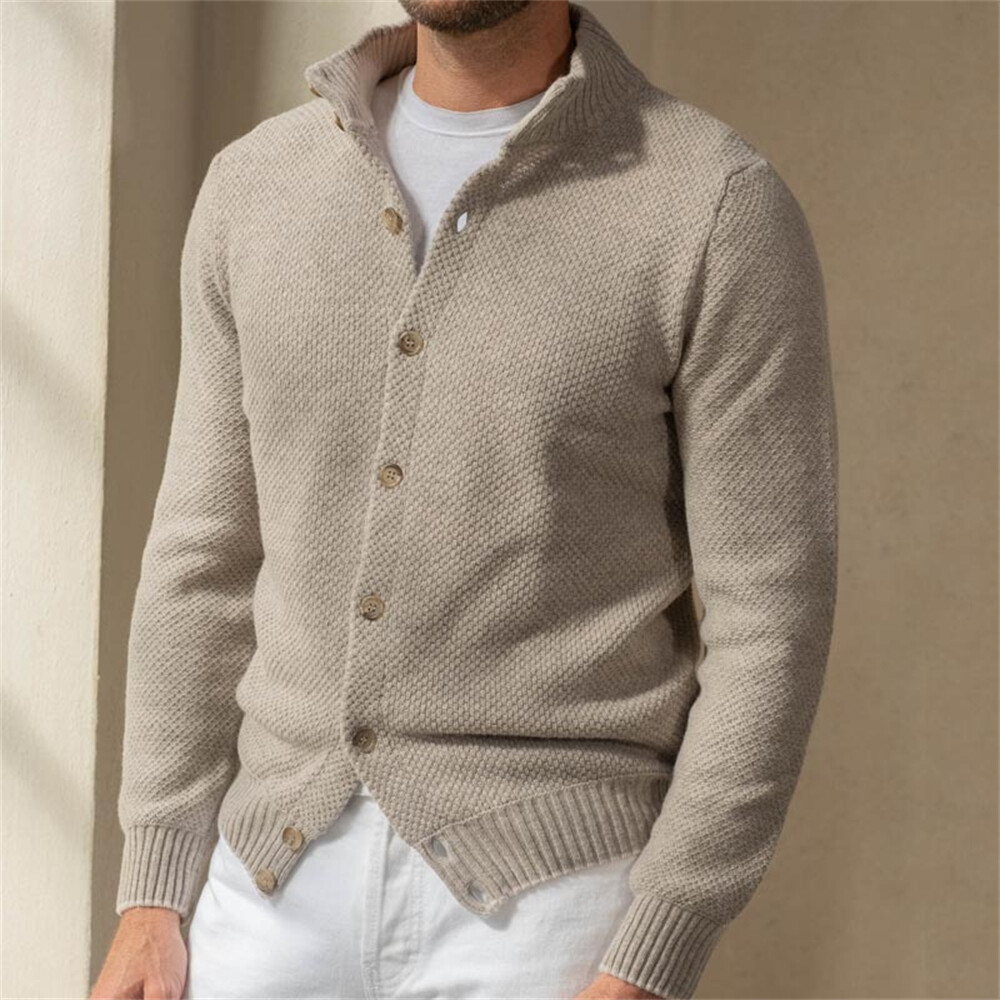
A thin, fine-gauge knit in merino or a lightweight cotton blend is built for the days that are just barely cool enough to need a layer. It works indoors under a jacket without adding bulk and it’s the one I reach for the moment the weather turns even slightly.
A medium weight wool cardigan handles the bulk of an ordinary winter. It stands on its own over a shirt without a jacket and it’s usually the one getting the most wear once the season settles in.
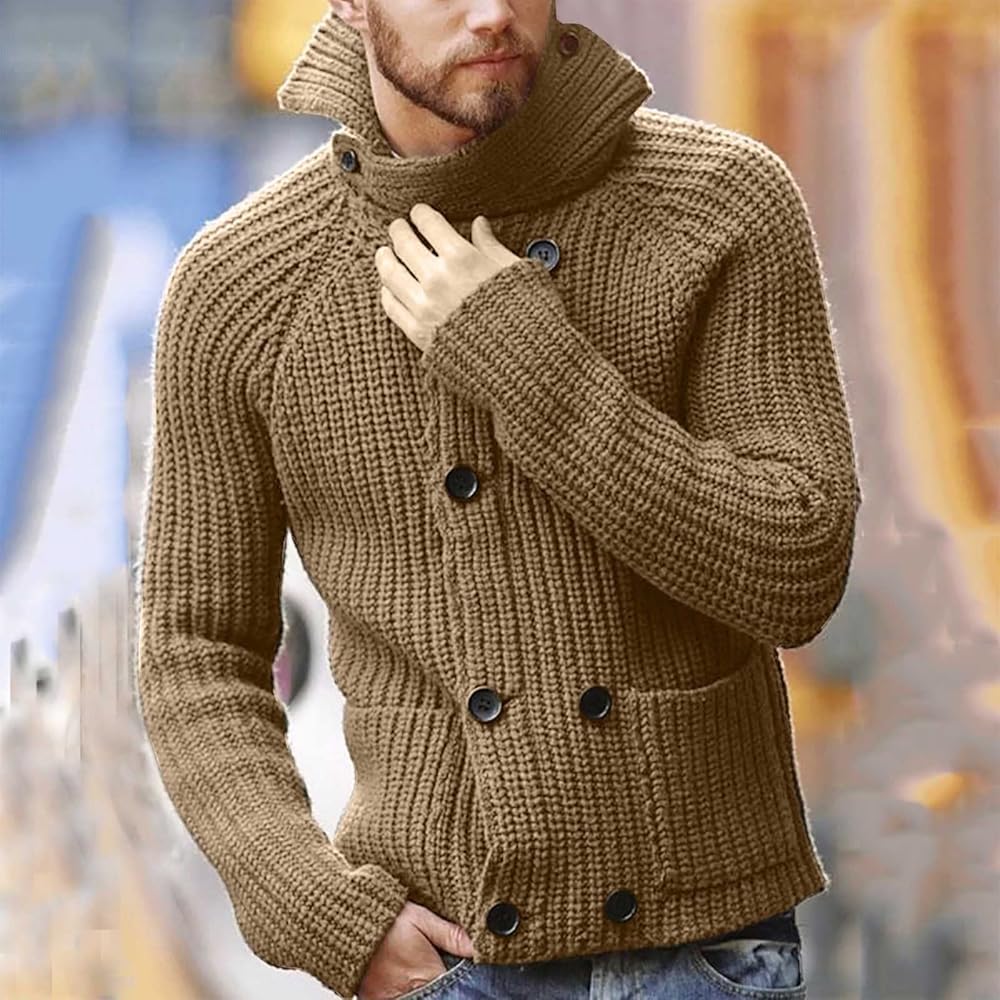
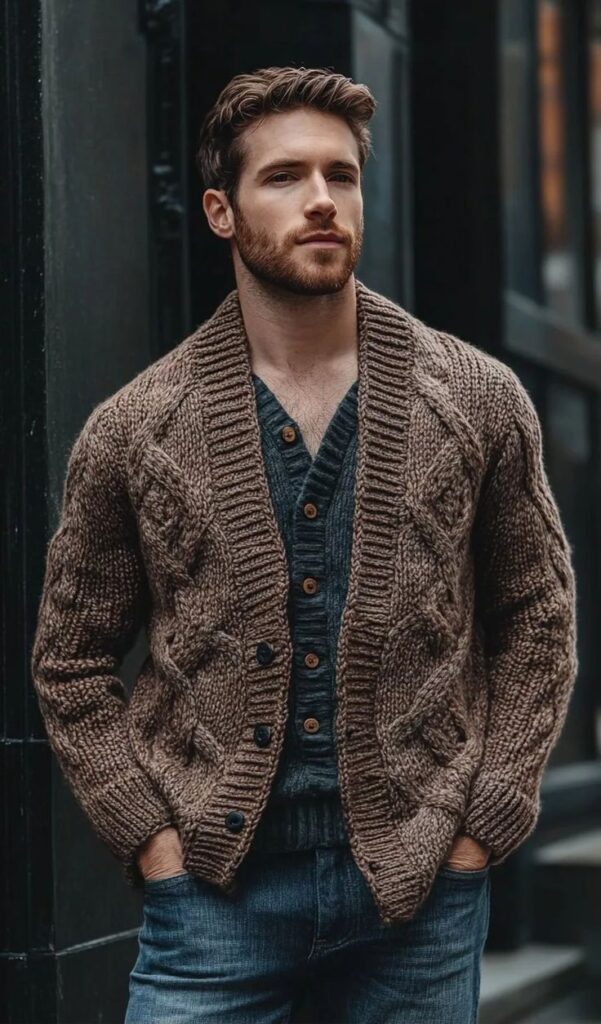
A heavy cable knit, sometimes with a shawl collar, stops behaving like a sweater and starts behaving like outerwear. It’s warm enough to skip a coat most days and a shawl collar in particular adds real visual weight through the chest and shoulders, which is exactly why people wrongly assume it looks dated. Worn with confidence, it does the opposite.
Caring For One So It Lasts
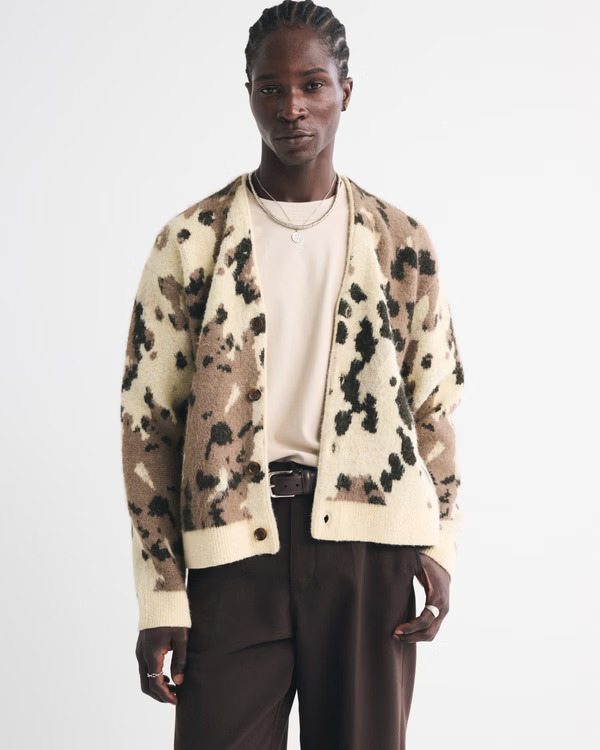
Hand wash in cold water where possible, since heat and agitation are what cause wool to shrink and lose shape. Lay it flat to dry rather than hanging it, since a wet, heavy knit stretches out at the shoulders fast on a hanger. For storage, fold rather than hang for the same reason and keep it away from direct sunlight if it’s a color that fades.
FAQs
Is a cardigan business casual?
Yes. A snug-fitting cardigan over a dress white shirt and tailored fit linen trousers is one of the more reliable ways to hit business casual without wearing a blazer.
What is the difference between a cardigan and a sweater?
A sweater pulls over the head in one piece. A cardigan opens at the front with buttons or a zipper, which lets it be worn open, closed or layered in ways a pullover can’t.
Can a cardigan replace a blazer?
In casual or office outfit, yes. A thicker knit cardigan can stand in for a blazer, though it’s not a fit for strict formal environments.
What should you wear under a cardigan?
A plain t-shirt for something casual, a collared or dress shirt for anything smarter. Thick layers underneath tend to bunch and ruin the shape of the knit.
Why I’m Already Waiting For The Next One
The Earl of Cardigan led men into a valley they didn’t walk back out of and the one thing that survived that entire disaster was the wool coat his soldiers had on their backs. That’s a strange legacy for a piece of clothing, but it’s also the reason the cardigan has never really needed reinventing. It was built to solve a real problem in brutal conditions and everything since has just been finding new problems for it to solve.
Mine solves smaller ones. The thin merino comes out the first week the mornings turn cold enough to need something over a t-shirt on the walk out the door. The medium wool one takes over once that becomes the norm rather than the exception, worn open over a grey shirt most days without a jacket on top. And the heavy cable knit doesn’t come out until the cold has real bite to it, at which point it does more work than most jackets twice its price.
None of that happens on a calendar. It happens by feel, one cardigan replacing another as the year gets colder and then warms back up. That’s the part nobody tells you about owning more than one. You stop checking the weather app and start checking your closet instead, because at some point your cardigans become a more reliable forecast than the actual forecast.
So while most people are counting down to spring, I’m doing the opposite. Somewhere in a box or a drawer, next winter’s cardigan is already waiting and so am I.

Deepak Bhandari has spent 10 years in personal styling, helping men dress with more confidence and less guesswork. He’s the founder of Deepu Fashion, where he writes about style, grooming and everyday outfit ideas that actually work in real life. Follow him on Instagram for daily style tips and inspiration.