Watching me adjust a scarf on a mild October evening that didn’t call for one, a friend asked if I was cold. I wasn’t. I just liked how the outfit looked with it on and that’s really the split most men never resolve — a scarf is functional gear first, a styling piece second and most guys pick one purpose and forget the other exists. A masculine scarf works off that same order: fabric and fit that do a job, styled well as a side effect.
Most pages on how to tie a scarf for men jump straight to the knots and skip the part that matters first — picking the right scarf for the weather and what you are wearing it with. Thirteen ways to tie one below, roughly in order of how often you will reach for them, plus the fit and fabric calls that come before any knot.
Pick the Scarf Before You Pick the Knot
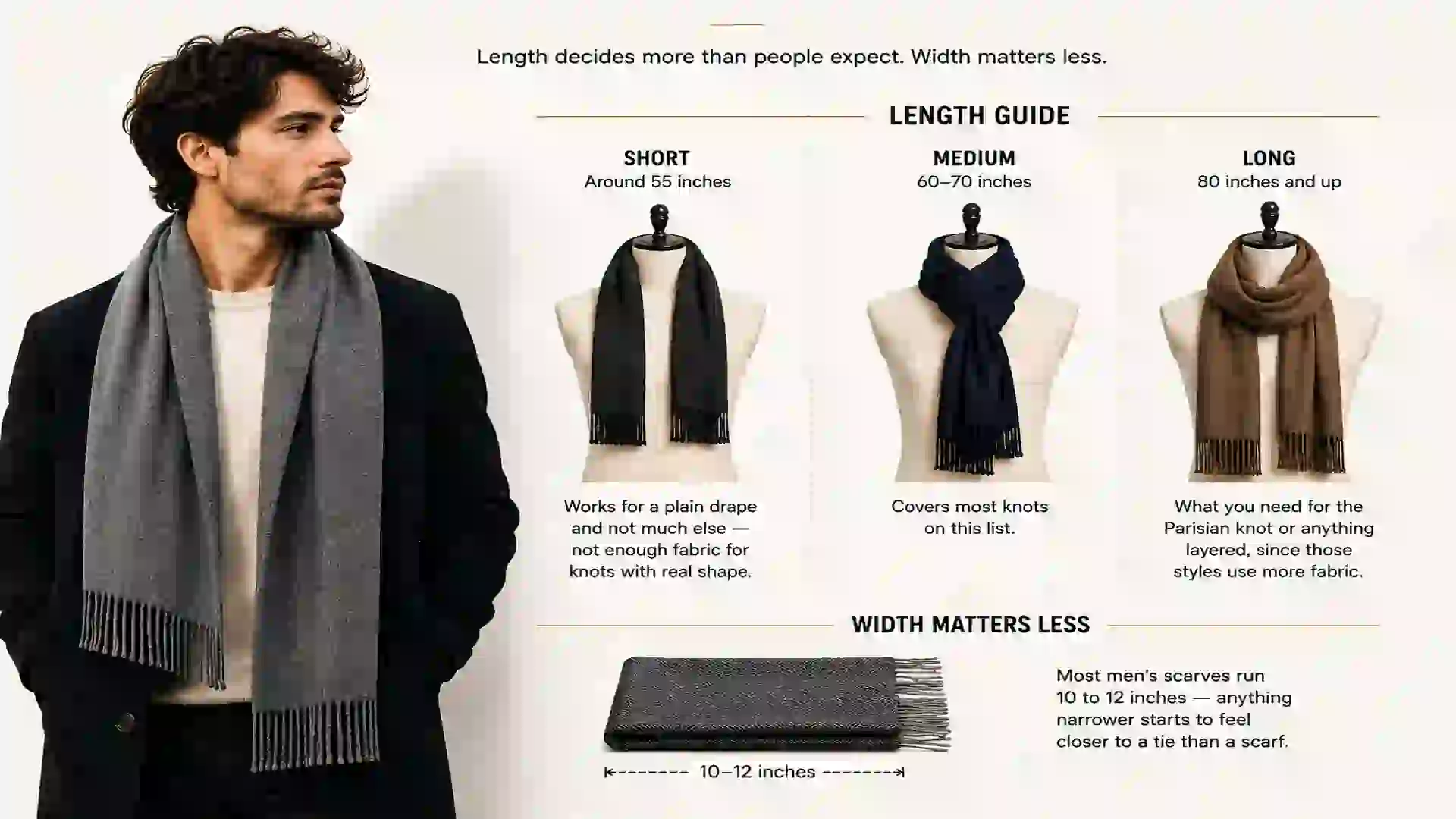
Length decides more than people expect. A short scarf (around 55 inches) works for a plain drape and not much else — there isn’t enough fabric for anything with real shape to it. Medium length (60-70 inches) covers most knots on this list. Long scarves, 80 inches and up, are what you need for the Parisian knot or anything layered, since those styles eat up fabric fast. Width matters less, but most men’s scarves run 10 to 12 inches — anything narrower starts to feel closer to a tie than a scarf.
Fabric matters just as much. Wool and cashmere are built for the coldest months and pair naturally with a coat. Cotton and knit scarves sit somewhere in between — casual, everyday, not trying too hard and they layer well over a high neck sweater or a shawl collar cardigan without adding real bulk. Silk scarves are the odd one out — thinner, dressier, better for an evening look than actual warmth. Lightweight scarves in cotton or linen blends are for weather that’s cool rather than cold and they’re the piece most guys skip, which is a mistake — a scarf doesn’t have to wait for winter. Learning how to tie a scarf around your neck properly starts with getting these two calls right before you touch a single knot.
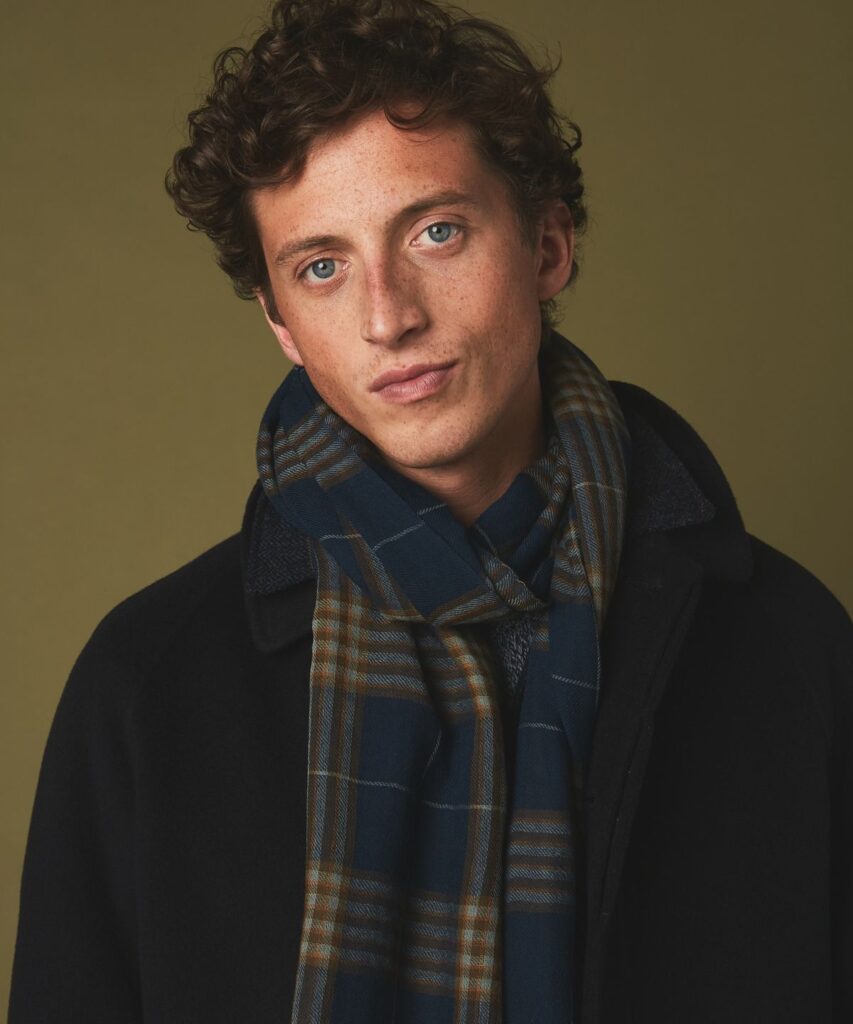
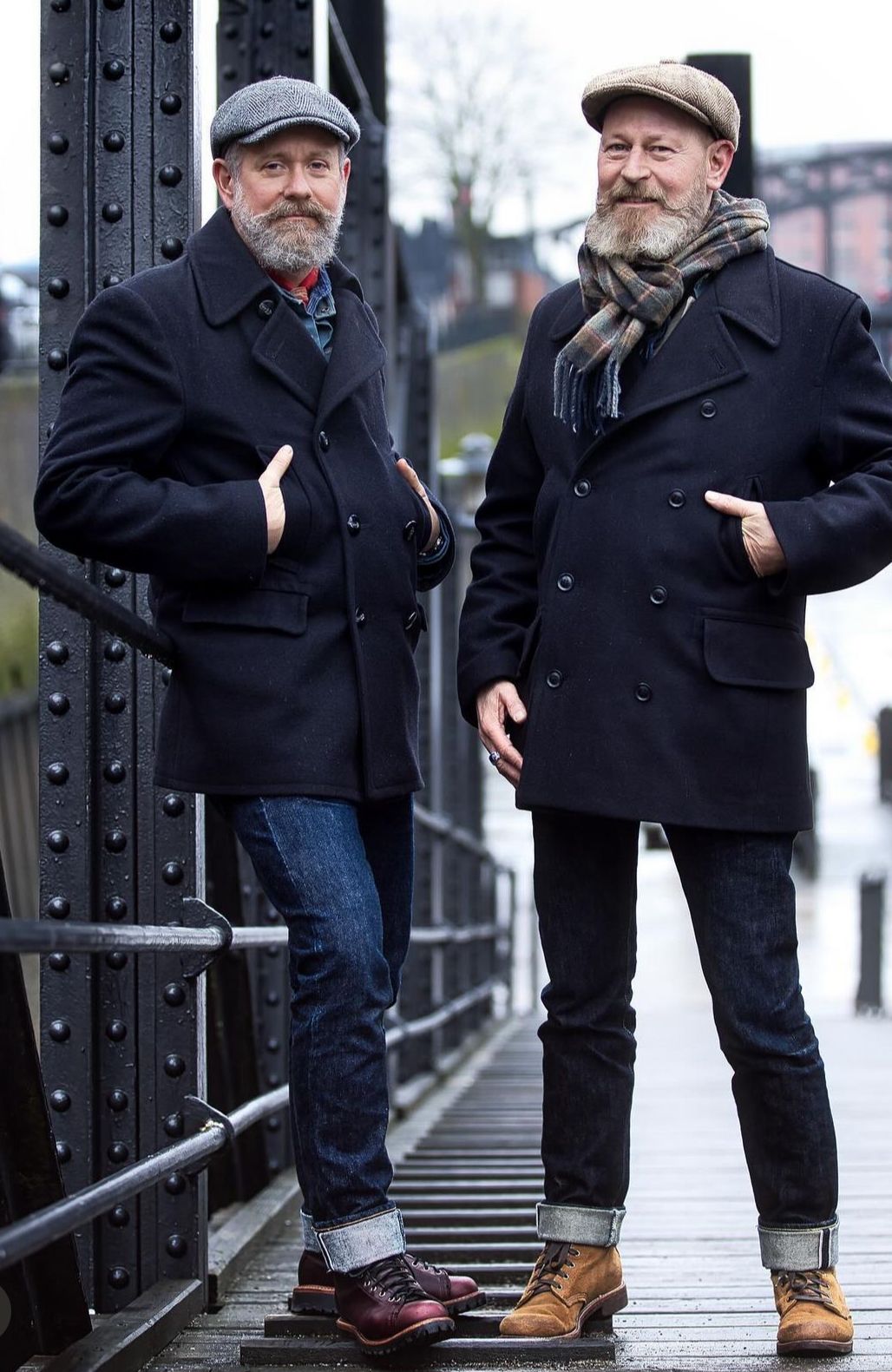
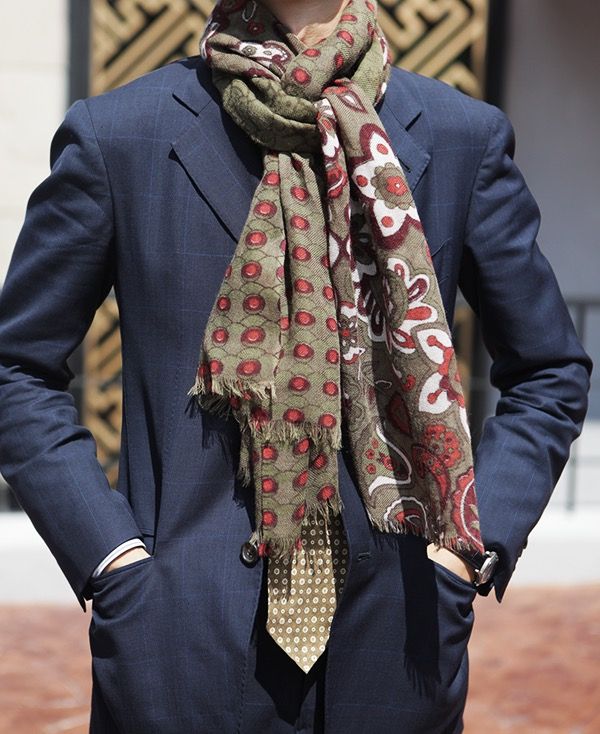
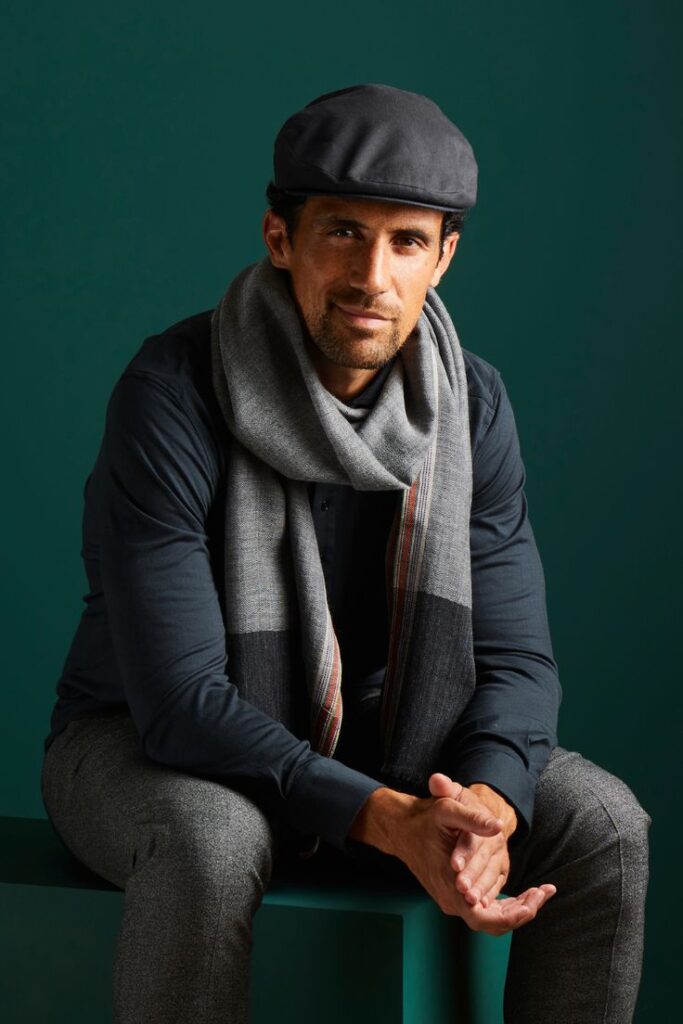
Color is where most guys either overthink it or ignore it completely. A neutral scarf — grey, navy, slate, camel — goes with almost everything you already own, which is why it’s the safer first buy. A patterned or brighter scarf works better as a planned accent against a plain coat rather than a busy outfit; put a bold scarf over a bold jacket and the two start competing instead of working together. If your coat is already a strong color, keep the scarf close to neutral. If the coat is plain black, navy or grey, that’s exactly where a scarf with some color earns its keep.
Two Checks Before Any Knot
If it’s tight enough that you’re thinking about your neck, it’s too tight. If it looks like you fought with it and lost, simplify the knot. Everything below is a variation on getting those two things right.
13 Knots and Wraps
These are the ways to tie a scarf that cover most situations you’ll run into, from a quick errand to a proper coat-and-tie evening — manly ways to tie a scarf, if you want the older-school term for the same thing. A few of these pair naturally with a jacket once you know which knot you’re reaching for.
| KNOT | DIFFICULTY | WARMTH | BEST FOR |
|---|---|---|---|
| Simple Drape | Easy | ● Low | Quick Errands, Mild Weather |
| Once Around | Easy | ● Medium | Daily Commute |
| Overhand Knot | Easy | ● Medium | Everyday, Cool Weather |
| Reverse Drape | Easy | ● Medium | Over a Proper Coat |
| Parisian Knot | Easy | ● Medium-High | Office, Half Formal |
| Fake Knot | Moderate | ● Medium | Casual, Patterned Scarves |
| Reverse Drape Tuck | Easy | ● High | Wind, Long Walks |
| Reverse Drape Cross | Moderate | ● Medium | Layered, Sharper Looking Wraps |
| Four-in-Hand | Moderate | ● Medium | Long Scarves, Casual Formal |
| Twice Around | Easy | ● High | Serious Cold |
| Ascot | Easy | ● Low-Medium | Jackets, Milder Cold |
| Hoxton Knot | Moderate | ● High | Wind, Distance Walking |
| DIY Snood | Moderate | ● Highest | Extreme Cold, No Tails |
Full detail on each is below.
Simple Drape
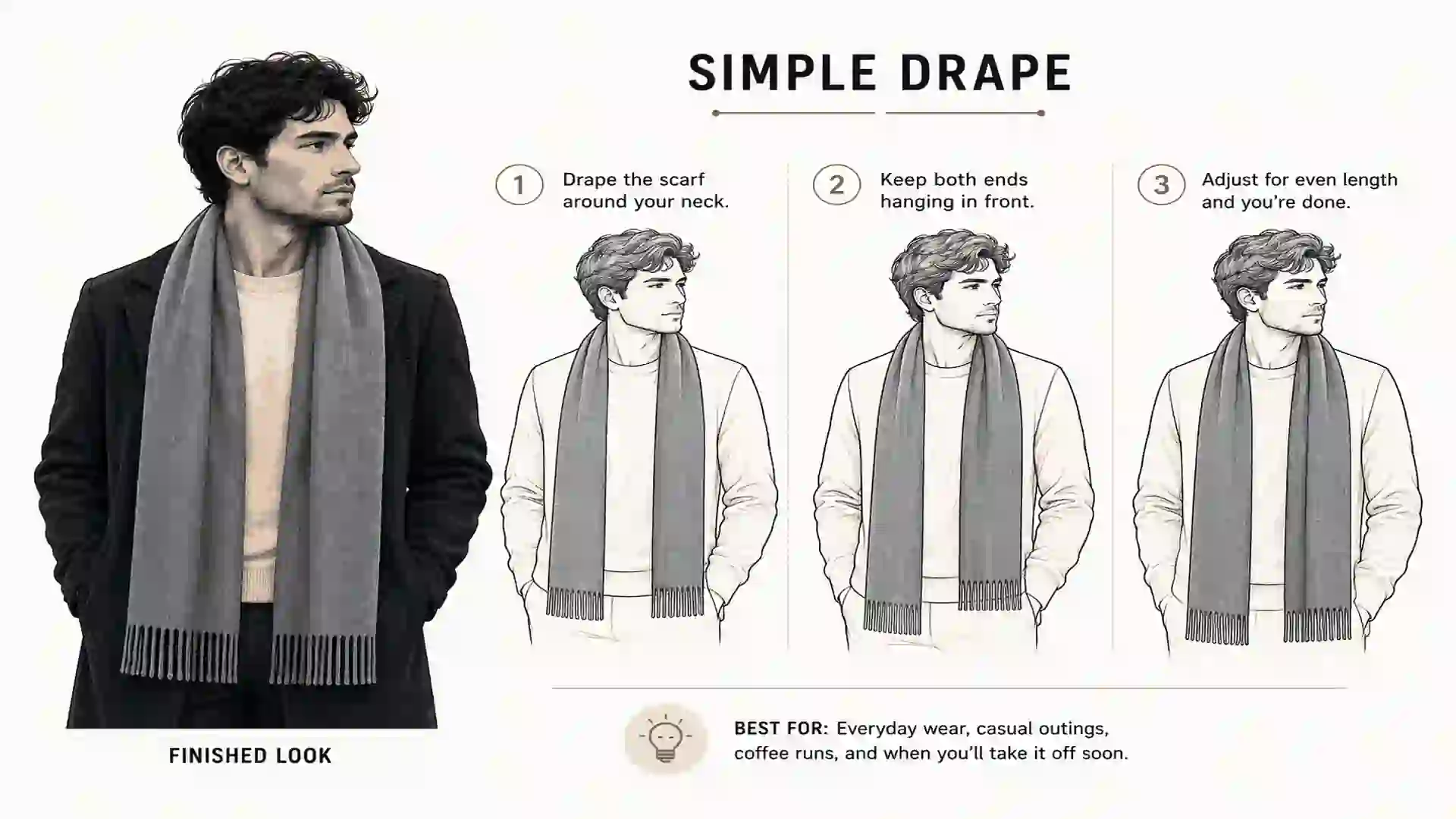
Around the neck, both ends hanging even. No knot at all — just a plain scarf drape. Start here if scarves still feel unfamiliar; it’s nearly impossible to get wrong. The one thing that trips people up is length — if both ends hang past your belt, it starts looking sloppy instead of easy, so fold the scarf a touch shorter before draping it if that’s an issue. Good for running errands, grabbing coffee, anywhere you’ll take the scarf off within the hour.
Once Around
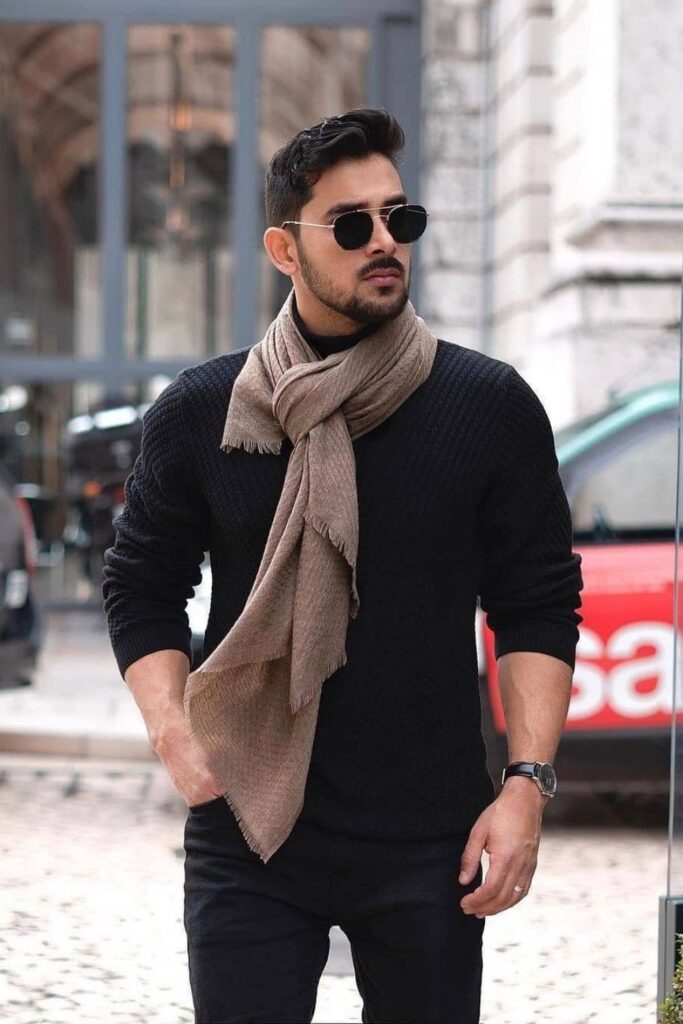
One end longer than the other, wrapped once around the neck. Most people picture this exact wrap when they say “wrap a scarf” without specifying further. The longer end should sit a few inches below the shorter one when you’re done, not perfectly even — that bit of asymmetry is what keeps it from looking accidental. Reach for this one on a properly cold commute, since it closes the gap at your collar better than a drape does.
Overhand Knot — Cross the long end over the short one and pull it through the loop near your neck. Don’t pull it tight enough to feel it against your throat — that’s the one mistake that shows up here more than any other. Leave a finger’s width of slack before you tighten it, then push the knot’s position a touch off-center rather than dead-center; centered looks try-hard, off-center looks unfussed.
Reverse Drape — Drape it evenly, then throw each end over the opposite shoulder. Works best over a coat with some length to it; on a short jacket it just looks like extra fabric. This one needs a coat with actual shoulder structure underneath to hold its shape — over a soft cardigan or thin sweater, the ends tend to slide back down within minutes, which defeats the point.
Parisian Knot — Fold in half, loop around the neck, pull the loose ends through the fold. Clean, fast and the one I’d default to for an office setting or anything half-formal. It sits flat against the chest rather than bulking outward, which is exactly why it survives a full day under a coat without needing to be redone. Ten seconds to tie and it looks the same at 6 PM as it did at 8 AM.
Fake Knot — Loop the longer end loosely, then pull both ends through it. Looks harder to tie than it is, which is most of its appeal. People will assume you spent longer on it than you did — that’s really the whole draw. Keep the loop loose rather than cinched; a tight fake knot loses the illusion and just looks like a lump of fabric at your throat.
Reverse Drape Tuck — Wrap once, then tuck both ends into the loop instead of leaving them hanging. Built for wind — it stays put when a simple drape wouldn’t. It’s the practical choice for anyone walking any real distance in cold weather; nothing flaps, nothing needs adjusting halfway through a commute. Less refined-looking than most knots on this list, but it earns that trade-off in bad weather.
Reverse Drape Cross — Wrap once, cross the ends, pull one through the neck loop. A bit sharper looking than the plain reverse drape without adding real bulk. The crossing point should sit just below your collarbone, not up near your throat — too high and it starts to look like you’re bundled up rather than dressed.
Four-in-Hand — Fold the scarf, pull one end through the loop, twist, pull the other end through. Needs a long scarf — anything shorter and there’s not enough fabric left to finish the twist properly. Named after the tie knot it borrows from and it carries the same asymmetric, undone-on-purpose look. Works best with a plain wool scarf; patterned fabric gets visually busy once it’s twisted.
Twice Around — Same idea as the once around, just wrapped a second time for real winter weather. Reach for this one when warmth matters more than how it looks. Two wraps means less visible fabric hanging down, so it reads bulkier and more insulated even before you factor in the actual warmth — useful information if you’re dressing for a day outdoors rather than a quick walk between buildings.
Ascot — Lay the scarf over your shoulders, cross both ends over each other near your throat like starting a shoelace knot. Faster than most scarf ties on this list and better suited to a jacket than a heavy coat, since it doesn’t add much bulk. This one reads more European than the others here — it’s common in colder Mediterranean climates where the temperature calls for a scarf but not a full winter wrap.
Hoxton Knot — Fold the scarf, pull both ends through a central loop. Neat, secure and the one that holds up best if you’re walking a distance or dealing with wind. It sits higher and tighter around the neck than the reverse drape tuck, which makes it the better pick under a collared shirt or jacket where you don’t want fabric bunching at the collarbone.
DIY Snood — Tie the two loose ends of a long scarf together, then pull the loop over your head so the knot ends up hidden against the back of your neck. No tails hanging down at all, which makes it the warmest option here by a clear margin. It only works with a long scarf — anything shorter and you won’t get the loop over your head without choking yourself in the process.
What Not to Wear a Scarf With
A scarf pin is the fastest way to make a scarf look like a costume piece rather than clothing — skip it. Anything sheer or see-through is decorative rather than functional and it reads that way immediately. Oversized scarves that could double as a blanket overwhelm most outfits instead of finishing them. Heavy fringe, tassels, beading or embroidered patterns push a scarf toward novelty-item territory fast — a plain edge holds up better across more outfits than a busier one ever will.
Matching a Scarf to What’s Over It
A scarf worn under a suit jacket works best as a simple drape or a loose Parisian knot — anything bulkier fights with the jacket’s lines. That same combination works as an indoor scarf too, kept on with the coat off, just as an accent tucked into a blazer’s lapel rather than for warmth. Over a proper overcoat, you’ve got more room to work with; the reverse drape or a twice-around wrap both suit heavier outerwear without looking out of place. Not sure which coat you’re dealing with? The topcoat vs overcoat vs peacoat breakdown sorts that out, since the right scarf knot depends on it. Lighter jackets call for lighter knots — a simple drape or fake knot sits better than anything that adds visible bulk under a jacket that wasn’t built to carry it. A fleece jacket falls into that same lighter category, even on a colder day.
Scarves Aren’t Just a Cold-Weather Thing
Most advice on this topic assumes it’s freezing outside, which leaves a real gap for anyone wearing a scarf in weather that’s cool rather than cold. A lightweight cotton or linen scarf, worn as a simple drape or loose wrap, works over a sweater or light jacket without needing a coat at all. Skip anything thick or tightly knotted here — the whole point is that it should look effortless, not like you’re bracing for weather that isn’t happening.
A Few Notes on Body Type
Shorter guys generally look better keeping the scarf close to the neck and skipping long hanging ends, which can visually cut the body into pieces. Taller guys have more room to work with — long scarves and layered styles that would overwhelm a shorter frame tend to sit fine on a taller one. If you’re on the leaner side, medium-weight scarves avoid the bulky look that heavier wraps can create. Broader or more muscular builds can usually handle more volume without it looking excessive — the main thing to avoid is anything wrapped so tight it looks strained.
Frequently Asked Questions
How do you tie a scarf step by step?
Drape it around your neck, pick a simple method like the once around or Parisian knot and adjust until it sits comfortably without pulling at your throat.
How tight should a scarf be?
Loose enough that two fingers fit between the scarf and your neck. Anything tighter starts to look — and feel — like a mistake rather than a style choice.
Can men wear scarves in casual outfits?
Yes. Simple drapes and loose wraps in lighter fabrics work well with jeans, sweaters and jackets — a scarf doesn’t need a suit to make sense.
What’s the best scarf knot for the office?
The Parisian knot or a clean once-around. Both stay neat without looking like you tried too hard before a meeting. Still figuring out the rest of the outfit? What to wear on your first day at work covers that part.
How do you tie a neck scarf so it doesn’t come loose?
Tuck the ends in with a reverse drape tuck or a Hoxton knot — both are built to hold rather than just hang, which is what keeps a scarf in place through a windy commute or a long walk. That’s how to tie a neck scarf once wind or movement becomes part of the equation.
How to tie a silk scarf without it slipping?
Silk is slippery by nature, so skip anything that relies on friction to hold — a fake knot or an overhand knot grips better on silk than a loose drape ever will.
Where to Start
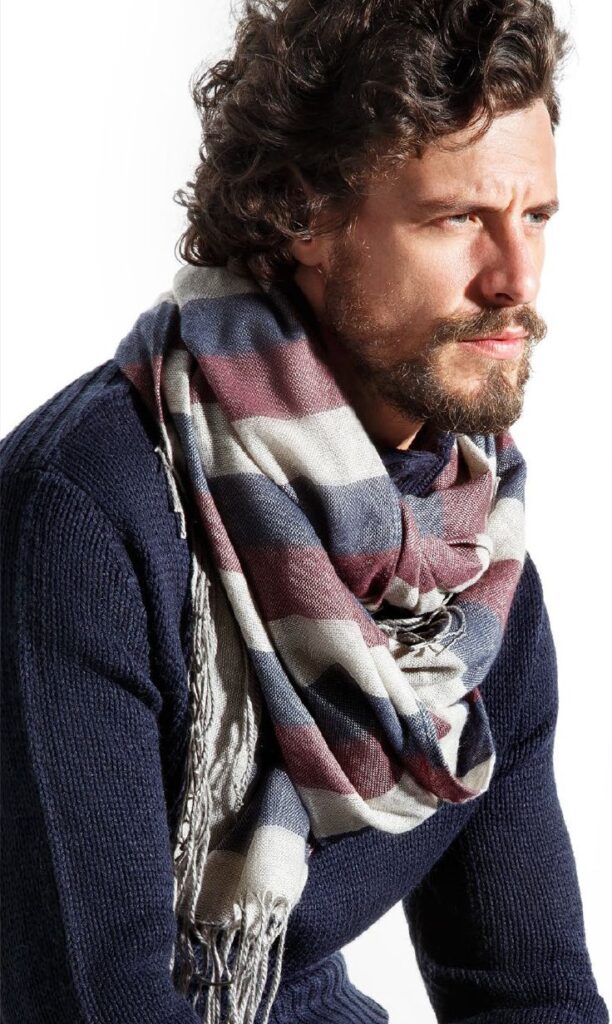
If none of this feels intuitive yet, start with the simple drape and the once-around — those two cover more situations than the other eleven combined. The rest are worth learning once those feel automatic, not before. Once the scarf’s sorted, a decent dress watch is usually the next thing on the list.
2. Once Around Wrap
Make one end longer and wrap it once around your neck.
Best for: Everyday winter wear
Common search: how to wrap a scarf
This is what many people mean when they search how to wrap a scarf.
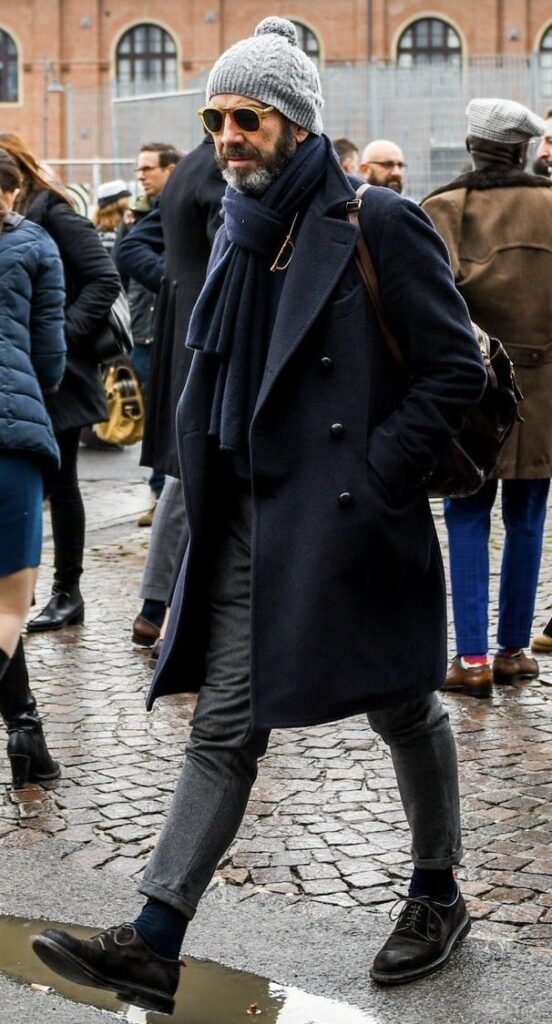
3. Overhand Knot
Cross the longer end over the shorter one and pull it through the loop near your neck.
Best for: Cold days, clean outfits
Common mistake: Pulling it too tight
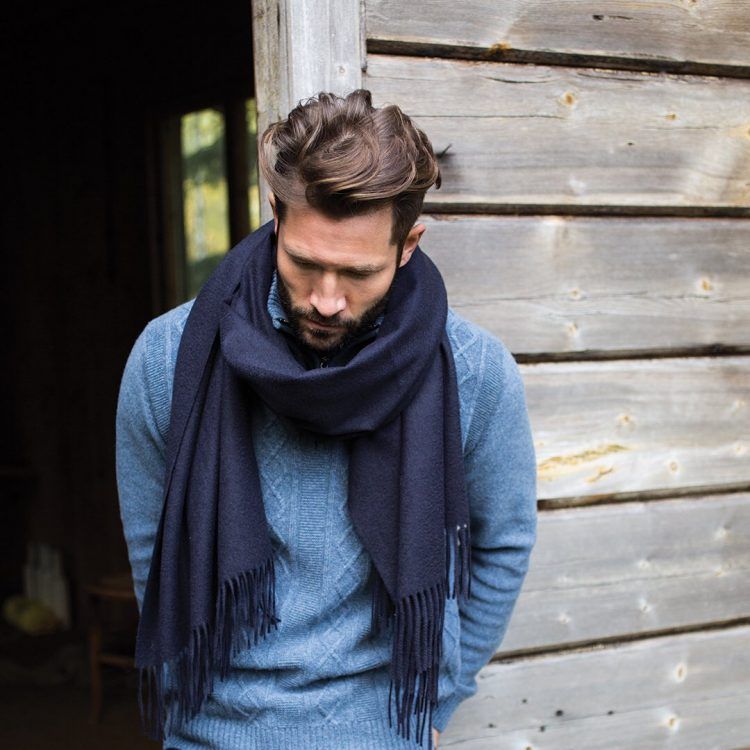
4. Reverse Drape
Drape the scarf evenly and throw each end over the opposite shoulder.
Best for: Coats and long jackets
Look: Stylish and relaxed
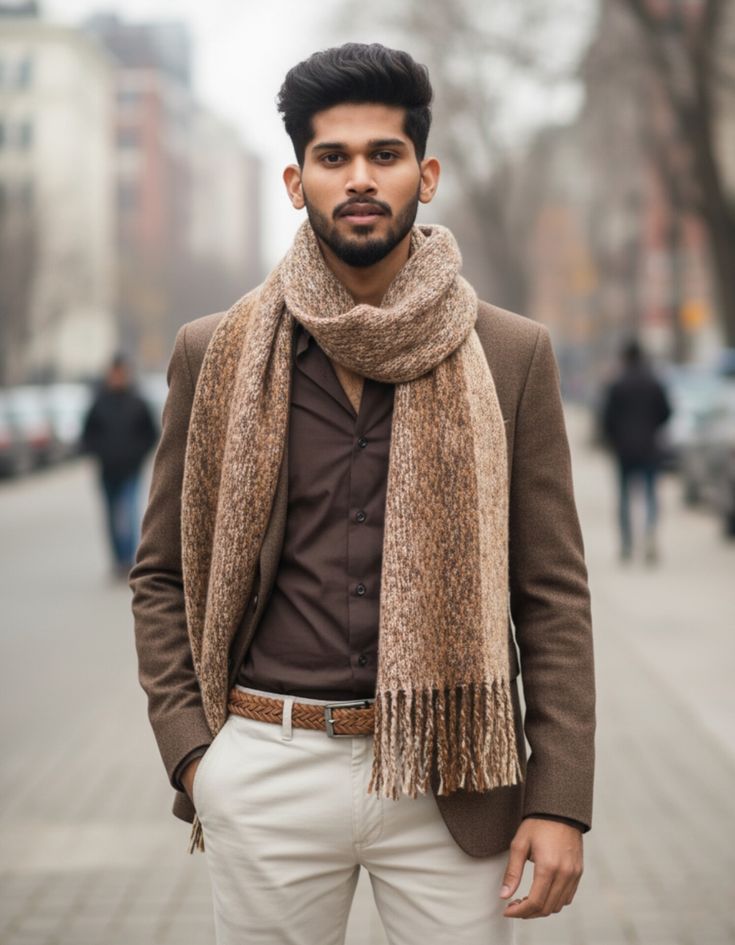
5. Parisian Knot
Fold the scarf in half, place it around your neck and pull the loose ends through the loop.
Best for: Office wear, cold weather
Why men love it: Clean, balanced, easy
A classic look for a confident man in a scarf.

6. Fake Knot
Create a loose loop with the longer end and pull both ends through it.
Best for: Smart casual outfits
Benefit: Looks complex but is simple
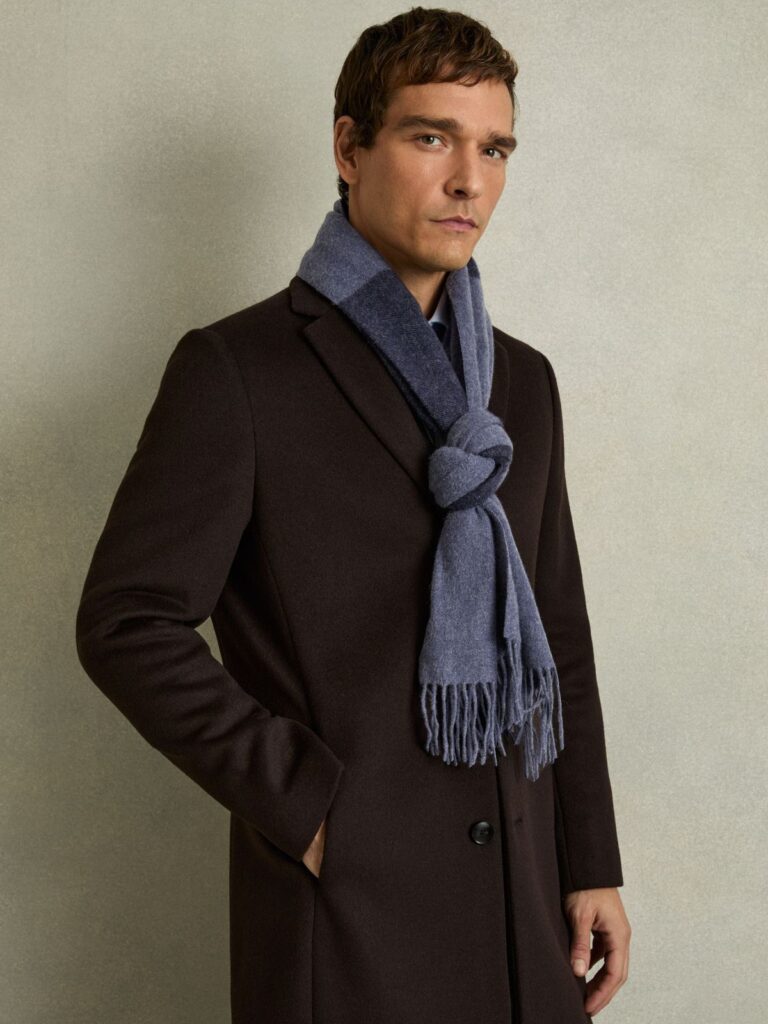
7. Reverse Drape Tuck
Wrap the scarf once and tuck both ends inside the loop.
Best for: Windy weather
Why it works: Keeps the scarf in place
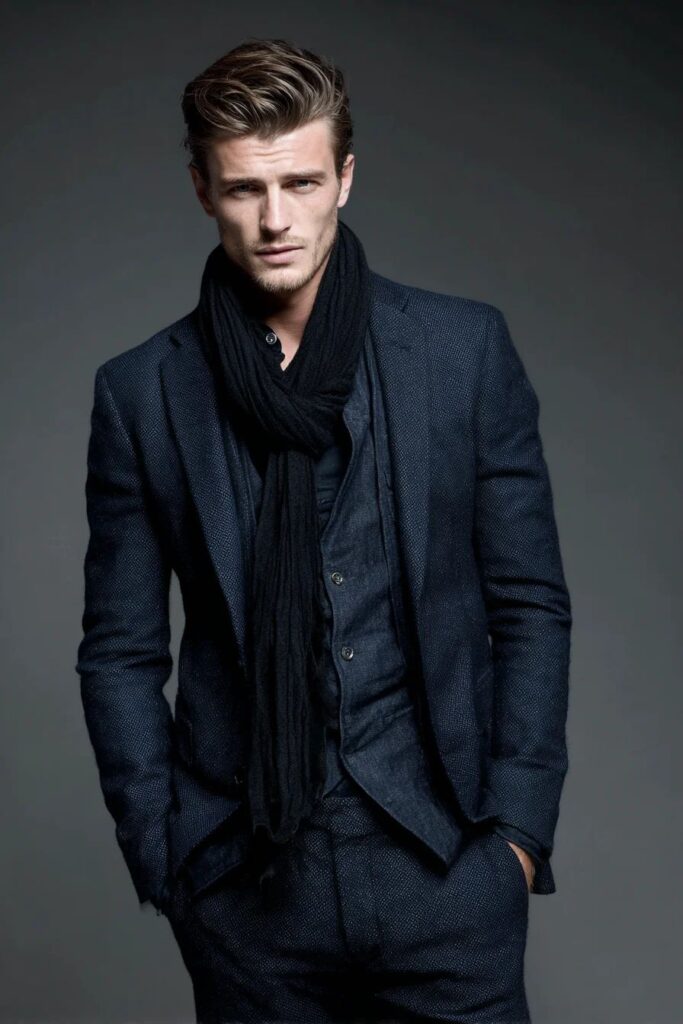
8. Reverse Drape Cross
Wrap the scarf once, cross the ends and pull one end through the neck loop.
Best for: Layered outfits
Look: Structured but not bulky
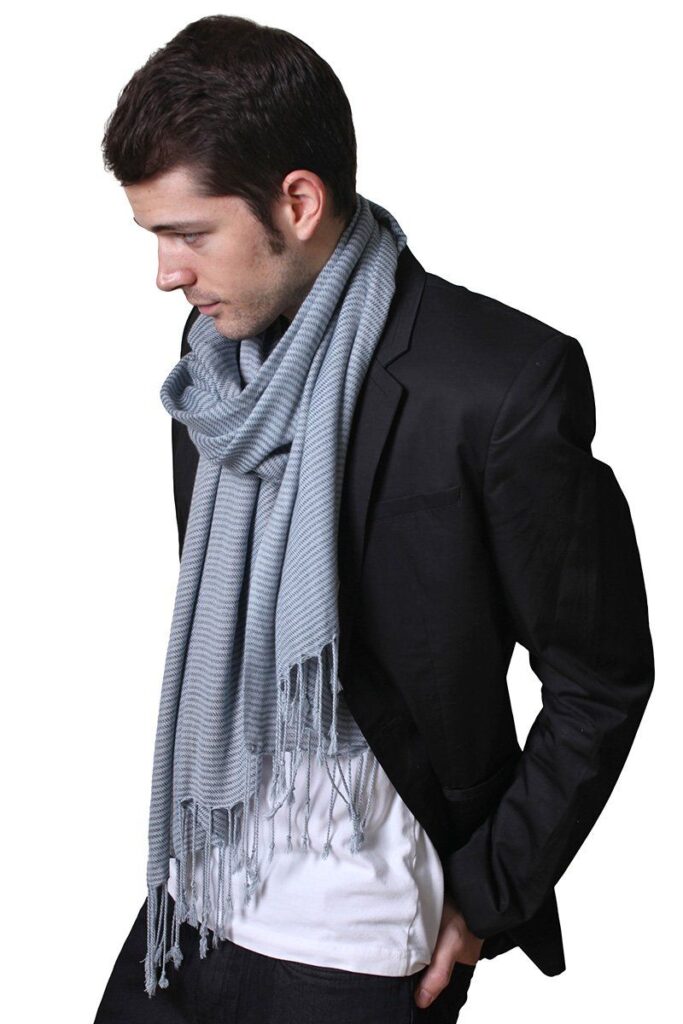
9. Four in Hand Scarf Knot
Fold the scarf; pull one end through the loop, twist the loop, then pull the other end through.
Best for: Long scarves
Avoid if: Your scarf is short
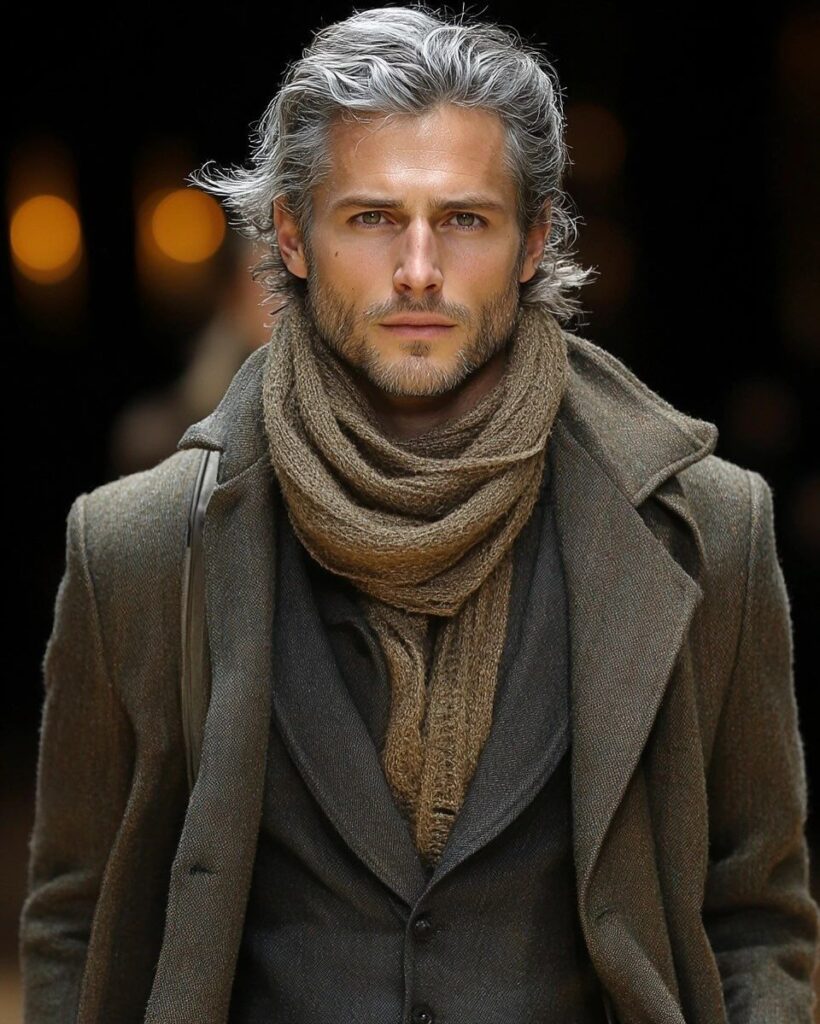
10. Twice Around Wrap
Tie Twice Around Wrap Scarf the long end twice around your neck.
Best for: Extreme cold
Priority: warmth over style
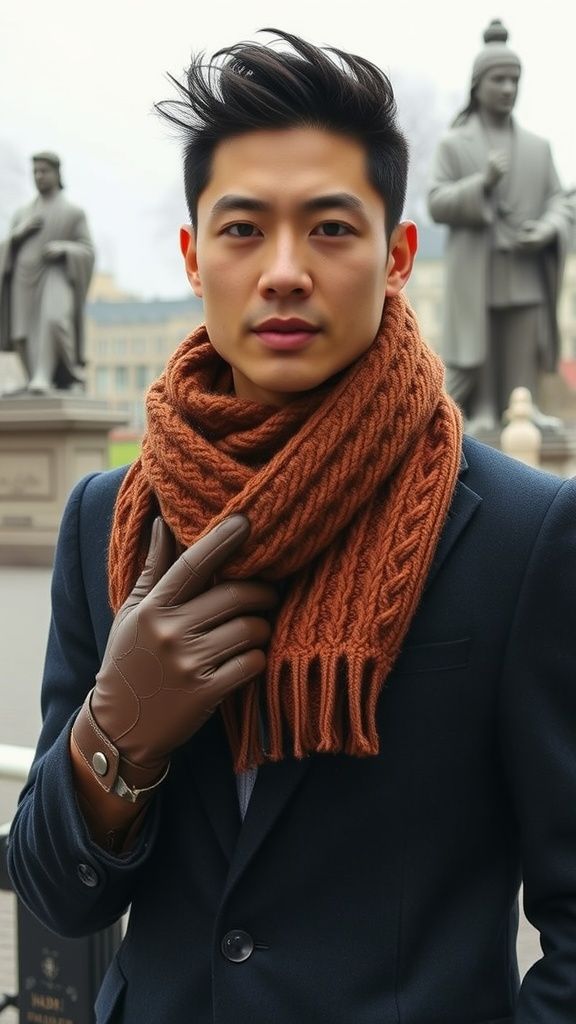
11. Hoxton Knot
Fold the scarf and pull both ends through a central loop.
Best for: Travel, walking, wind
Why it works: Neat and secure
Choose Your Scarf Style (Quick Decision Guide)
Use this when you’re unsure and don’t want to overthink it.
Wearing a coat? → Parisian Knot, Once Around
Wearing a jacket? → Simple Drape, Fake Knot
Casual outfit? → Loose wraps, no tight knots
Formal outfit? → Clean, symmetrical knots
Windy weather? → Hoxton Knot, Tucked styles
This section improves engagement and helps readers decide faster.
Scarf Styles for Skinny Guys
Avoid bulky wraps
Medium weight scarves look cleaner
Scarf Styles for Broad or Muscular Men
Balanced knots work best
Avoid very small or very tight wraps
These are real searches most blogs ignore.
How to Wear a Scarf Without a Coat
Use lightweight scarves
Stick to simple drapes or loose wraps
Avoid thick or tight knots
Works best with sweaters and jackets
Scarves are not only for coats.
How to Wear a Scarf in the Office
Office scarf rules:
Neutral colors
Clean knots only (Parisian or once around)
No bulky wraps
Tuck ends neatly
This keeps your look professional, not flashy.
Deepak Bhandari has spent 10 years in personal styling, helping men dress with more confidence and less guesswork. He’s the founder of Deepu Fashion, where he writes about style, grooming and everyday outfit ideas that actually work in real life. Follow him on Instagram for daily style tips and inspiration.