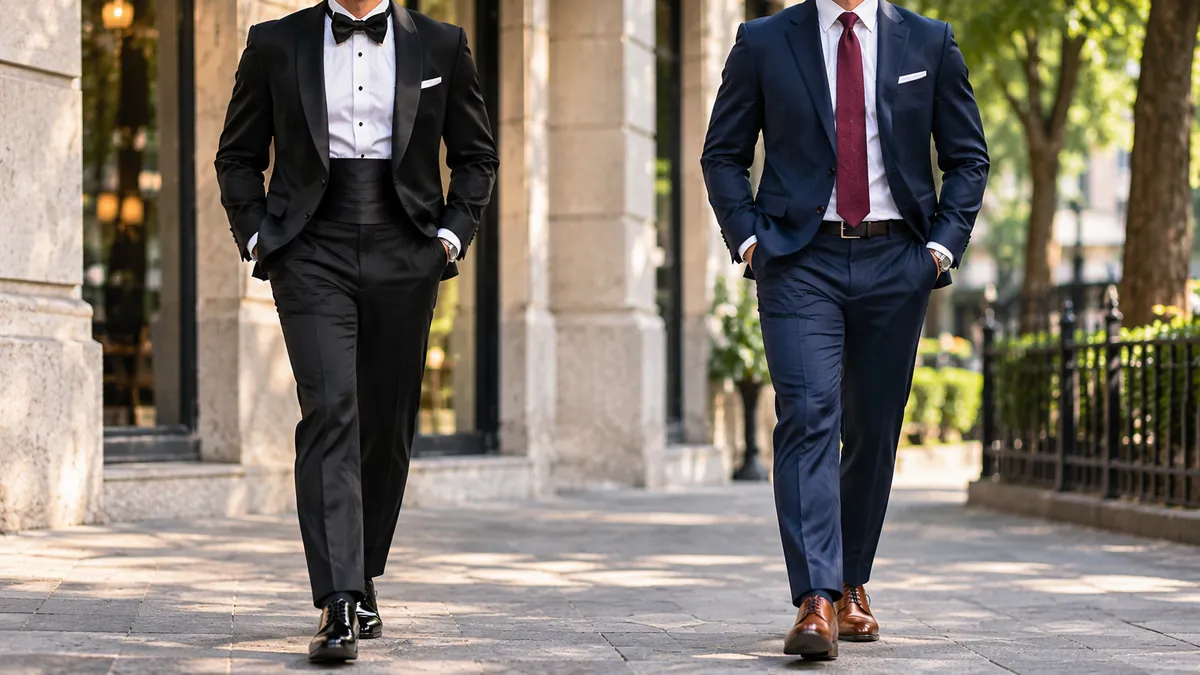
Short answer: A tuxedo is a formal suit made for black tie evening events. It has satin or silk on the lapels, buttons, pockets and trouser stripe. A regular suit is made from one fabric and works for the interviews, office, weddings and parties. If your invitation says “black tie” wear a tuxedo. For almost everything else, a suit is the better choice.
That’s the short answer for suit vs tuxedo question. The rest of this guide shows you how to spot each one, what to wear with them and how to pick the right one for your event, so you don’t end up overdressed or under dressed.
Is a Tuxedo a Suit?
Yes and no. A tuxedo is a type of suit, since it comes with a matching jacket and trousers. But when people say “suit” they usually mean a regular comfortable daytime suit and that’s the one a tuxedo gets compared with.
The difference between a suit and a tuxedo isn’t always easy to see. Many modern tuxedos look like business suits and some have no satin at all. Some suits also look dressy with peak lapels and dark colour. So don’t judge by one detail. Look at the whole outfit: the fabric, the shirt, the tie and the shoes.
10 Differences Between a Tuxedo and a Suit
A tuxedo and a suit can look the same from far away. Up close, you can see the difference in the small details: the lapels, the buttons, the pockets and the trousers. The shirt and shoes are different too. Here are 10 ways to tell them apart from the jacket down to the shoes and colours. Use them to spot a tuxedo fast or to pick the right outfit for yourself.
1. Lapels
Lapels are the folded flaps of fabric on the front of the jacket. On a traditional tuxedo they are covered in satin or grosgrain, a ribbed, silk-like fabric. That shiny finish is the easiest way to spot a tuxedo and it’s gives the jacket its evening look.
On a regular suit, the lapels are made from the same fabric as the rest of the jacket, so the jacket looks plain and uniform. Lapel shape matters too, but it doesn’t decide anything alone. Shawl and peak lapels are the classic choices on tuxedos, while notch lapels are the most common on business suits. Peak lapels also show up on formal suits, so check the facing, not just the shape.
2. Buttons
A traditional tuxedo jacket has one button. With only one, the front opens in a deep V and shows more of the shirt, which is part of why a tuxedo looks sleek when it’s worn open. The buttons are covered in the same satin as the lapels.
Suit jackets usually have two or three buttons. They are normally plastic or horn and match the color of the suit, so they blend in instead of standing out.
3. Pockets
This one gets missed a lot, but it’s a clear giveaway. Tuxedo jackets have jetted pockets, which are slim slits with a thin trim, often in satin. They have no flaps, because a flat pocket keeps the line of the jacket smooth.
Most suit jackets have flap pockets and some have patch pockets sewn on top of the fabric. Both look more practical and casual than a jetted pocket.
4. Vents
Vents are the slits at the back of a jacket. The most traditional tuxedo jackets have no vents at all, which gives a cleaner, slimmer back. If a tuxedo does have vents, they are usually side vents.
Suits often have one center vent or two side vents. Vents make it easier to sit down and reach into your pockets, which is why they are so common on suits you wear to work.
5. Trousers
Tuxedo trousers have a satin or grosgrain stripe down the outside of each leg that matches the jacket lapels. Traditional pairs have no belt loops, no cuffs and no pleats. They use side adjusters or suspenders (braces) instead of a belt, which keeps the waist smooth under the jacket.
Suit trousers have no stripe. They almost always have belt loops and some have pleats or cuffs, since they are made for everyday wear.
6. Shirts
A tuxedo is traditionally worn with a white dress shirt. The front can be pleated, have a textured piqué panel (called a bib) or be plain with a covered placket. Most have French cuffs that need cufflinks, though some barrel-cuff shirts are made to take cufflinks too. Some have a wing collar and others have a regular turn-down collar.
A suit gives you more room to play. A white shirt, a light blue one or a striped one all work One simple rule to remember: if your shirt has a bib front or a wing collar, wear a bow tie with it.
7. Neckwear
The traditional choice for a tuxedo is a black bow tie. A self-tie is best, because the slightly uneven shape looks more natural and refined than a pre-tied one.
With a suit you can wear a necktie, a bow tie or no tie at all. That freedom is useful, but it has a limit. If an invitation says black tie, a regular necktie is not a stand in for the bow tie.
8. Waist Covering
A tuxedo is traditionally wear with either a cummerbund or a low cut waistcoat. Both hide the spot where the shirt meets the trousers, so nothing looks untidy when the jacket is open. You wear one or the other, not both.
If you wear a cummerbund keep the folds (pleats) facing up. A suit does not need either one. If you want a three piece look, you can add a waistcoat that matches the suit.
9. Shoes
The classic tuxedo shoe is black patent leather or highly polished black leather, in a plain lace up style. The shine matches the satin on the jacket. Some men wear black patent loafers or velvet slippers at formal events, but lace-ups are the safe choice.
Suits work with formal oxfords, Derby shoes and monk straps. Black shoes suit with charcoal suits, while brown looks good with navy colours.
10. Colors and Fabric
Tuxedo colors are limited. Black and midnight blue are the most traditional and midnight blue looks richer than black under evening lights. Velvet jackets and white or ivory dinner jackets also appear at summer weather or festivals.
Suits come in far more colors, from navy and grey to brown, green and patterns. This is a big reason a suit is easier to wear again and again. The cut differs a little as well. Tuxedos tend to have a clean, close shape with little padding, while suits vary a lot by brand and style.
Quick Comparison Table
────────
If you want the differences at a glance, this table puts them side by side.
| Feature | ★ Tuxedo | ◆ Suit |
|---|---|---|
| ♢ Lapels | Satin or grosgrain | Same fabric as jacket |
| ◎ Buttons | Usually one, often satin-covered | Usually two or three, regular buttons |
| ▢ Pockets | Jetted, no flaps | Usually flap pockets |
| ♡ Vents | Often none | Usually one or two |
| ♘ Trousers | Side stripe, no belt loops | No stripe, belt loops |
| ♟ Shirt | Formal white shirt | Many styles and colors |
| ★ Neckwear | Black bow tie | Necktie, bow tie or none |
| ♞ Shoes | Black patent or polished black | Wide range |
| ★ Formality | Black tie | Business to smart casual |
| ✦ Best for | Evening formal events | Work, weddings, parties |
Quick Comparison Table
If you want the differences at a glance, this table puts them side by side.
| Feature | Tuxedo | Suit |
| Lapels | Satin or grosgrain | Same fabric as jacket |
| Buttons | Usually one, often satin-covered | Usually two or three, regular buttons |
| Pockets | Jetted, no flaps | Usually flap pockets |
| Vents | Often none | Usually one or two |
| Trousers | Side stripe, no belt loops | No stripe, belt loops |
| Shirt | Formal white shirt | Many styles and colors |
| Neckwear | Black bow tie | Necktie, bow tie or none |
| Shoes | Black patent or polished black | Wide range |
| Formality | Black tie | Business to smart casual |
| Best for | Evening formal events | Work, weddings, parties |
Not every modern tuxedo ticks every box. Some leave out the satin trouser stripe and some use a notch lapel. If most of the details match the traditional list, you are looking at a tuxedo.
When to Wear a Tuxedo
A tuxedo belongs at formal events held in the evening or anywhere the invitation asks for black tie. Outside of those, it can look like too much. Here are the most common occasions.
Black-tie events. If the invitation says “black tie” wear a tuxedo. A black or midnight blue tuxedo, a white shirt, a black bow tie and polished black shoes will cover you.
Formal evening weddings. A black tie wedding calls for a tuxedo and the groomsmen can wear matching ones so the group looks same in photos.
Galas and award nights. Charity galas, formal awards and big celebrations usually follow a black-tie dress code, so a tuxedo is the expected choice.
When to Wear a Suit
A suit is the better pick for most of daily life. It’s flexible, easier to dress up or down and you can wear it far more often than a tuxedo.
Work and meetings. A navy suit with a light blue shirt and a plain tie is the safe choice. If your office is casual, you can skip the tie and try a business casual look with the same suit.
Job interviews. Wear a suit that fits you well. A cheap suit that fits looks better than an expensive one that hangs loose. The interviewer will see a jacket that’s too big or sleeves that are too long long before they think about the brand.
Weddings without black tie. For a outdoor wedding, wear a light suit. Light gray or beige keeps you cooler in the sun. For an evening wedding, a dark suit looks better.
Dinners and parties. A brown suit with an open collar and loafers works for a night. Add a tie and dress shoes when you want to look sharper.
Graduations and family events. Wear a dark suit with a plain shirt. It looks neat in photos and it’s easy to sit in for a long ceremony. If you’d like a different shirt color, see the best shirt colors for men.
Dress Codes Explained
Dress codes cause most of the confusion, because the names sound alike. Here’s what the common ones mean for men.
Black Tie. Wear a tuxedo. That means a black or midnight blue tuxedo, a white shirt, a black bow tie, black formal shoes and a cummerbund or waistcoat if you like. A business suit is not the traditional answer for this one.
Black Tie Optional. A tuxedo is preferred, but a dark, well-fitted suit is generally fine. If you go with a suit, wear a white shirt, a plain tie and polished black shoes.
Cocktail attire. This means a tailored suit, a dress shirt, a tie and leather dress shoes. It’s dressier than business casual but a step below black tie, so no tuxedo is needed.
Formal. This one is broader. A dark suit often works, but some evening events expect a tuxedo. If the invitation isn’t clear, ask the host instead of guessing.
White Tie. This is more formal than black tie and a regular tuxedo won’t work. The outfit is a black tailcoat, a white waistcoat, a white bow tie, a stiff-front white shirt, black trousers and black patent shoes.
Black Suit vs Tuxedo: Can You Swap One for the Other?
A black suit and a tuxedo can look close, but they aren’t the same thing. A tuxedo has satin or grosgrain on the lapels, covered buttons, jetted pockets and a stripe down the trousers. A black suit has none of that. It’s one fabric from top to bottom, usually with flap pockets and belt loops.
At a black-tie event, a black suit is not the right choice. At a black-tie optional event, a dark suit is fine and black works if it fits well. Wear a white shirt, a plain tie and polished black shoes so the outfit still looks formal.
One more point: a black suit with a bow tie is still a suit. The satin details are what make a tuxedo. A black suit is very versatile, though. You can wear it to work events, dinners and many weddings, while a tuxedo is only for the occasions that call for one.
Tuxedo vs Suit for a Wedding
The invitation decides this one. The time of day, the venue and the couple’s style matter too, so read the details before you pick.
| Wedding type | What to wear |
| Black-tie wedding | Black or midnight blue tuxedo |
| Formal evening wedding | Check the invitation, often a tuxedo or dark suit |
| Daytime wedding | Light gray or beige suit |
| Garden wedding | Beige or tan suit |
| Beach wedding | Light, breathable suit |
| Semi-formal wedding | Navy or gray suit |
If you’re the groom, you can wear either one. Pick the outfit that fits the style of the wedding, not just the dressiest option. A relaxed garden wedding with a full tuxedo can feel out of place.
If you’re a guest, you should wear a tuxedo only when the invitation says black tie or formal evening wear. At a regular wedding, a tuxedo can make you look dressier than the groom, which most couples would rather avoid. When in doubt, ask the couple or check the invitation.
Tuxedo vs Suit for Prom
Both work at prom, so the choice mostly comes down to the venue and your own taste. A tuxedo gives you a classic look and fits right in at a hotel ballroom or a formal venue. A suit works well too, especially in a bold color and you can wear it again after prom, which makes it better value.
Before you decide, check your school’s rules and ask what your date is wearing, since matching colors looks good in photos. For a casual event in the school gym, a clean dark suit is plenty.
Dinner Suit vs Tuxedo: Is There a Difference?
These terms cause a lot of mix-ups, mostly because of where you live. Here’s how they line up.
- Tuxedo is the common American word for the black-tie outfit. The name comes from Tuxedo Park, a club community in New York, where the style caught on in the 1880s.
- Dinner suit is the usual British word for the same outfit.
- Dinner jacket is just the jacket. It can be part of a dinner suit or it can stand alone in another color, like a white or ivory jacket with black formal trousers.
So a tuxedo and a dinner suit mean the same thing. A dinner jacket is one piece of it.
Price: Is a Tuxedo More Expensive?
Often, yes, but not always. A tuxedo usually costs a bit more than a basic suit and the extras add up quickly. A bow tie, cufflinks, studs, a formal shirt and patent shoes can add a lot to the total. A designer suit can cost more than an entry level tuxedo, so the brand and the fabric matter more than the label.
Should You Rent or Buy?
If you wear a tuxedo once or twice a year, renting is good choice. You don’t need to store it and you skip the cost of owning one. If you go to formal events a few times a year, buying makes more sense. You get a better fit and you can have it tailored to your body.
Fit Tips for Both
Fit matters more than price. A suit or tuxedo that fits well looks sharp even when it’s inexpensive and a loose one looks sloppy no matter what it cost. You can check the fit in a few minutes in front of a mirror, whether you are buying or renting.
The jacket’s shoulder seam should end right where your shoulder ends. If it hangs over the edge, the jacket is too big. If the fabric pulls or dimples, it’s too small. Shoulders are hard to alter, so check this one first.
About half an inch of shirt cuff should show below the jacket sleeve. That small line of white makes the outfit look finished and sleeves that are too long are the first thing people notice.
Jacket length. The jacket should cover your seat and not hang much past it. A simple test is to let your arms fall naturally. Your fingertips should land near the bottom edge of the jacket.
They should sit at your natural waist, not down on your hips. A tuxedo trouser leg should end with a slight break or none at all, so the shoe stays clean and visible. Extra length bunches up and spoils the line of the satin stripe.
You should be able to slide one or two fingers between your neck and the shirt collar. Tighter than that gets uncomfortable by the end of the night and looser makes the collar gap behind your tie.
These rules matter a bit more for a tuxedo, because its clean, close lines are the whole point. If something is slightly off, a tailor can usually fix the sleeves, hems and waist for a small cost, which is often cheaper than buying a new outfit.
8 Tuxedo and Suit Mistakes (and How to Fix Them)
Most formal wear mistakes are small and most come from guessing. A few of them are enough to make an expensive outfit look wrong. Here are eight common ones and how to avoid each.
- Wearing a regular black suit to a black tie event. A black suit isn’t a tuxedo, because it has no satin on the lapels, buttons or trousers. When the invitation says black tie, wear a tuxedo. If you don’t own one, rent one.
- Wearing a belt with traditional tuxedo trousers. These trousers are cut to be wear without one and a belt breaks the clean line at the waist use side adjusters or suspenders instead.
- Wearing a regular necktie with a bib front or wing collar shirt. These shirts are made for a bow tie. A long tie over them looks bad and the collar won’t sit right.
- Wearing both a cummerbund and a waistcoat. They do the same job, which is to cover the waistband. Pick one.
- Skipping the waist covering. Without a cummerbund or waistcoat, the shirt and waistband show whenever you unbutton the jacket. That looks unfinished at a formal functions.
- Wearing casual shoes. Sneakers and chunky shoes clash with a tuxedo. Choose polished black lace-ups or classy patent leather.
- Ignoring fit. Tight shoulders, long sleeves and trousers that pool at the ankle ruin the look fast. Check the fit early, so there’s time for a tailor if you need one.
- Adding too many accessories. A bow tie, cufflinks and a pocket square are plenty. Piling on more makes the outfit look busy instead of sharp.
If you get these right, the rest of the outfit mostly takes care of itself.
Which One Should You Buy First?
Buy a suit first. It does more for you, because you can wear it to work, interviews, weddings & parties. A navy blue suit is the easiest to style and the safest to start with.
Buy a tuxedo when you have a real reason, such as going to black-tie events each year or having a formal events coming up. Until then, renting is easier on your wallet and saves you from storing something you rarely wear.
Frequently Asked Questions
Here are quick answers to the questions people ask most about tuxedos and suits.
Suit vs tuxedo: which one is more formal?
The tuxedo. It is made for black-tie and formal events. A suit covers a wider range, from business to casual. If you see “tux vs suit” on a dress code list, the tux is always the dressier pick.
Can you wear a black suit to a black-tie event?
Not to a strict black-tie event. The dress code calls for a tuxedo. If the invitation says black tie optional, a dark, well fitted suit is generally fine.
Does a tuxedo cost more than a suit?
Usually a little more, but not always. Brand, fabric and extras like shirts, studs and shoes change the price a lot.
Can a guest wear a tuxedo to a wedding?
Only if the invitation says black tie or formal wear. Otherwise a suit is the safer choice, so you don’t outdress the groom.
So, Which One Should You Wear?
The main difference is formality. A tuxedo is built for black-tie evenings with satin details, a formal white shirt and a bow tie. A suit is built to wear in more colors and with more shirts, ties and shoes.
Here’s the simple rule: pick the tuxedo when the invitation says black tie and pick the suit for everything else and if you are not sure, ask the host. It takes one message and saves you the stress on the day.

Deepak Bhandari has spent 10 years in personal styling, helping men dress with more confidence and less guesswork. He’s the founder of Deepu Fashion, where he writes about style, grooming and everyday outfit ideas that actually work in real life. Follow him on Instagram for daily style tips and inspiration.