Buying mens bell bottom jeans isn’t the problem. Wearing them well is. Walk into any store and you’ll find five near identical flares on the rack and most of them will leave you looking like you raided a costume box instead of a wardrobe. The line between “trendy” and “trying too hard” usually comes down to a couple of inches of fabric and one decision almost nobody thinks about: where the flare actually starts on the leg.
This isn’t another roundup of what’s trending right now. It’s the specific calls that decide whether flared denim works for you or works against you.
The One Fit Detail That Decides Everything
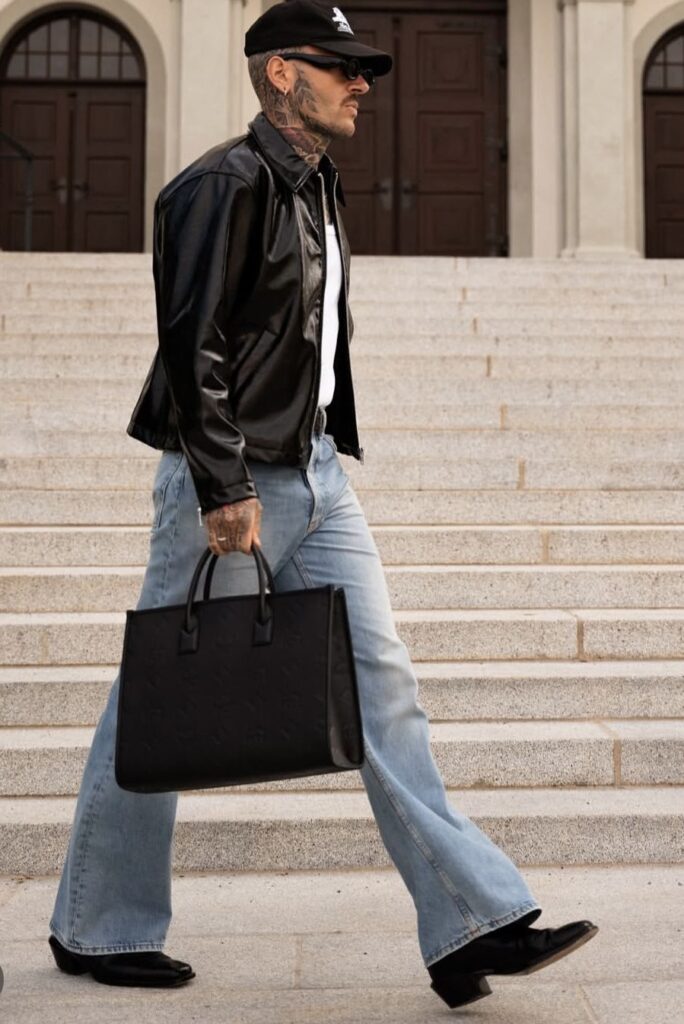
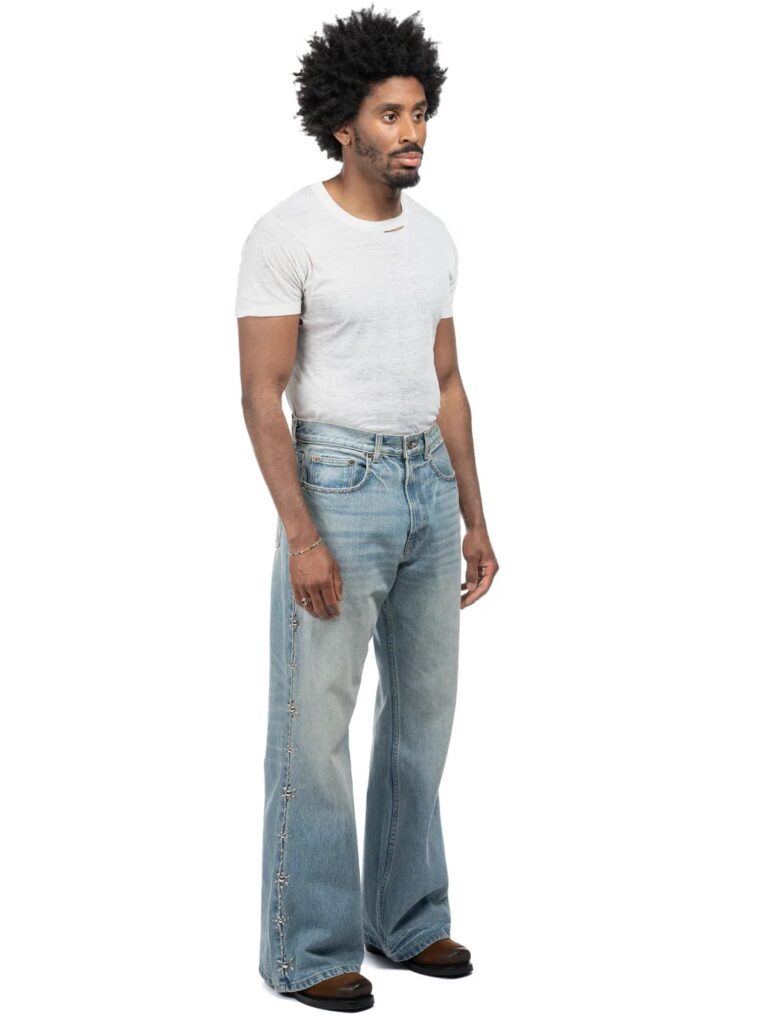
Forget the flare for a second. The waist and hip fit is what makes or breaks this pant and almost nobody talks about it. If the top of a bell bottom is loose, the whole leg looks like it’s hanging off you rather than shaped around you. Close through the waist, straight or barely tapered through the thigh, then let it open up from the knee down. That’s the formula. A flare that starts at the hip instead of the knee reads costume, not clothing. That’s the fastest way to turn a good pair of jeans into a Halloween outfit.
This is where bell bottoms actually differ from most other trousers in your wardrobe. Pleated trousers add volume up top on purpose — that’s the whole point of the pleat. Bell bottoms do the opposite. Any extra room at the waist or hip isn’t a design choice, it’s a mistake.
Rise matters just as much as taper. A mid rise sits closer to the natural waist and keeps the proportion balanced for most builds. A low rise pulls the eye downward and can make the flare look even more dramatic than it is, which works on a taller frame and overwhelms a shorter one. If you are new to flared denim, start with mid rise. It’s the more forgiving choice and it’s easier to build outfits around — think of it the same way you’d approach linen trousers in summer: the fit rule stays the same even when the fabric and season change.
Height changes the math too. A wide, dramatic flare needs leg length to carry it. Under five foot eight, keep the sweep subtle and stick with mid rise rather than low rise. It protects your proportions instead of shortening them.
Bell Bottoms Aren’t the Only Flare Out There
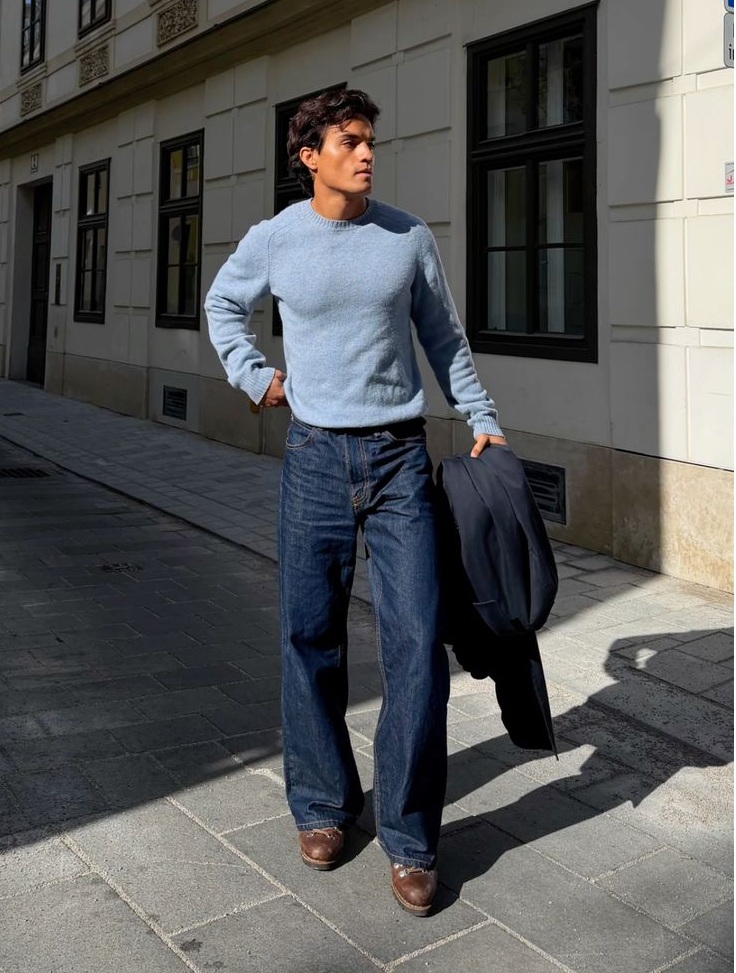
Search for flare jeans and you’ll run into terms that get thrown around loosely: loon pants, balloon pants, elephant pants. These aren’t marketing fluff — they’re genuinely different silhouettes. Loon and balloon pants push the flare even further than a standard bell bottom, often ballooning out enough to brush the floor. Elephant pants take it to the extreme, with a flare wide enough to fully cover the shoe, meant to be worn with thick soled footwear so the hem doesn’t drag and fray on the ground.
A standard bell bottom sits in the middle: dramatic enough to read as a statement, controlled enough to wear to work or dinner without looking like a costume. That’s closer in spirit to something like dress pants than it is to loon or elephant silhouettes — the flare says something, but it doesn’t take over the room. The same restraint that makes wool trousers work for a dinner isn’t so different from what keeps a bell bottom on the right side of wearable.
If you’re shopping and a listing says “loon” or “elephant,” expect a far wider sweep than a typical bell bottom or flare jean.
The Fabric Matters More Than the Cut

This is the part most articles skip entirely. A bell bottom cut in rigid, heavyweight denim, think 12 to 14 ounce, holds its shape and drapes with weight, which is what gives the flare that clean, structured swing when you walk. A bell bottom cut in a lightweight stretch blend clings through the thigh and can look flimsy at the hem, no matter how good the cut is on paper.
If you’re buying your first pair, check the fabric weight before the wash. Rigid or mid weight denim with a small percentage of stretch, under 3 percent elastane, gives you the structure of raw denim with enough give to move comfortably. Anything heavier on stretch tends to lose the flare’s shape by the end of the day.
Black Isn’t Actually Your Safest Option

Everyone defaults to black bell bottom jeans for men because it feels foolproof. It isn’t, not entirely. Black flared denim looks sharp under structured grey shirts but goes flat and heavy under anything equally dark. Dark indigo does more work across more outfits. It plays well with warm neutrals and even patterned white shirts without fighting for attention. Ice blue and light washes are the ones nobody talks about enough and they’re the easiest to wear in warmer months when black denim just feels wrong. If you’re only buying one pair, indigo beats black. If you’re buying two, add black second.
The Jeans Aren’t Doing the Heavy Lifting, Your Shirt Is

Here’s what actually separates a styled outfit from a guy who just put on wide pants: what you wear above the waist carries the smart outfit. A flared leg already has visual weight, so a fitted t-shirt or a tucked in shirt is what gives the whole look shape instead of just volume. Pair two loose pieces together and you disappear into fabric. Tuck a t-shirt or best types of shirt into bell bottoms and you get a defined waist, which is the one detail that makes flared denim look styled instead of accidental.
If you want a sharper finish, a fitted jacket layered over a plain t-shirt tightens the whole silhouette. Our guide on jackets for men covers which cuts pair best with a wider leg without adding bulk up top. Footwear needs to sit under the hem, not peek above it.
Chunky sneakers, Chelsea boots and loafers work because the flare is cut to fall over them, not stop short. This is really the same rule that governs boots with jeans in general — the hem needs somewhere to land and thin, delicate footwear just disappears under it.
Boots earn their spot here for a reason: a flared leg needs volume and weight at the bottom to stay balanced and boots with jeans have solved that problem for decades. Skip the sneaker entirely on cooler days and lean into a boot instead — it does more of the visual work for you.
Stop Calling Every Wide Jean a Bell Bottom
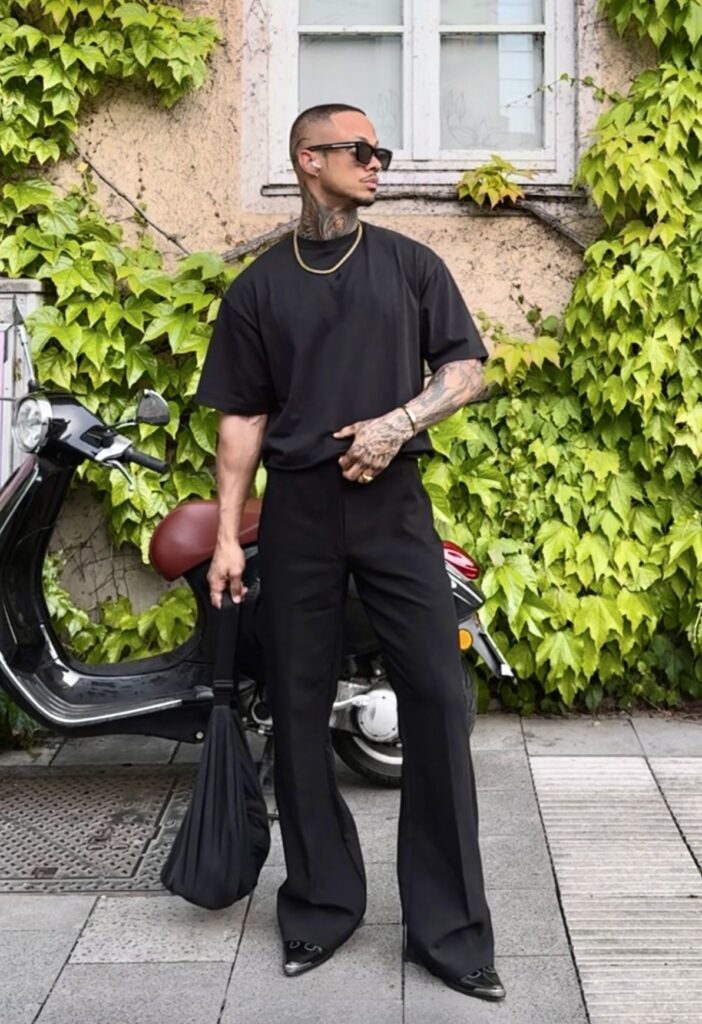
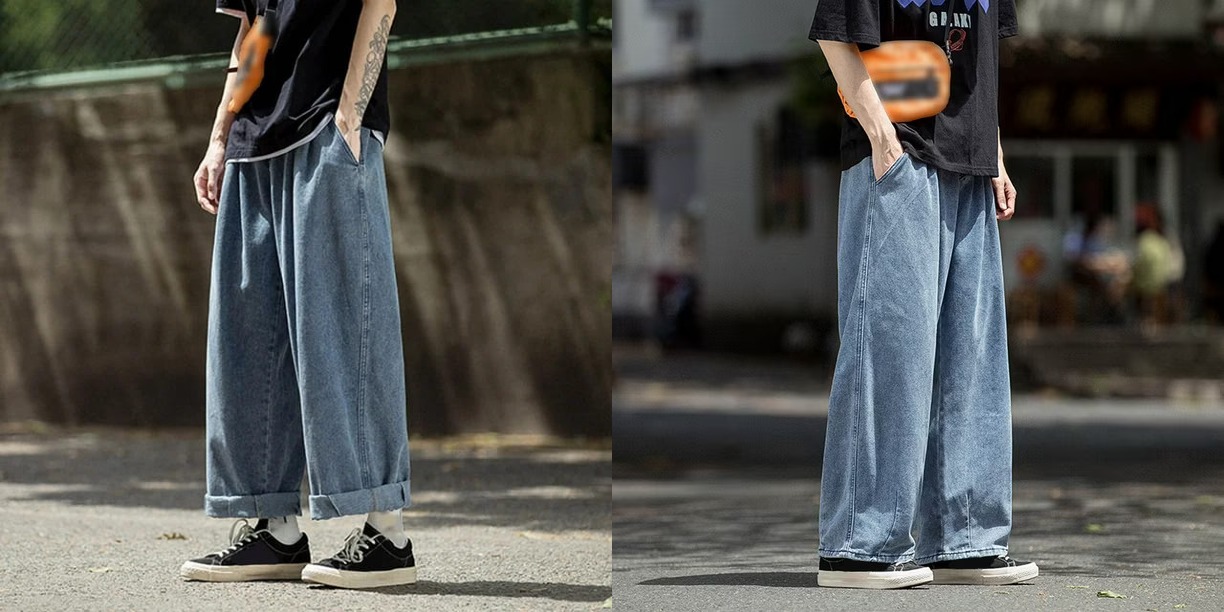
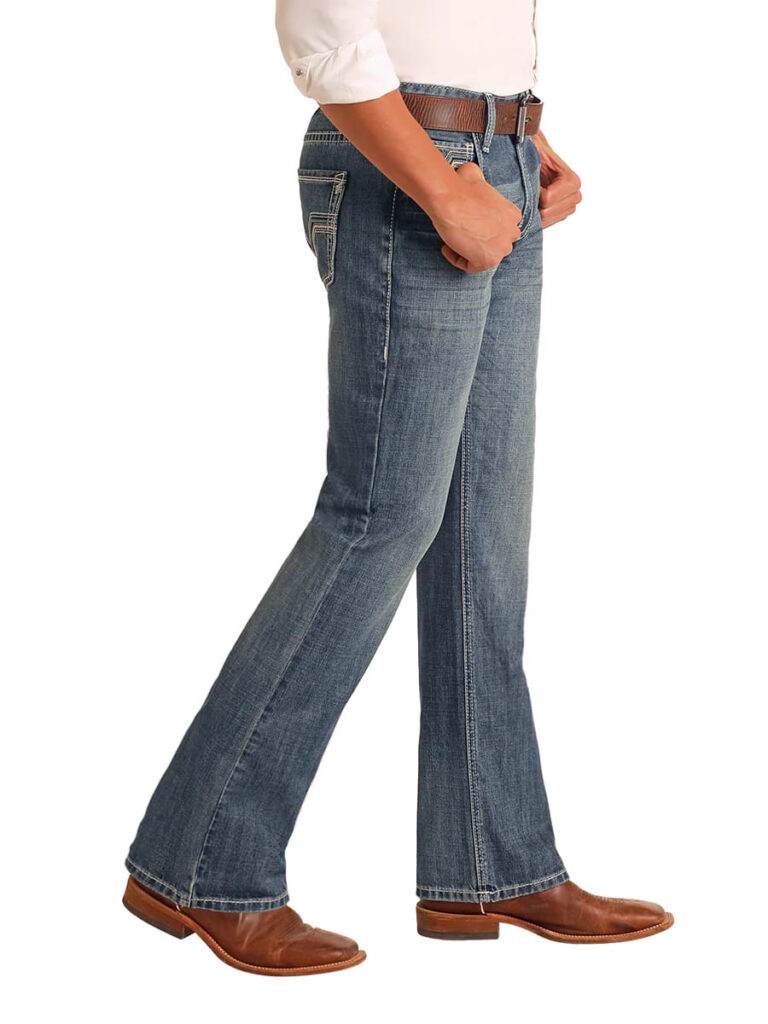
This mislabeling happens constantly and it’s why guys end up buying the wrong pair. A bootcut barely flares — a subtle kick from the knee, built to sit over a boot without any real drama. A wide leg jean carries width from the hip straight down, with no taper through the thigh at all. A bell bottom does something neither of those does: it stays fitted through the thigh, then opens into a pronounced, deliberate flare from the knee down. That taper-then-flare shape is the entire point. If your jeans are wide everywhere, you bought wide leg not bell bottom. And that’s a completely different silhouette with its own styling rules.
Where This Earns Its Place in Your Wardrobe
Bell bottoms aren’t a one outfit pant. A graphic t-shirt and sneakers takes them straight into campus territory. A henley with loafers turns them into a weekend brunch outfit that doesn’t try too hard. The one place they genuinely outperform skinny denim is travel. Anyone who’s sat through a long flight or a train ride in tight jeans knows the relief of a cut with actual room through the thigh. For evenings, black bell bottoms with a fitted shirt and Chelsea casual boots hold their own at dinner without needing a blazer to look finished.
The Mistake That Undoes the Whole Outfit
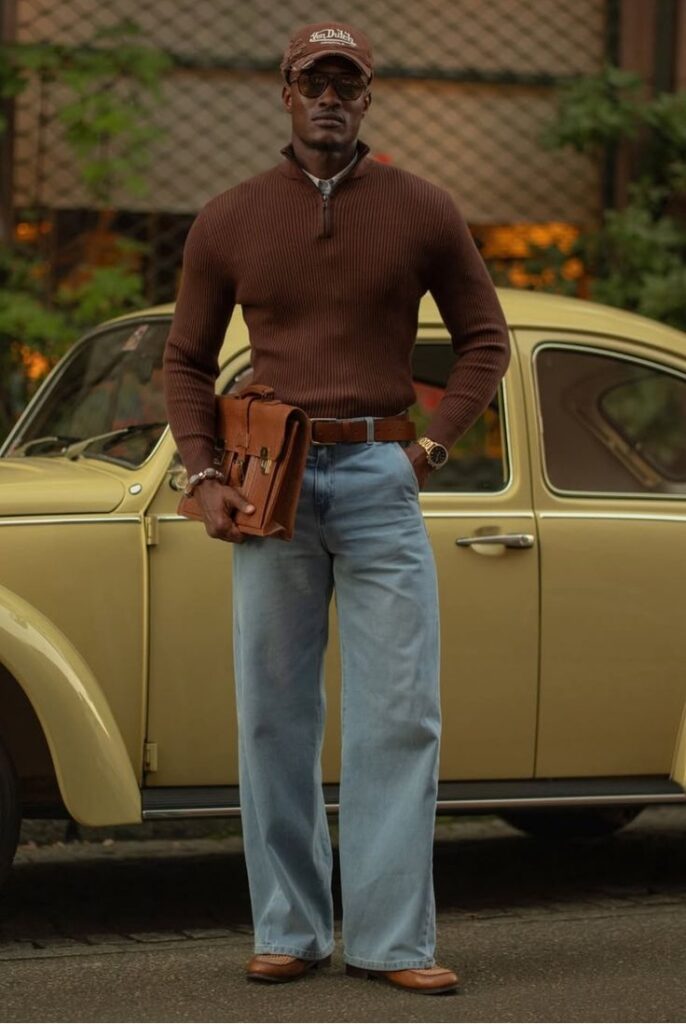
It’s not the flare width. It’s the hem length. Too short and you expose ankle in a way that snaps the retro line completely. It stops looking intentional and starts looking like the jeans shrank. Too long and the fabric pools and frays at the heel, which reads sloppy no matter how good the fit is everywhere else. Get the hem tailored so it grazes the top of your shoe with barely a break in the fabric. That single alteration does more for how these jeans look than any styling choice above the ankle.
Do Bell Bottom Jeans Still Work in Modern Men’s Fashion?

Yes — and it comes down to one word: restraint.
The line between outdated flared jeans and modern flared denim isn’t the flare itself. It’s everything around it. Loud prints, chunky accessories, exaggerated silhouettes — that’s what pulls a wide leg jeans look backward into costume territory.
Strip that away and keep it simple. Clean lines. Neutral colors. A sharp, deliberate fit. Do that and bell bottom jeans stop reading as retro denim. They read as a choice.
That’s the real difference. Nostalgic bell bottoms try too hard. Modern ones don’t try at all — they just look right.
Which Body Type Suits Bell Bottom Jeans Best?

Bell bottoms aren’t for men who want to blend in. They’re for men who don’t mind a second look.
They sit best on average to tall builds with a lean or athletic frame, paired with a style that already leans simple. The flare has room to work with that kind of proportion, which is why most fit guides for flared jeans lead with body type first.
But here’s the part most guides skip: body type isn’t the deciding factor. A proper bell bottom jeans fit guide will always come back to one thing — fit over frame. A well fitted bell bottom on almost any build will outperform a loose, mismatched one on a “perfect” body type every time. Get the thigh, the rise and the balance right and the jeans do the rest.
Frequently Asked Questions
Are bell bottom jeans still in style for men?
Yes and search trends back that up. Interest in flare jeans has stayed consistently ahead of both bell bottom jeans and bell bottom pants as search terms, which points to a wider fit that’s settled into regular rotation rather than a passing spike. The style solves comfort problems skinny fits created and that’s usually what keeps a silhouette around past its first trend cycle instead of fading out with it.
What shirts go best with bell bottom jeans?
Fitted t-shirts, slim polos and chambray shirts. Anything oversized on top cancels out the shape the flare is meant to create.
Can short men wear bell bottom jeans?
Yes, with a subtle flare and a mid-rise cut. A dramatic low-rise flare can visually shorten a smaller frame, so keep the sweep minimal and the rise higher.
What’s the real difference between bell bottoms and bootcut jeans?
Bootcut jeans flare barely, just enough to clear a boot. Bell bottoms flare wide and dramatically from the knee. The two aren’t interchangeable despite how often they’re sold as the same thing.
What shoes work best with bell bottom jeans?
Chunky sneakers, Chelsea boots and loafers. Thin-soled or narrow shoes get visually swallowed by the flare and throw off the whole proportion.

Deepak Bhandari has spent 10 years in personal styling, helping men dress with more confidence and less guesswork. He’s the founder of Deepu Fashion, where he writes about style, grooming and everyday outfit ideas that actually work in real life. Follow him on Instagram for daily style tips and inspiration.