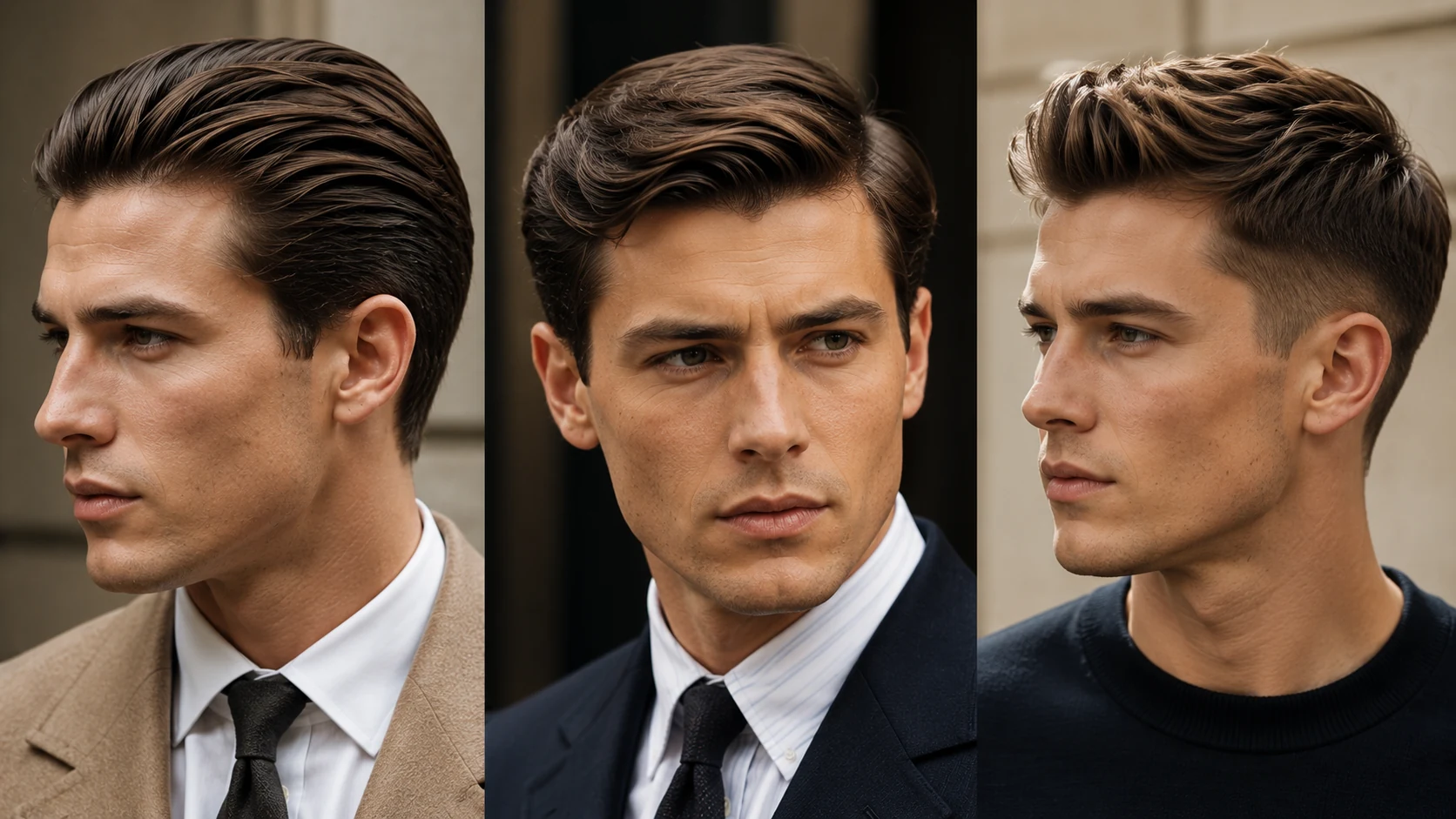
There’s a particular kind of haircut that doesn’t announce itself, doesn’t ask for attention and doesn’t chase whatever trend is circulating on social media this week. No dramatic fades, no three different products holding a shape that collapses by noon, no visible effort of any kind. Just a haircut that looks right — in a boardroom, at a dinner table, on a weekend walk, everywhere.
That’s the old money hairstyle in a sentence. Not loud. Not trying. Just permanently, quietly correct.
The old money aesthetic has always been about restraint — expensive clothes that don’t show their price tags, watches that don’t flash, cars that don’t need to prove anything. The hair is exactly the same philosophy applied to your head. Clean, structured, natural. The kind of cut that looks like it costs nothing to maintain because the person wearing it has never had to think about it.
Every old money hairstyle worth knowing is here — the iconic classic cuts, modern interpretations that work for 2026, face shape guidance, hair type advice, grooming product recommendations and the real difference between old money hair and everything else out there right now.
Old Money Hair vs New Money Hair — The Real Difference
Before getting into specific styles, understanding what actually separates old money hair from everything else saves you from getting the wrong cut for the right reason.
New money hair is about visible effort. High skin fades with hard razor lines. Sculptured shapes that require thirty minutes of styling. Heavy product that makes the hair look wet or stiff. Bold contrasts and dramatic disconnections. It looks expensive because it looks worked on. The whole point is that people notice.
Old money hair is about invisible effort. Once cut well, the styling looks effortless rather than worked on. Nothing is rigid — the shape holds but moves naturally. Product stays minimal — just enough to keep things in place without looking like anything was applied. It looks good because it was cut well, not because it was styled extensively.
The single biggest tell between the two is this: new money hair looks like it took time this morning. Old money hair looks like it always just looks like that.
What Makes a Hairstyle Read as Old Money
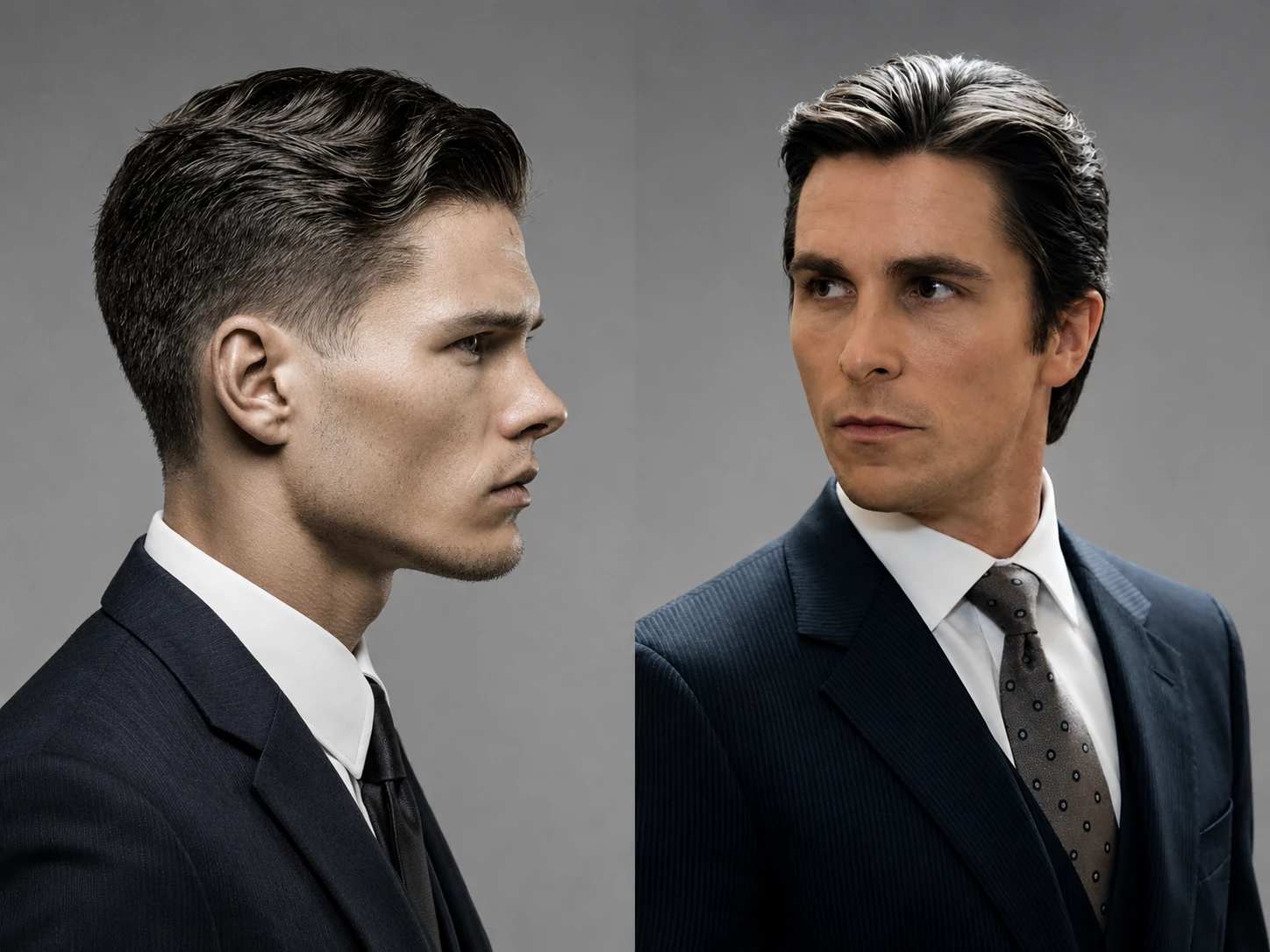
Proportion over drama. Old money cuts work with the natural shape of the head rather than creating artificial contrast. Low tapers instead of skin fades. Scissor work instead of clipper architecture. The transition from top to sides is gradual and natural rather than abrupt and geometric.
Natural texture respected. Old money hair works with what grows out of your head rather than fighting it into a different shape. Thick hair gets light layering for movement. Fine hair gets cut to maximise its natural volume. Wavy hair is shaped to enhance its natural direction rather than being forced straight.
Product that disappears. The finishing touch of any old money hairstyle is product that you can’t see. Matte creams, light pomades, styling pastes in small amounts. The hair looks like it’s behaving naturally — because it mostly is.
The Best Old Money Hairstyles for Men
1. The Classic Side Part
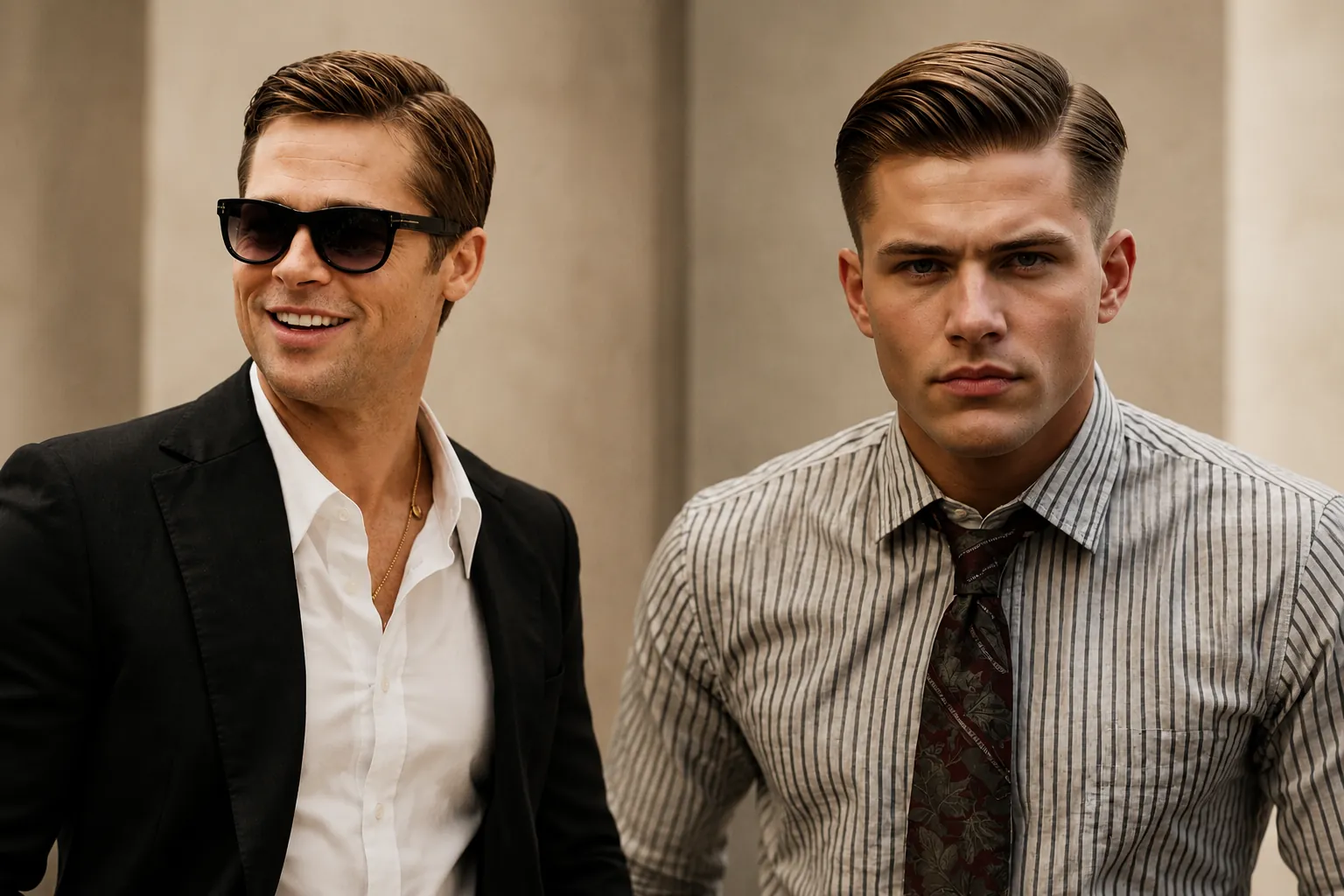
The side part is the single most recognisable old money hairstyle and for good reason — it has been worn by prep school graduates, Ivy League alumni, European aristocrats and Wall Street professionals for over a century without ever looking dated.
The cut itself is straightforward: longer length on top, low taper on the sides and back, a natural part line on the left or right. What makes it read as old money rather than just tidy is the finish — combed gently into place with a light cream or pomade, touchable rather than lacquered, with a little natural movement at the crown rather than being plastered flat.
Ask your barber: Classic side part with scissor work on top, low taper on sides and back, natural part line rather than razor-cut.
Product: Light pomade or styling cream, pea-sized amount, worked through slightly damp hair.
Best for: All face shapes. Oval and rectangular faces particularly benefit from the horizontal line of the part.
2. The Ivy League Cut
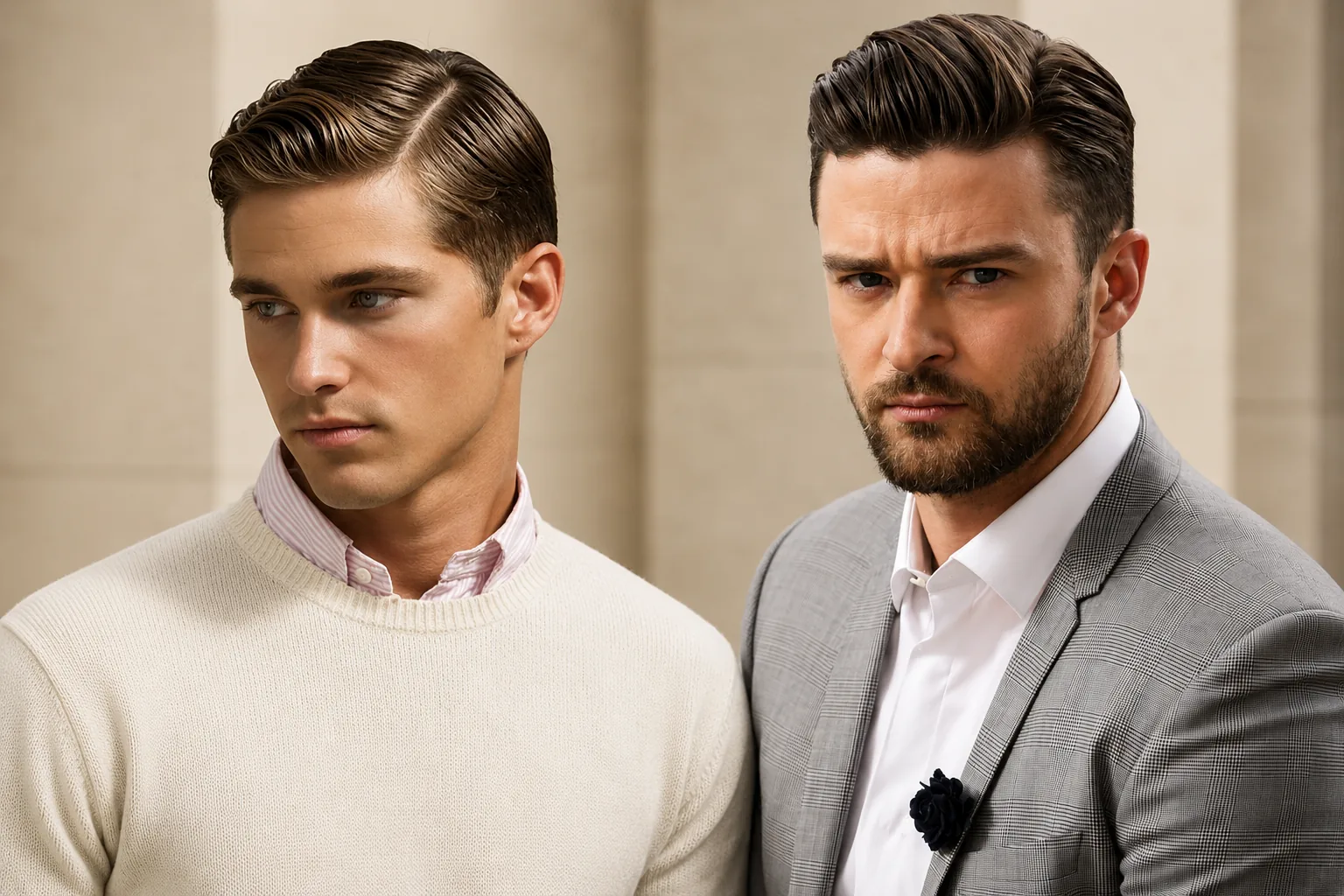
The Ivy League is what happens when a crew cut grows up. It keeps the neat, masculine structure of the crew but adds enough length on top to comb or sweep slightly to one side. It’s the haircut equivalent of a well-fitted blazer — structured enough to mean business, relaxed enough to wear all day without thinking about it.
Old money haircut for men in professional environments consistently lands on the Ivy League because it navigates every context without adjustment. Board meeting in the morning, school pickup in the afternoon, dinner reservation in the evening — the same cut handles all three without a single touch-up.
Ask your barber: Short length on top with light scissor texture, tapered sides and back, enough length to sweep slightly to one side.
Product: Small amount of matte paste worked through dry hair for natural texture and separation.
Best for: Oval, square and rectangular face shapes. Works with straight, wavy and slightly thick hair.
3. The Princeton Cut
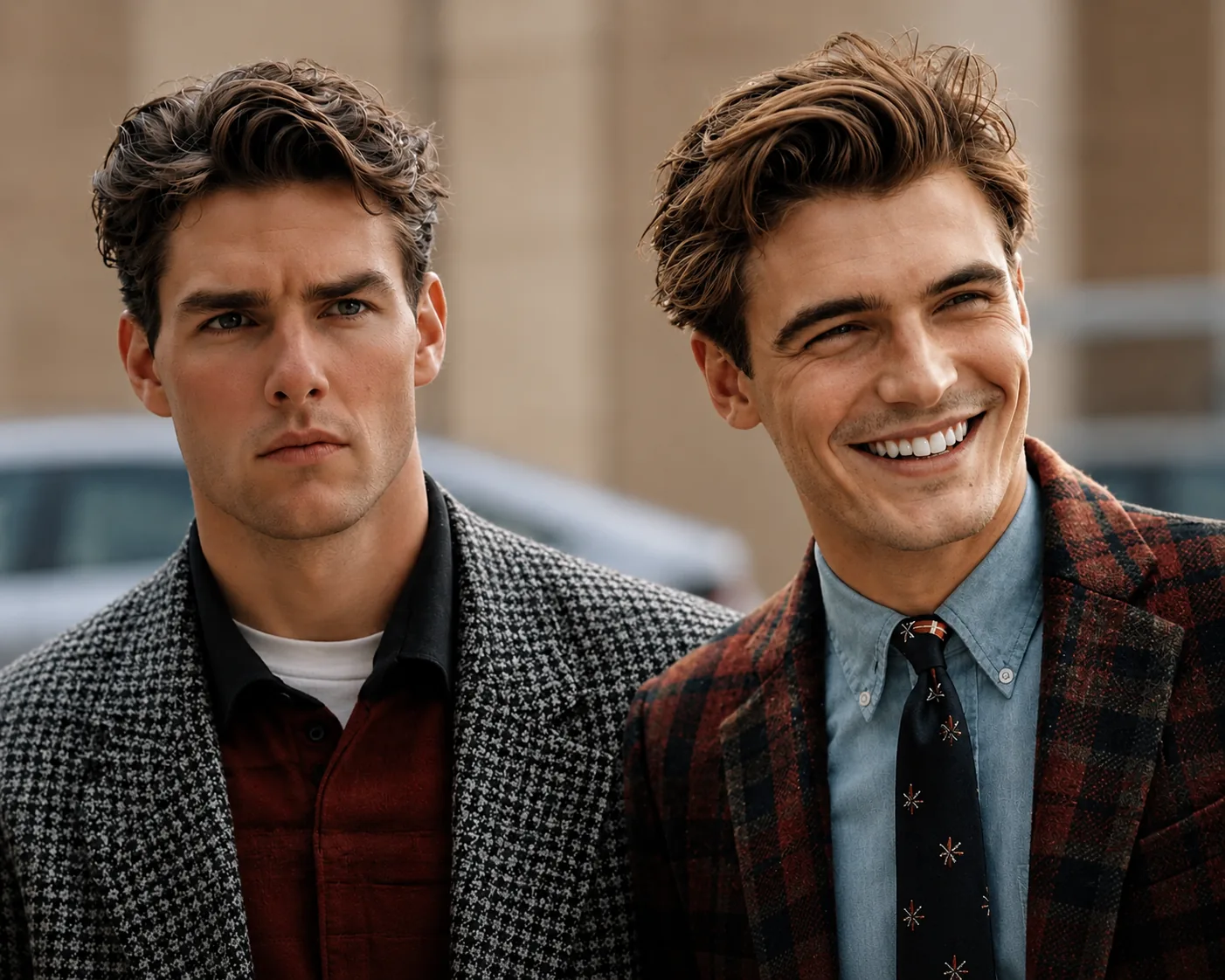
The Princeton sits between the Ivy League and a full side part in terms of formality. The top is cut slightly shorter than a side part but slightly longer than a standard Ivy League, with a defined natural part and clean low taper. It’s tidy enough for the most formal professional settings while remaining genuinely comfortable for daily wear.
Named after the university, the Princeton carries that specific Northeastern prep school energy that is central to the old money hairstyle aesthetic — educated, understated, completely at ease with itself.
Ask your barber: Short top with defined natural part, low taper on sides and back, clean scissor-cut neckline.
Product: Light styling cream combed through damp hair, allowed to dry naturally.
Best for: Oval and oblong face shapes. Particularly flattering on men with higher foreheads.
4. The Slick Back
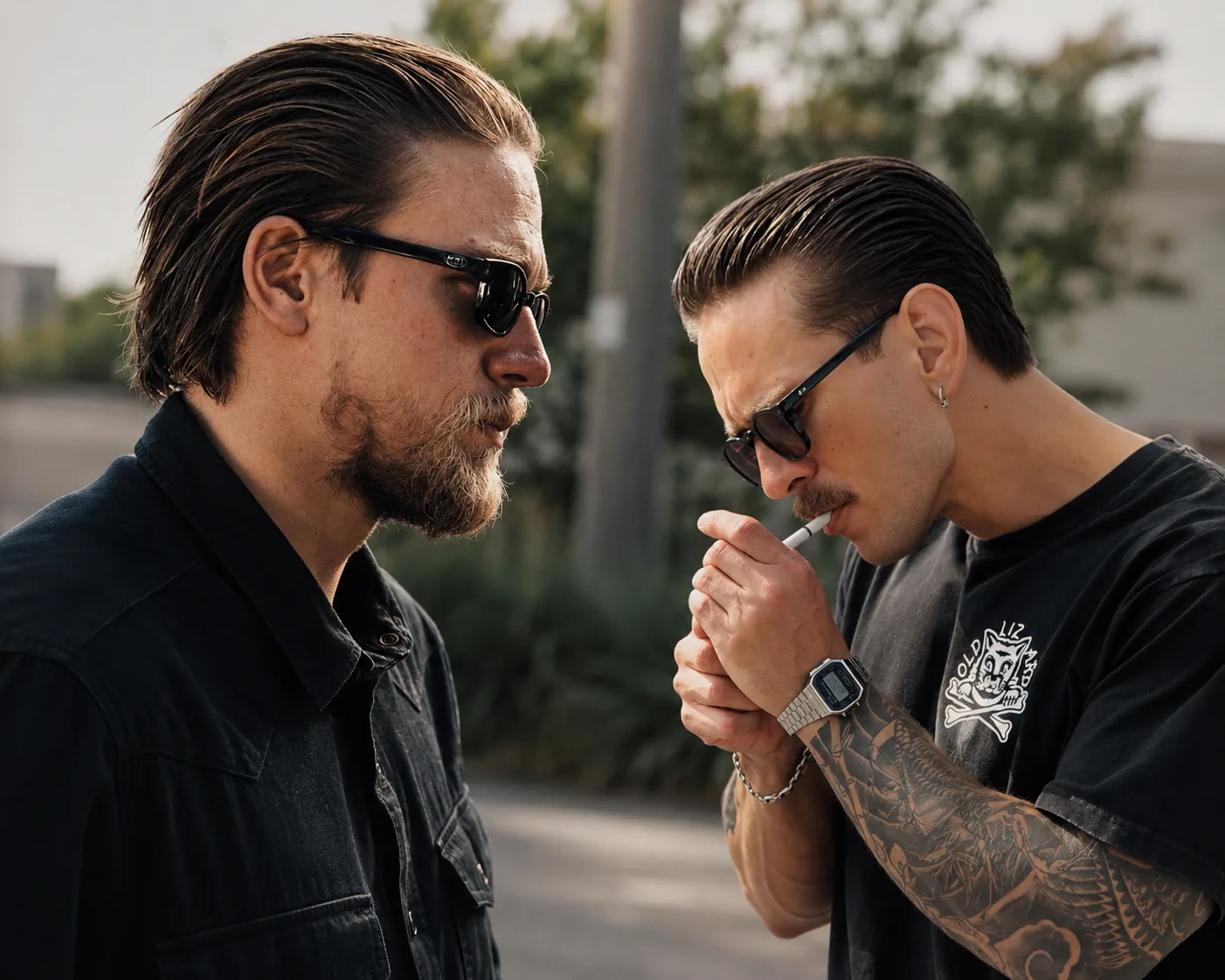
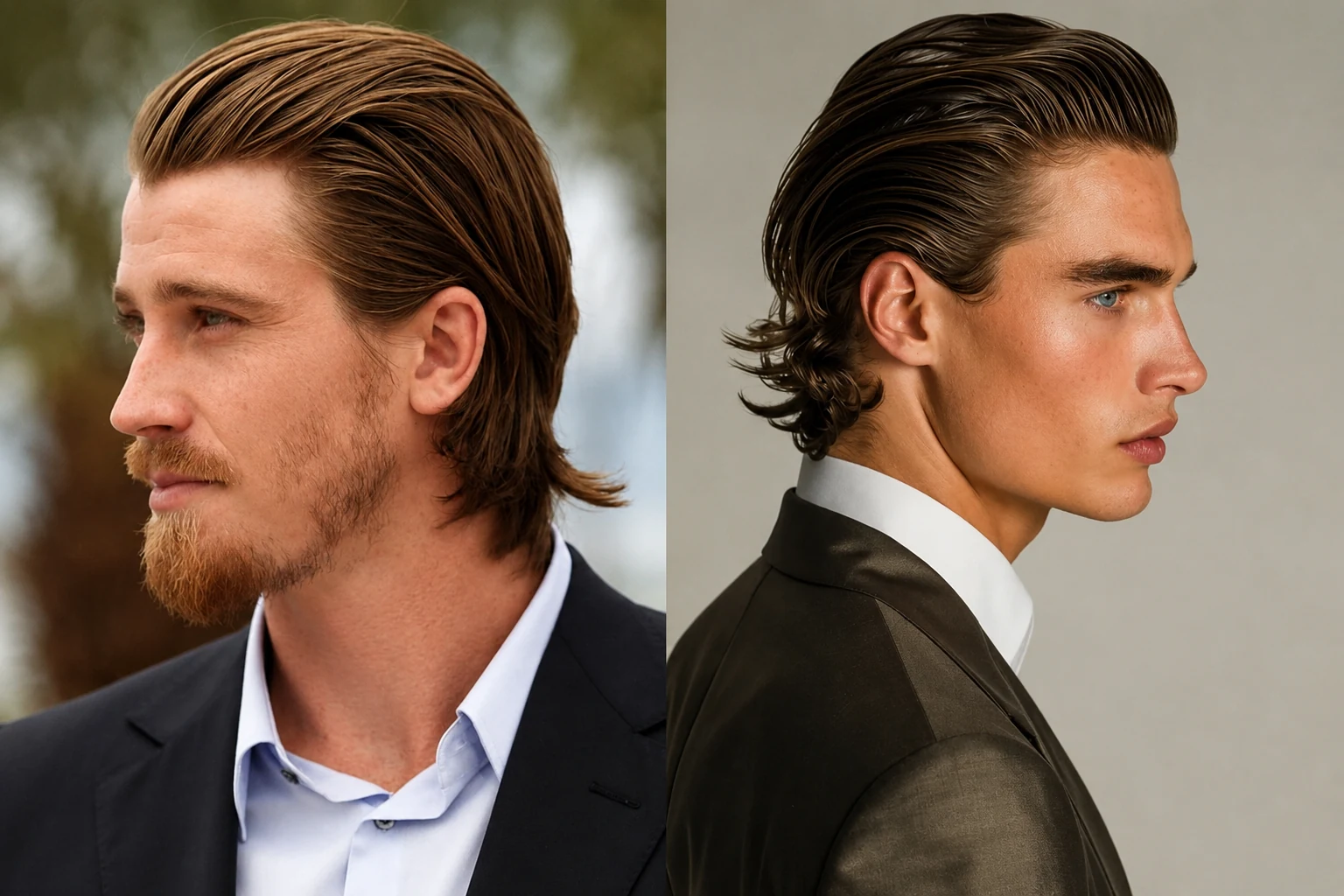
The slick back is the old money hairstyle that carries the most authority in a room. Hair combed clean from the forehead straight back, no part, smooth and controlled with a light product that gives a healthy sheen without looking wet or over-worked.
The key difference between an old money slick back and a new money version is the sides. Old money keeps the sides scissor-blended and low-tapered — the hair transitions gradually from the length on top rather than being shaved or faded aggressively. The result looks mature and confident rather than trend-driven.
Ask your barber: Medium to longer length on top, scissor-blended sides with low taper, clean neckline, no hard disconnection.
Product: Light pomade or medium-hold cream worked through slightly damp hair, brushed straight back.
Best for: Oval and rectangular face shapes. Works best with straight or slightly wavy hair of medium to thick density.
5. The Gentleman’s Crop
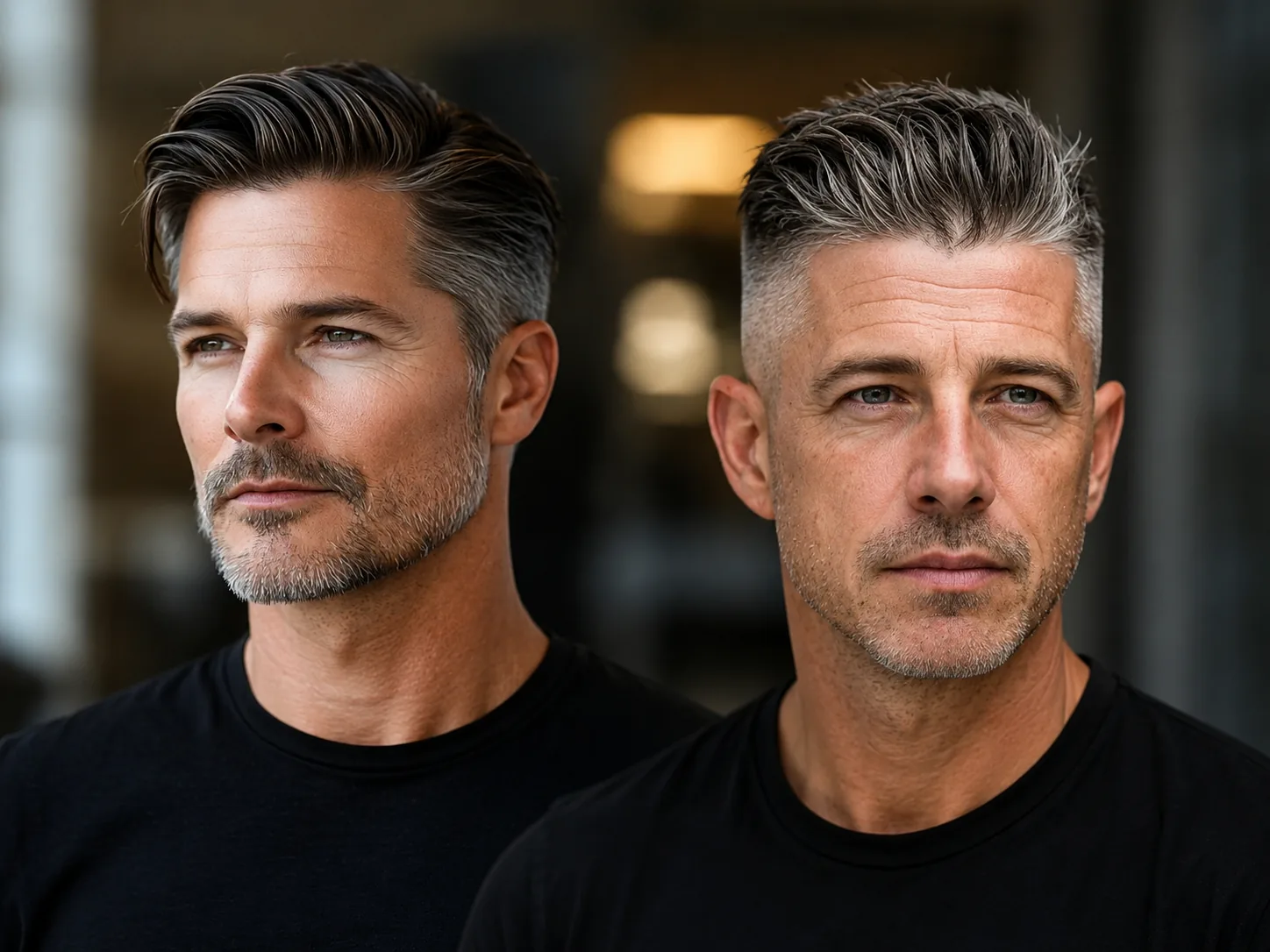
The gentleman’s crop — sometimes called the French crop in its more casual form — is a clean, low-maintenance option that sits firmly in old money territory when executed with restraint. Short textured top, soft fringe that sits naturally at the forehead rather than being pushed aggressively forward, low taper on the sides.
What separates the old money version from a standard French crop is the finish. The fringe lies naturally rather than being styled forward with heavy clay and the overall shape has softness rather than architectural sharpness.
Ask your barber: Short textured top with natural fringe, low skin-adjacent taper, scissor-blended sides.
Product: Small amount of light clay or matte paste, worked through dry hair without over-directing.
Best for: Round and square face shapes. Works well with thick hair that naturally falls forward.
6. The Tailored Crew Cut
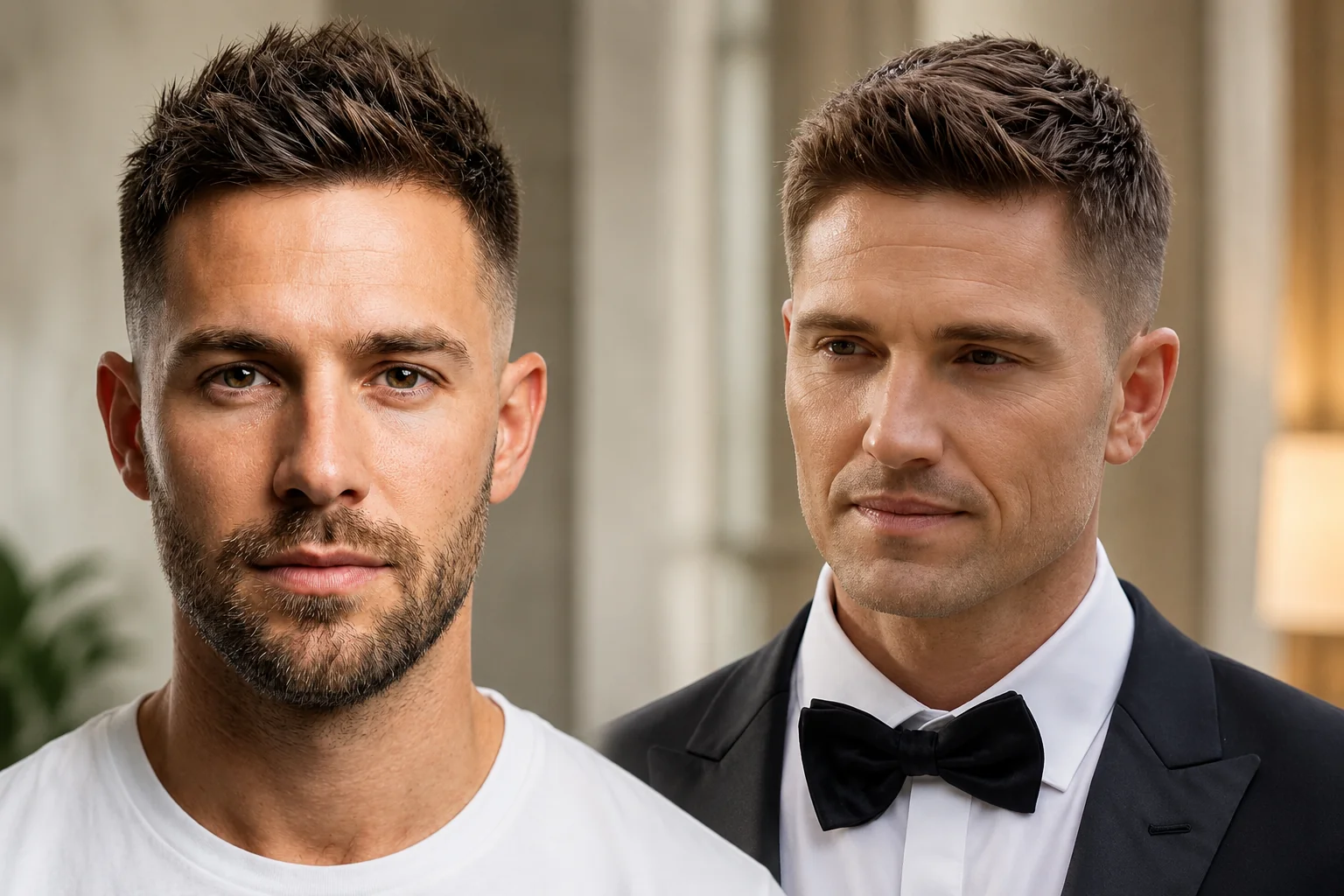
The crew cut is perhaps the most quietly confident haircut a man can wear. Short, clean, masculine — it requires almost no daily maintenance while consistently looking sharp. The tailored version of the crew cut that reads as old money keeps the taper low and natural rather than faded aggressively and uses scissor work on top rather than clippers alone.
Short haircuts like the tailored crew carry a particular kind of unpretentious confidence. There’s no style calculation happening, no careful arrangement. The hair simply looks correct.
Ask your barber: Crew cut with scissor texture on top, low natural taper on sides and back, clean neckline.
Product: Touch of matte paste or nothing at all — the crew cut is the most product-free option on this list.
Best for: All face shapes. Particularly strong on square and oval faces.
7. The Natural Slick Back
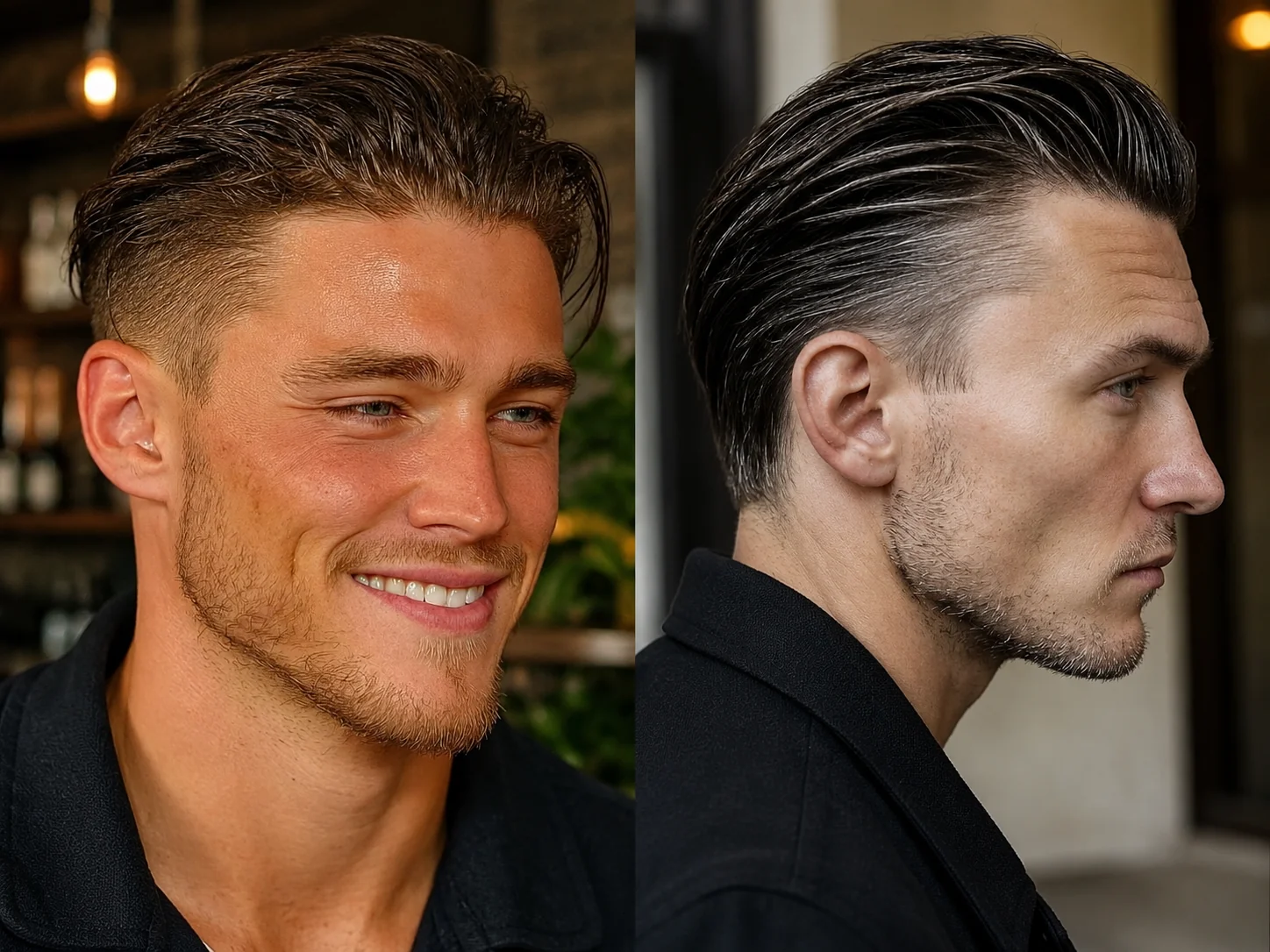
A softer version of the full slick back, the natural slick back allows a little more movement and volume rather than pressing everything completely flat. The hair is directed backward but allowed to sit with its natural texture rather than being combed into a smooth, uniform surface.
This is the old money hairstyle for men who want the authority of a slick back without the formality. It works equally well with a suit and with weekend casual wear, which makes it one of the most genuinely versatile cuts on this list.
Ask your barber: Medium length top, scissor-blended sides, tapered neckline, no hard part or hard disconnection.
Product: Light cream or styling lotion, distributed through slightly damp hair and brushed backward.
Best for: Oval and long face shapes. Excellent for men with naturally wavy or slightly thick hair.
8. The Side Sweep
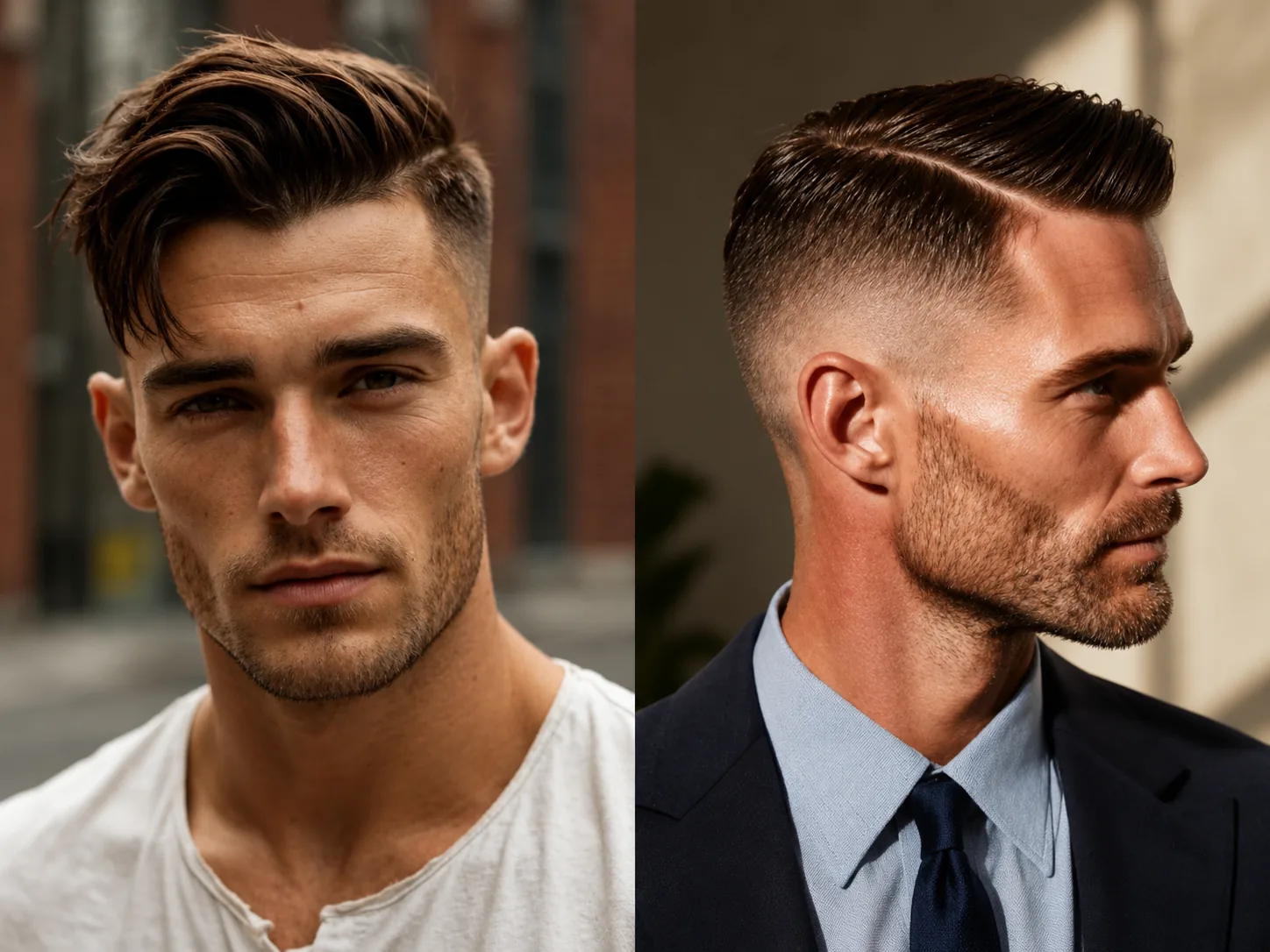
The side sweep gives you movement and subtle volume without crossing into trend territory. The top is cut with enough length to sweep across the forehead to one side, the sides are tapered rather than faded and the overall shape has a relaxed elegance that works whether you’re wearing a collar or a casual shirt.
Ask your barber: Medium length on top, tapered sides, enough length at the front to sweep to one side.
Product: Light blow dry with a round brush to encourage the sweep direction, finished with a small amount of cream.
Best for: Oval and rectangular face shapes. Works beautifully with fine to medium hair that benefits from directional styling.
9. The Scissor Cut
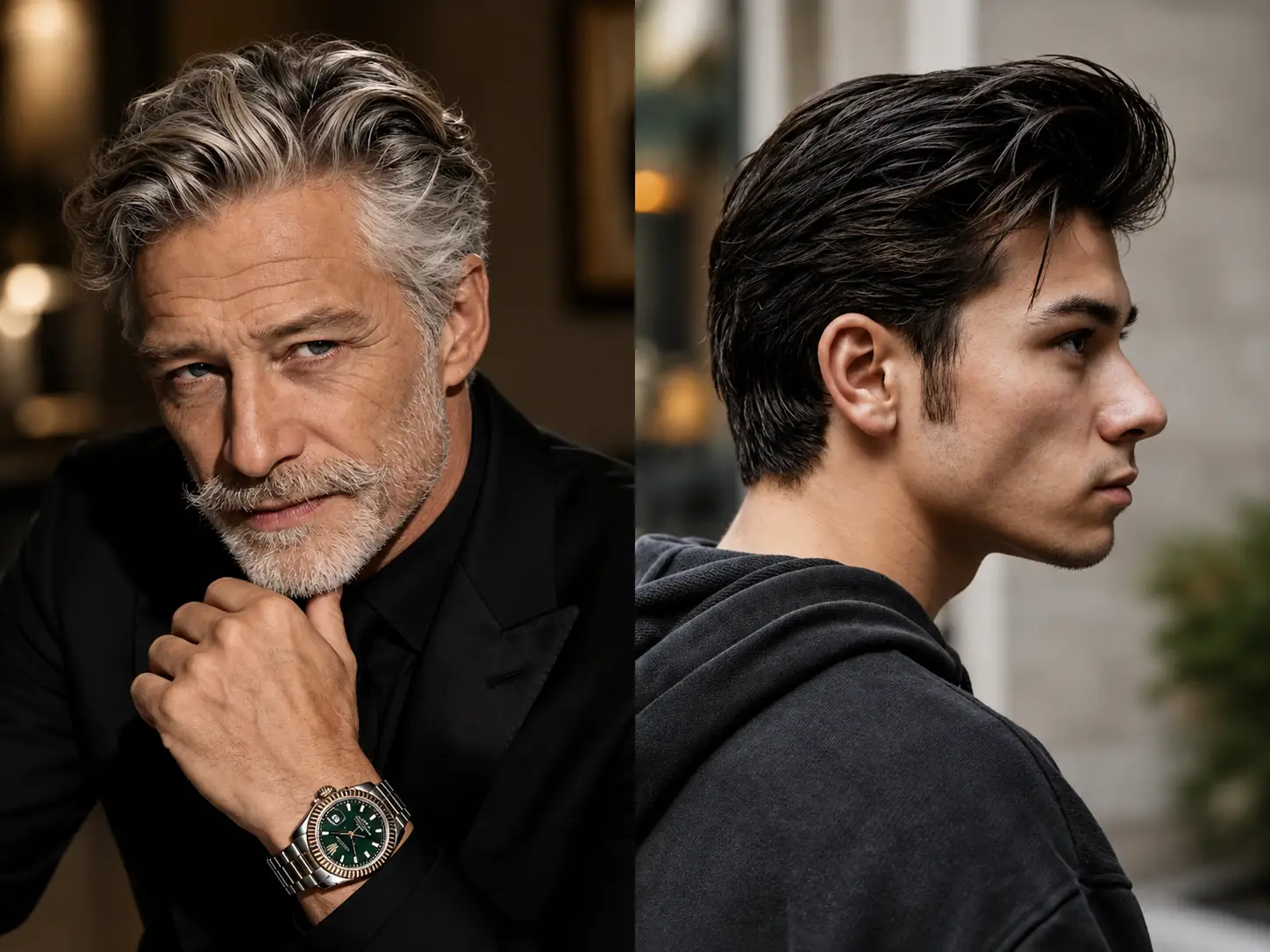
Pure scissor work — no clippers on the sides, no fades, just scissors throughout — is one of the clearest signals of old money grooming standards. What it produces is a softer, more natural transition from top to sides that looks expensive in the way that quiet things look expensive: because the technique required to execute it well is significant. Done right, the finish looks effortless — natural movement throughout, gradual length transitions, a haircut that behaves because it was cut correctly, not because it was styled into submission.
Ask your barber: Full scissor cut throughout — top and sides — with light layering for movement and a tapered neckline.
Product: Light cream or leave-in conditioner. The short scissor cut men is designed to work with your hair’s natural behaviour.
Best for: All hair types, particularly wavy and thick hair that benefits from scissor layering rather than clipper work.
10. The Curtains
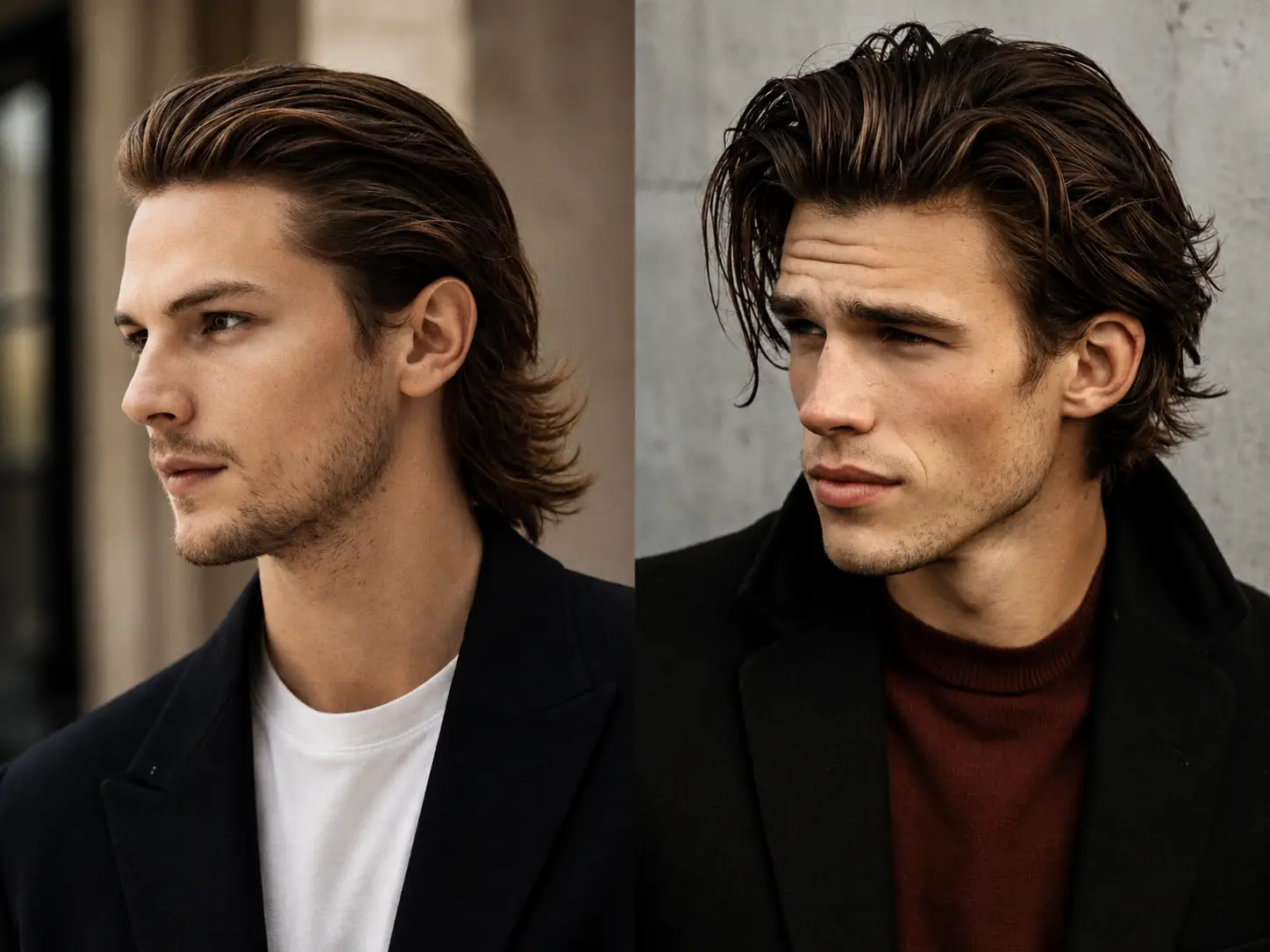
Curtains hairstyle curly hair — parted softly in the middle and falling naturally to either side — have been an old money staple since the 1990s and have never really left the rotation of men who understand understated style. The old money version of curtains is neater than the grunge-era original: the sides are tapered rather than left long and the parting is soft rather than severe.
Ask your barber: Medium layers on top with soft centre parting, tapered sides, clean neckline.
Product: Light blow dry outward from the centre part, minimal cream to hold natural movement.
Best for: Oval and heart face shapes. Works particularly well with naturally straight or slightly wavy hair.
11. The Bro Flow
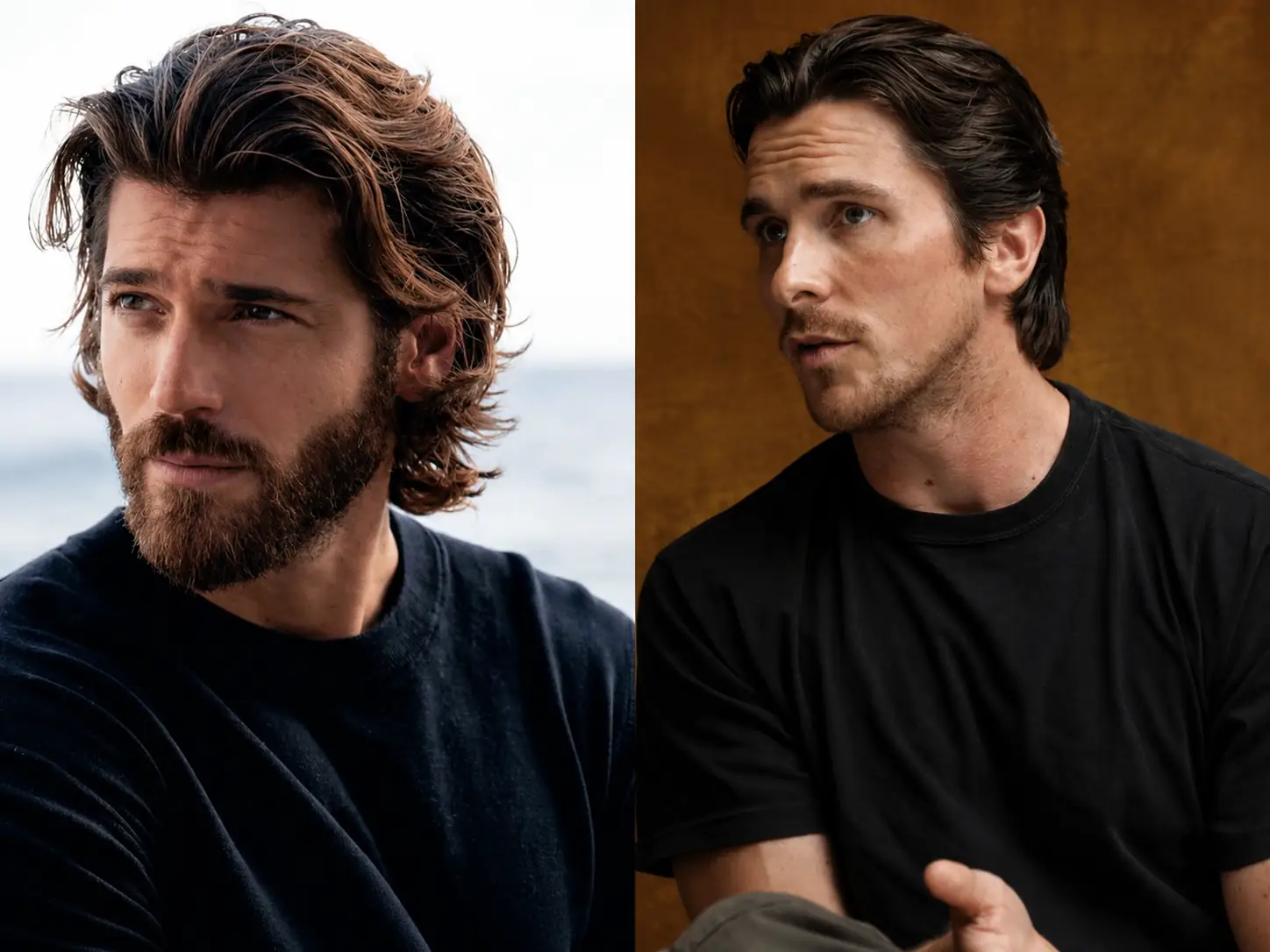
The bro flow is longer, more relaxed and carries the kind of ease that comes from genuinely not needing to prove anything. Medium to longer hair with natural movement, tapered edges to keep it from looking unkempt and a clean neckline that signals the difference between intentional length and neglect.
Old money figures have always worn longer hair — think Kennedy-era New England, British aristocratic country house weekends, European old family portraits. The flow is not a departure from the aesthetic, it’s a longer expression of the same philosophy.
Ask your barber: Medium to longer layered length, tapered sides, clean neckline, light layering to prevent bulk.
Product: Leave-in conditioner for natural texture, minimal additional product.
Best for: Oval and rectangular face shapes. Works best with naturally straight or wavy hair of medium to thick density.
12. The Low Taper Classic
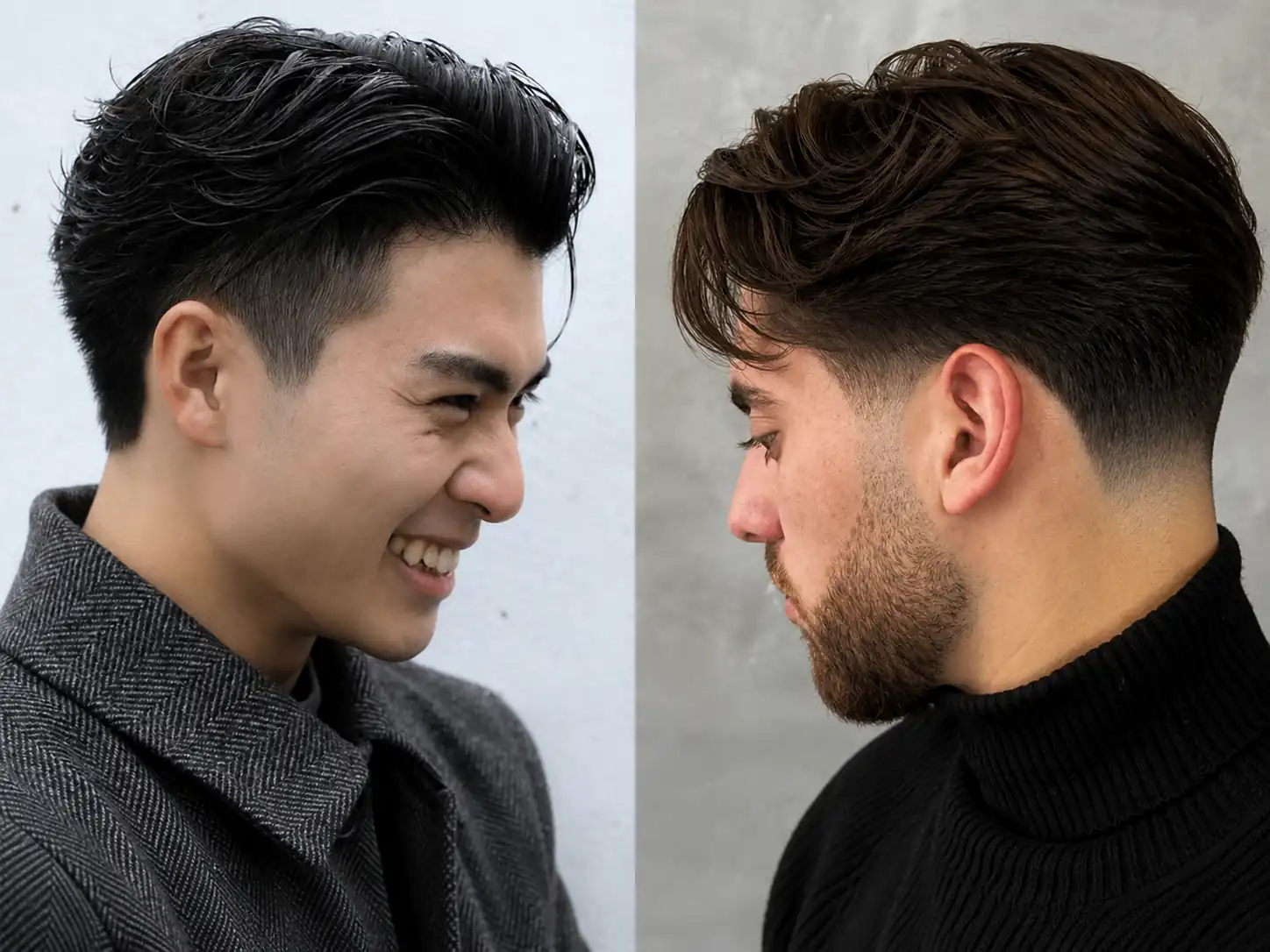
The low taper is less a specific style and more a finishing principle that elevates any of the cuts on this list. Rather than fading aggressively from the top down, the low taper begins just above the ear and transitions gradually — keeping more length on the sides while still producing clean, tidy edges around the ears and neckline.
Ask your barber: Specify low taper rather than fade for any cut — begin the taper above the ear only, gradual transition, no skin visible.
Best for: All cuts and all face shapes. Non-negotiable for the old money aesthetic.
13. The Executive Contour
A natural side part with scissor work throughout, the executive contour is the boardroom version of the classic side part. The top carries a little more length and volume than a standard side part, the sides are blended seamlessly and the overall shape has a quiet authority that reads as competent and controlled without looking stiff.
This is the cut most associated with men in positions of genuine institutional power — finance, law, medicine, government. Not because it signals wealth directly, but because it signals that the person wearing it has been wearing it for twenty years without ever needing to think about whether it was working.
Ask your barber: Natural side part, scissor cut throughout, low taper, slightly more volume on top than a standard side part.
Product: Light cream combed through gently. The key is controlled naturalness rather than visible styling.
Best for: Oval, rectangular and square face shapes.
Old Money Hairstyles by Hair Type
Fine or Thinning Hair
Fine hair and old money hairstyles are actually a natural match — the aesthetic’s preference for shorter, cleaner cuts suits finer hair far better than longer styles that can look limp or formless.
The Ivy League, Princeton cut and tailored crew cut all work exceptionally well for fine or thinning hair. The shorter length prevents the hair from lying flat and formless, while the scissor work on top creates texture that reads as intentional rather than sparse. For men managing genuine thinning, the tailored buzz cut or Caesar cut are worth considering — the uniform shorter length removes the contrast that draws attention to areas of reduced density.
Avoid: The slick back and natural slick back, which require enough density to hold the backward direction without exposing the scalp.
Thick Hair
Thick hair carries old money hairstyles with particular strength — the structure and weight of the hair holds classic shapes naturally without requiring product support. The scissor cut, bro flow and curtains all perform at their best on thick hair. The main consideration with thick hair is avoiding too much bulk on the sides — scissor thinning on the sides keeps the overall shape balanced rather than wide.
Best picks: Scissor cut, curtains, bro flow, side sweep.
Wavy or Naturally Textured Hair
Wavy hair has a natural movement that suits old money styling beautifully when worked with rather than against. Old money curly hairstyles men tend to wear lean into the wave’s natural direction — a side sweep that follows the hair’s natural fall, a curtain part that lets the wave move outward naturally or a natural slick back that directs the wave’s energy backward.
The key for wavy hair is product that enhances rather than eliminates the texture — light creams and styling lotions rather than pomades or gels that flatten the wave into something unnatural.
Best picks: Natural slick back, side sweep, curtains, scissor cut with light layering.
Old Money Brunette Hair
Old money brunette hair carries a particular advantage — the depth and richness of darker hair tones makes classic cuts read with more contrast and definition than lighter shades. The side part’s clean division, the slick back’s smooth surface and the Ivy League’s textured top all benefit from the visual weight that brunette hair provides.
For brunette hair specifically, avoiding harsh product shine is important — the goal is healthy natural lustre rather than the kind of gloss that reads as over-styled. Matte and natural-finish products are always the right choice.
Old Money Hairstyles and Face Shape
Oval face: The most versatile face shape for this aesthetic — virtually every style on this list works. The side part, slick back and Ivy League all perform particularly well.
Square face: The crew cut, tailored crew and Ivy League complement the strong jawline without adding additional width. Avoid very short cuts that leave the squareness of the jaw as the dominant feature.
Round face: The side part and Princeton cut add vertical direction that counterbalances the roundness. Avoid curtains and horizontal styles that add width.
Rectangular or oblong face: The curtains and side sweep add horizontal width that balances longer face proportions. Avoid slick backs that add further vertical length.
Heart face: Curtains and the bro flow add weight at the forehead to balance a narrower jawline. The side sweep also works well.
Old Money Hair Products — What to Use and Why
Light pomade — The classic old money product. Gives a natural sheen and enough hold to keep a side part or slick back in place without looking stiff or wet. Best for straight hair in formal settings.
Matte paste or clay — The modern old money product choice. Provides texture and hold without any shine, making styled hair look naturally behaved rather than product-assisted. Works for virtually every cut on this list.
Styling cream — The gentlest option. Adds light definition and moisture without significant hold. Ideal for curtains, the scissor cut and the bro flow where natural movement is the whole point.
Leave-in conditioner — For wavy and thicker hair types where the goal is enhanced natural texture rather than directed styling. Apply to damp hair and let the hair dry as it wants to.
What to avoid: Gel, strong-hold wax, anything that creates a wet or shiny finish, anything that creates visible product build-up at the hairline.
Old Money Hair Inspiration — Style Icons Worth Studying
The clearest reference points for old money hairstyles aren’t current celebrities chasing the aesthetic — they’re the men who wore these cuts because it was simply how men in their world looked.
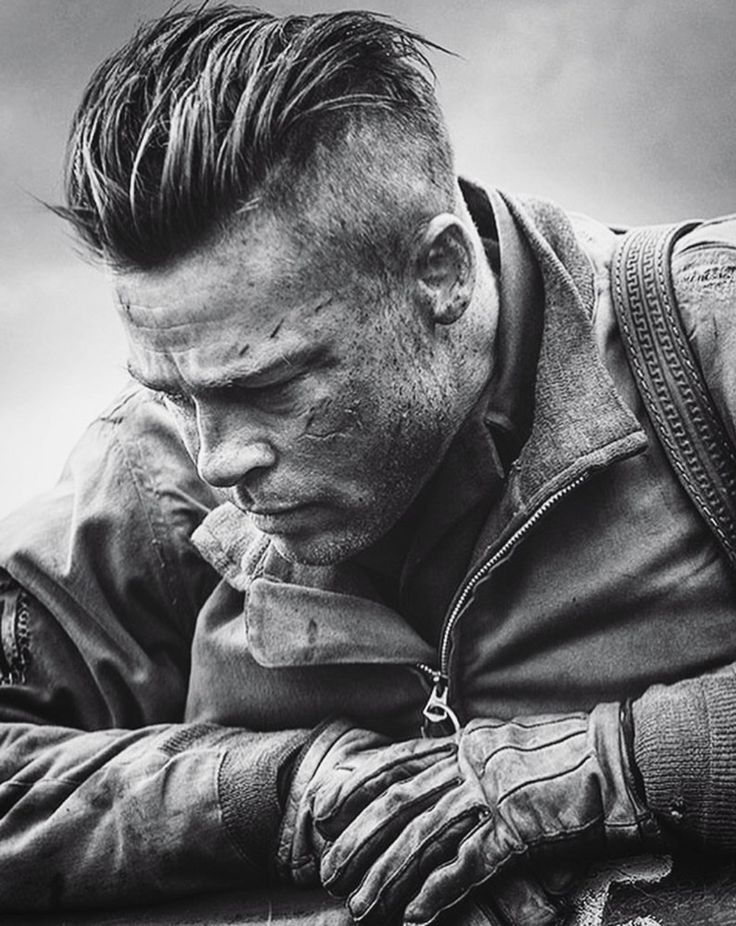
Brad Pitt Haircuts across his career have consistently moved between old money territory and its edges — his side-parted, slicked variations from the 1990s and early 2000s are direct old money references, clean and authoritative without trying to be fashionable.
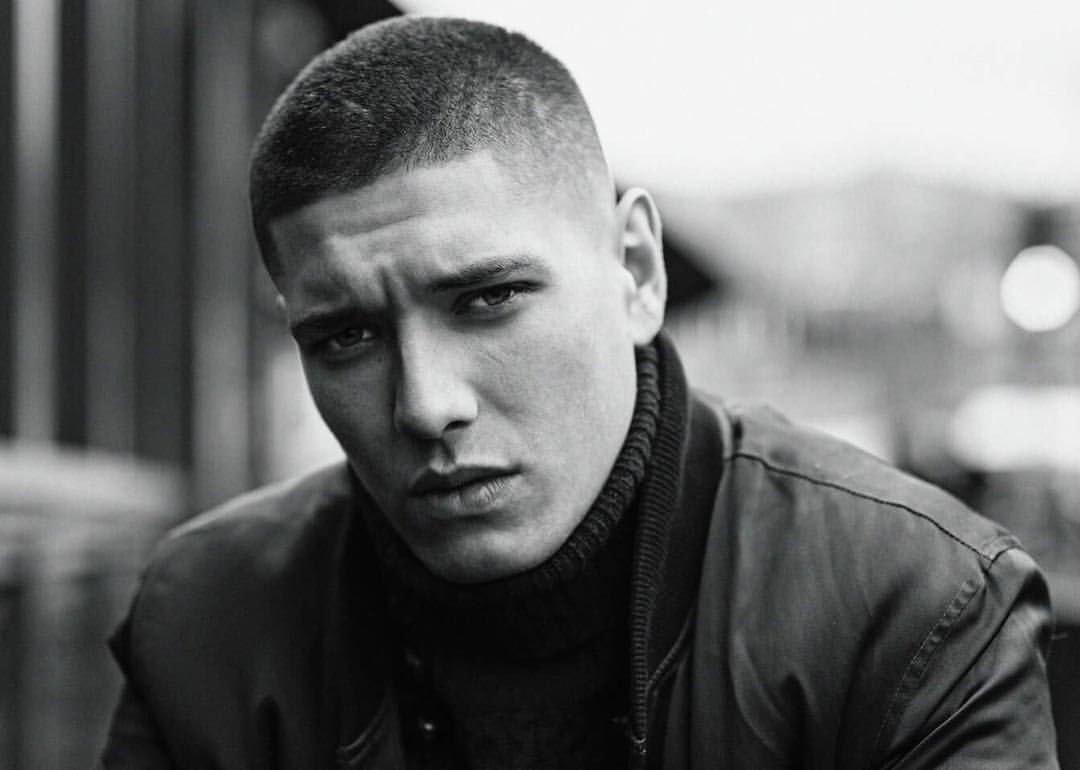
Military Style Haircuts share significant DNA with old money hair — the crew cut, the tapered cut and the scissor cut all have military grooming roots. The difference is precision versus natural finish. Old money takes the discipline of military cuts and adds a touch of effortless ease.
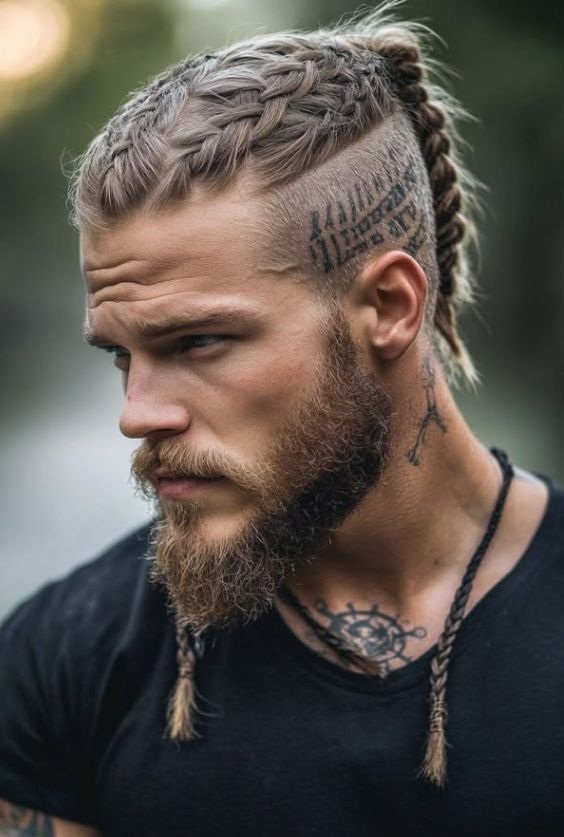
Viking Haircuts for Men represent the opposite end of the spectrum — longer, more dramatic, more deliberately statement-making. Understanding where Viking styling sits helps clarify what old money is specifically rejecting: volume for its own sake, dramatic contrast, visible effort.
The Old Money Grooming Standard Beyond the Cut
Frequency of cuts matters. Old money hair looks right because it’s trimmed every three to four weeks without exception. The shape never gets the chance to fall apart because it’s maintained before that can happen.
Scalp health is the product. Healthy hair — well-conditioned, clean, naturally lustrous — is the actual goal. A quality shampoo, regular conditioning and minimal heat styling produce the kind of hair that holds old money cuts naturally.
Facial hair alignment. Old money hair and heavy, styled facial hair rarely coexist cleanly. Clean-shaven or light stubble kept neat aligns with the aesthetic. Longer beard styles push the overall look away from the refined, controlled quality that old money hairstyles project.
Neckline maintenance between cuts. The neckline is where old money grooming shows its discipline. Keeping the neckline clean between barber visits — with a simple at-home trim — maintains the overall cut’s sharpness without requiring full appointments.
Why Old Money Hairstyles Work in 2026
The current moment in men’s grooming is experiencing a genuine correction. After years of increasingly dramatic fade haircuts, complex barbershop geometry and trend-driven styling, a significant number of men are moving back toward classic cuts — not out of nostalgia but because the classic cuts simply look better for longer.
The old money hairstyles men are gravitating toward in 2026 aren’t a trend in the conventional sense. Trends arrive and depart. These cuts have been worn continuously by men who understand personal presentation for over a century. What’s changed is that more men are discovering what those men already knew: a well-executed classic haircut does more for your overall appearance than almost any other single grooming decision.
No shouting, no fading, no expiry date. Just a haircut that looks right — every room, every occasion, every decade.
Deepak Bhandari has spent 10 years in personal styling, helping men dress with more confidence and less guesswork. He’s the founder of Deepu Fashion, where he writes about style, grooming and everyday outfit ideas that actually work in real life. Follow him on Instagram for daily style tips and inspiration.