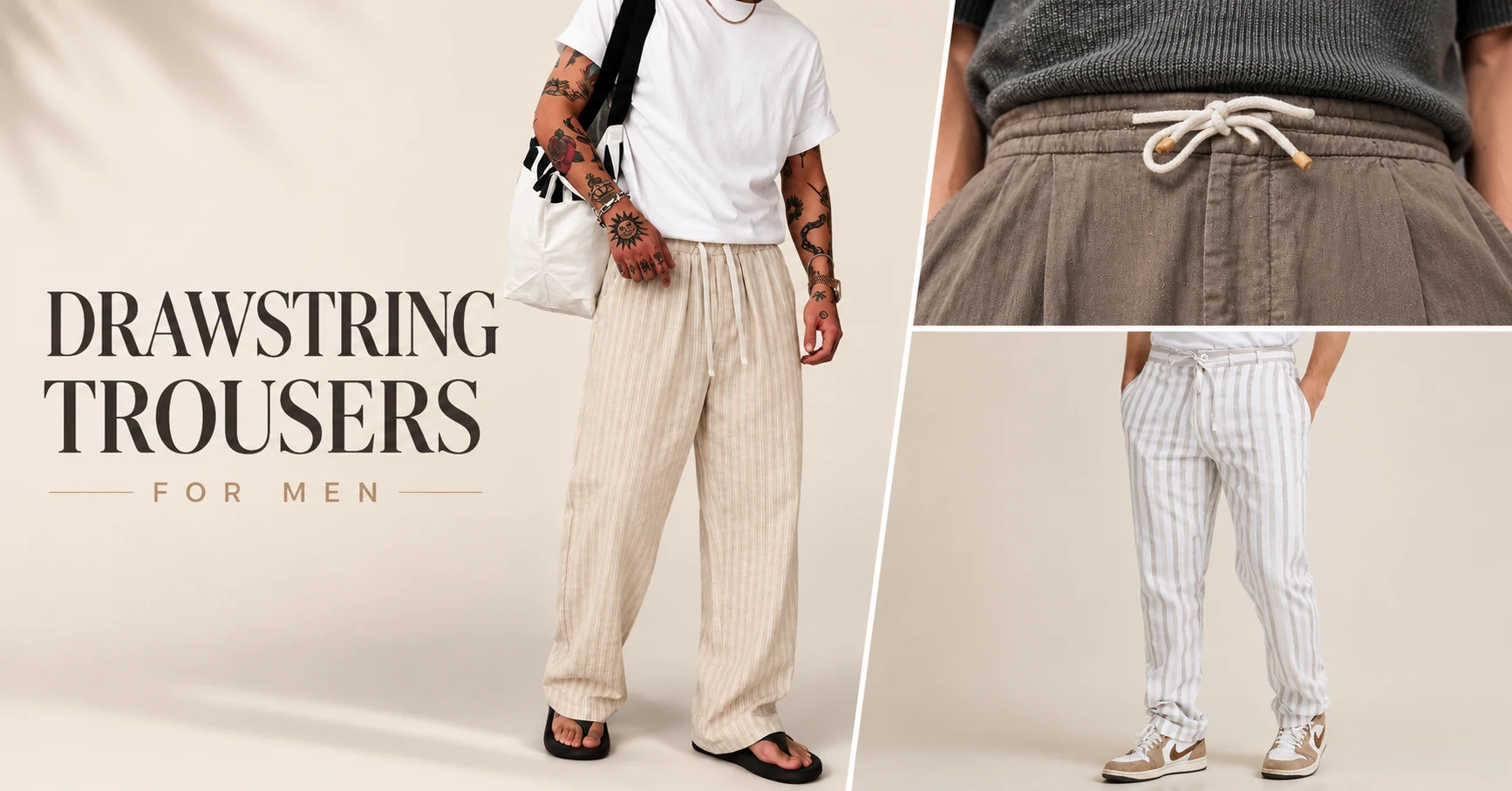
For years I filed anything with an elastic or drawstring waist under one category: loungewear. Fine for the sofa, fine for the beach, never fine for anywhere that expected me to look like I’d made an effort. That’s changed for me and honestly for most guys I know. Drawstring trousers for men now sit in the same conversation as tailored chinos pants, not sweatpants.
The tension is still real though and I learned this the hard way. The first pair I owned looked like effortless, considered comfort in the store and like pajamas I’d forgotten to change out of the moment I wore them out to dinner. The difference isn’t the drawstring itself. It’s the fabric, the cut and what shirt or tee goes on top, the same styling logic that separates a sharp khaki pants outfit from a sloppy one.
Quick answer: Drawstring trousers for men work best in a relaxed fit through the hip and thigh, tapering gently at the ankle. Choose a structured fabric like cotton twill, wool-linen blend or tropical wool rather than anything jersey or fleece like. Pair them with a collar shirt, a tucked tee or an unstructured blazer. Finish with loafers or clean sneakers. Avoid anything too baggy or too slim, both extremes undercut the easy, put together look the style is meant to have.
Here’s everything I’ve learned since that first bad pair. Why these pants earned their reputation and lost it. Which fit and fabric actually hold up in real wear, not just on a hanger. How to style them without looking like you’re heading back to bed. And where they fit next to sweatpants, chinos and joggers.
The Line Between Comfort and Looking Presentable
The old drawstring pant I grew up wearing was built for one job: comfort, nothing else. Soft jersey fabric, a loose, shapeless leg, no real construction underneath the waistband. It worked exactly as intended and I never left the house in it looking like anything but someone who’d given up for the day.
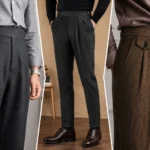
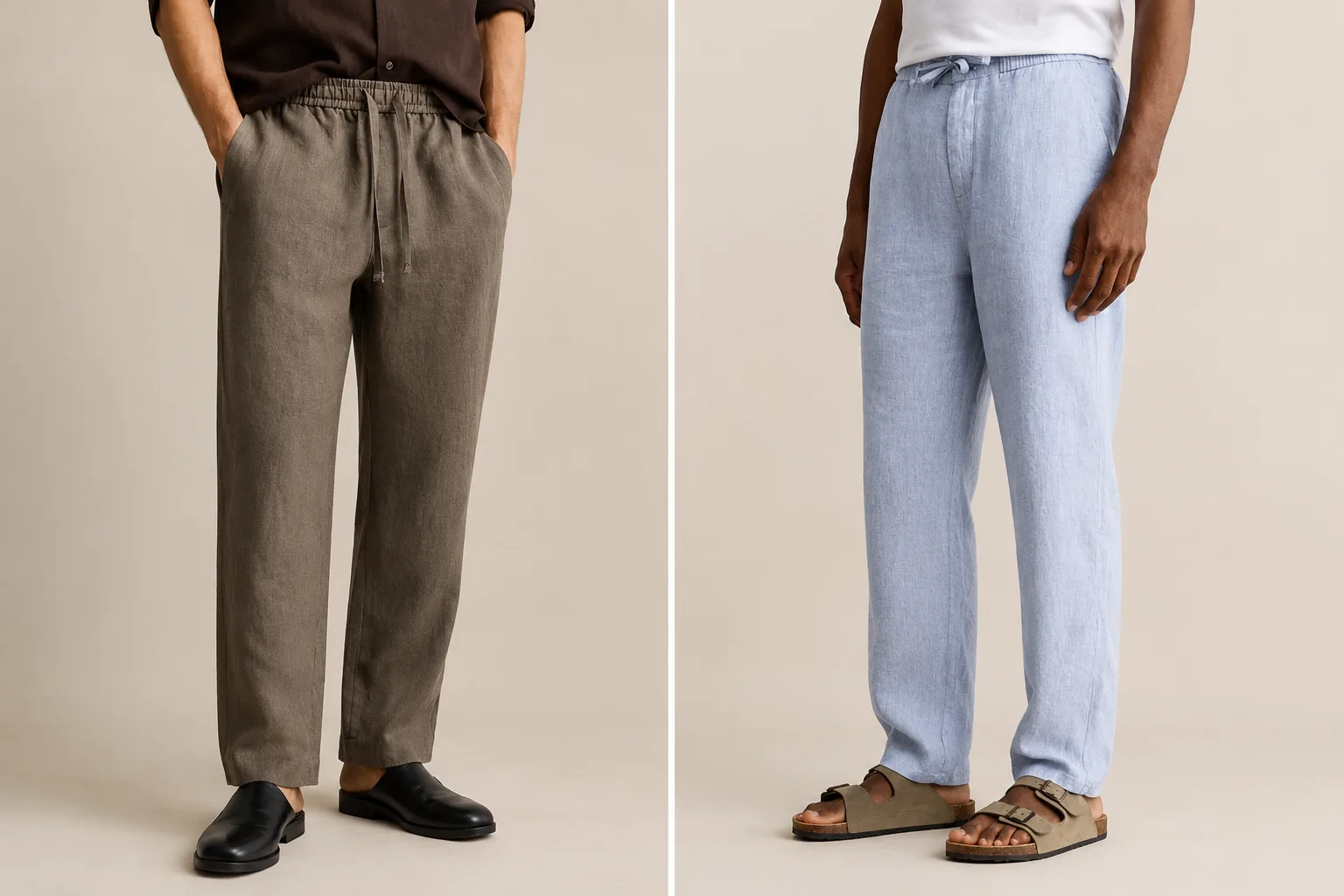
What’s changed is the construction, not the concept. The pairs I actually wear now use the same relaxed, fitted waistband. But the leg is properly cut and finished in fabrics with actual structure. Cotton twill, wool-linen blends and tropical weight wool hold a shape the old jersey version never could. The result reads as a tailored fit trouser that happens to skip the belt and button fly. It doesn’t read as a loungewear pant that wandered outside, which is exactly the trap my first pair fell into.
That distinction is the entire reason I take these seriously now. The comfort hasn’t changed. What surrounds it has.
Getting the Cut Right
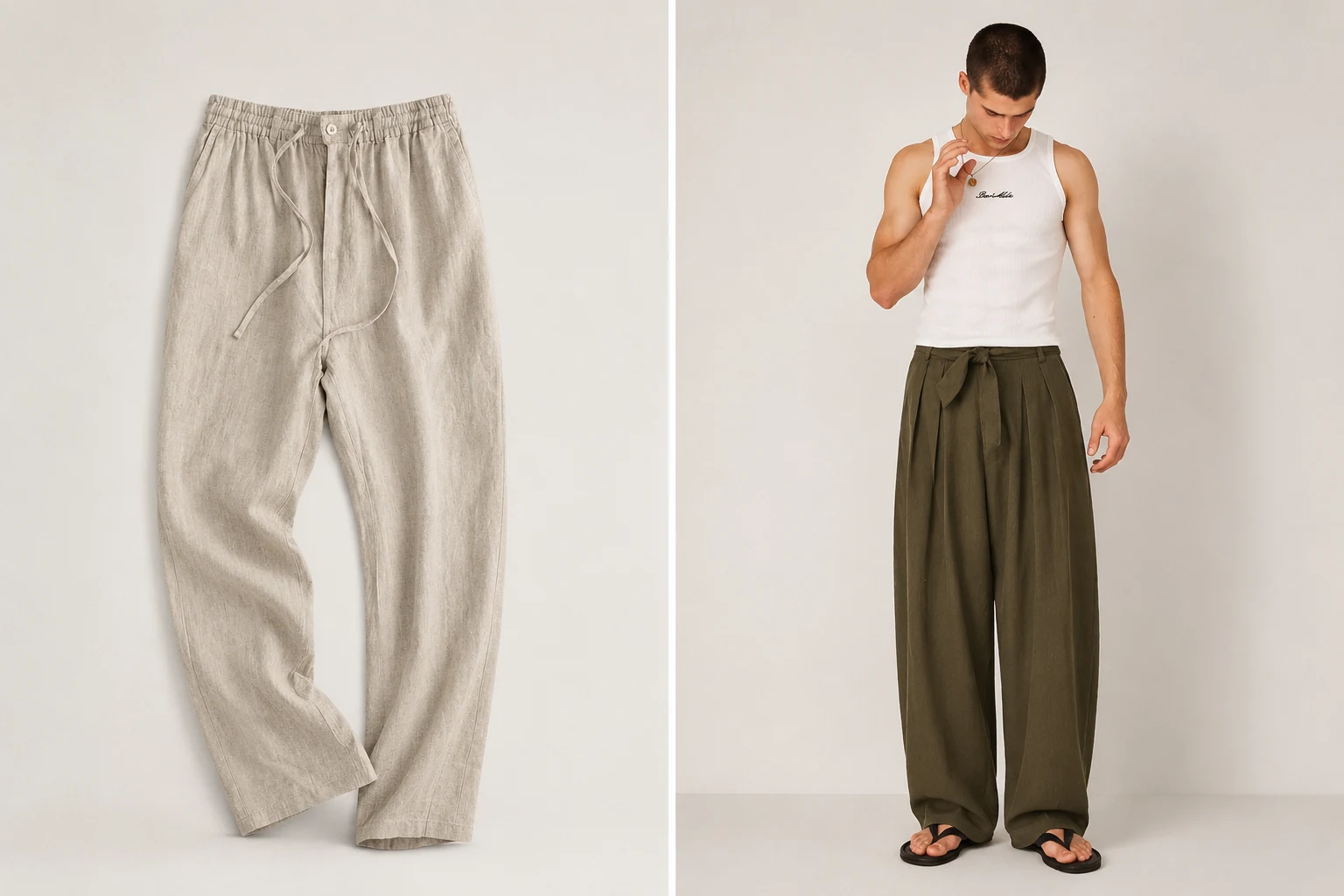
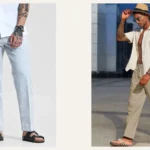
Fit decides almost everything here, and it’s the thing I got wrong the first time round. The leg should sit relaxed through the hip and thigh, then taper gently toward the ankle. That taper is what keeps the silhouette looking intentional instead of shapeless.
Going too wide undoes the whole effort. A leg with no taper at all reads closer to pajama pants than tailoring, no matter how good the fabric is. If you want that fuller leg without a drawstring waist, our wide leg trousers guide covers how to get the wider silhouette right instead.
A slight break at the shoe is worth aiming for, same as any other trouser I own. Cropped, ankle length drawstring trousers have become a genuine styling choice for me too rather than a fit accident. This works particularly well with loafers or sneaker shoes worn without socks, which is how I wear mine most weekends.
Build matters here too. Taller men can get away with a longer, slightly more relaxed leg without it overwhelming the frame. Shorter men generally look better in the cropped or ankle length version, since a full-length relaxed leg can visually shorten the frame the same way it does with baggy jeans. Broader builds benefit from a fabric with some structure, like cotton twill, which holds its shape rather than clinging or ballooning at the thigh.
The waistband construction changes the mood more than most people expect, and it’s worth checking before you buy. A hidden drawstring, tucked inside the waistband with no visible tab, gives a cleaner line that pairs naturally with a casual blazer or a tailored fit shirt. A visible drawstring with an exposed tab reads sportier, closer to an actual sweatpant, and works better with a t-shirt or a hoodie than anything dressier. I’ve been caught out by this once, buying a pair for a dinner that turned out to have a chunky, sporty tab sitting right at the front.
How to Tie Drawstring Trousers Properly
Getting the fit right starts before the trousers are even on. A properly tied drawstring keeps the waistband sitting evenly and the taper looking intentional rather than bunched or lopsided. Here’s the simple process:
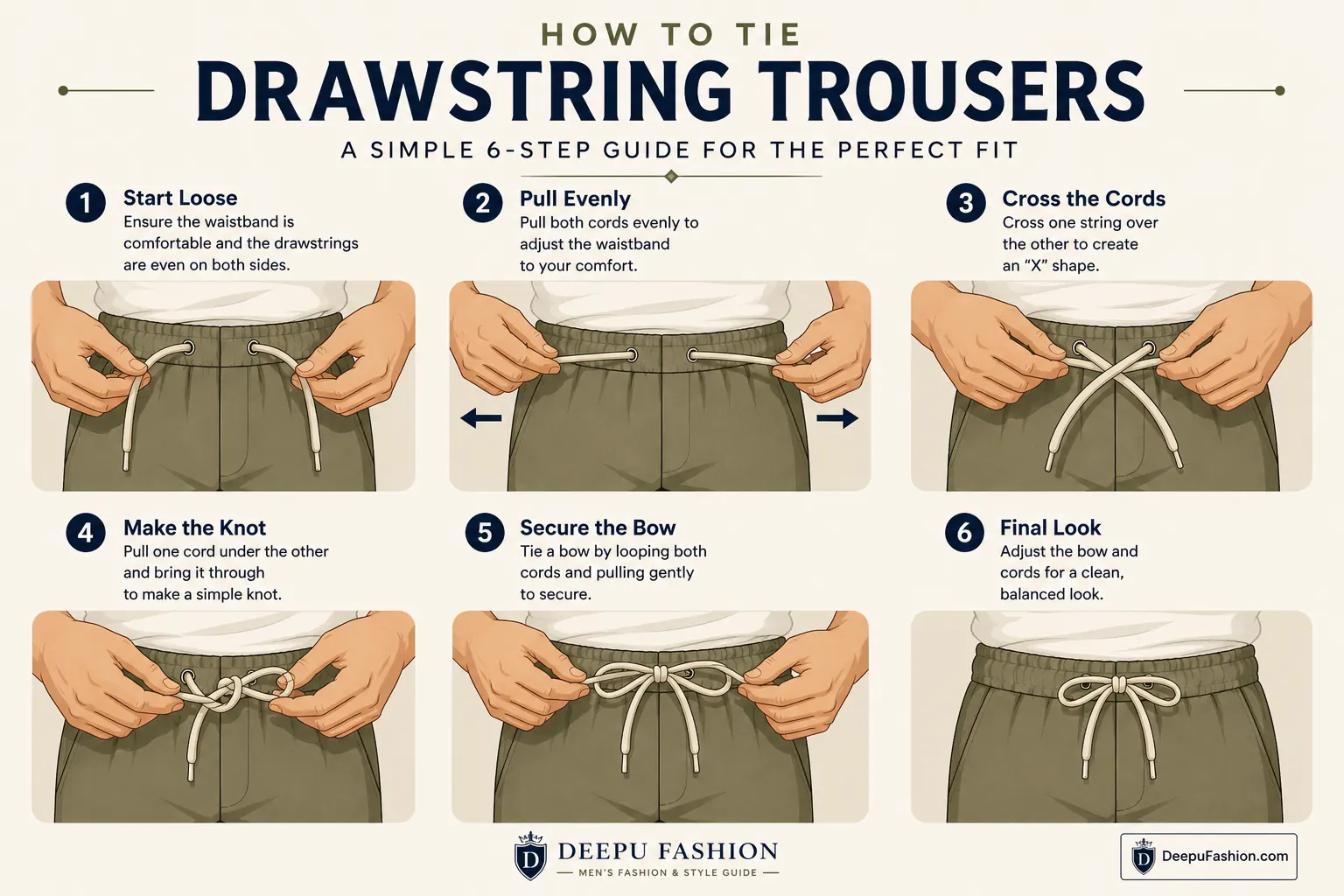
- Start Loose – Ensure the waistband is comfortable and the drawstrings are even on both sides.
- Pull Evenly – Pull both cords evenly to adjust the waistband to your comfort.
- Cross the Cords – Cross one string over the other to create an “X” shape.
- Make the Knot – Pull one cord under the other and bring it through to make a simple knot.
- Secure the Bow – Tie a bow by looping both cords and pulling gently to secure.
- Final Look – Adjust the bow and cords for a clean, balanced look.
Get this part right and everything else — the taper, the break at the shoe, the way the waistband sits under a blazer or tee — falls into place on its own.
Fabrics Worth Choosing
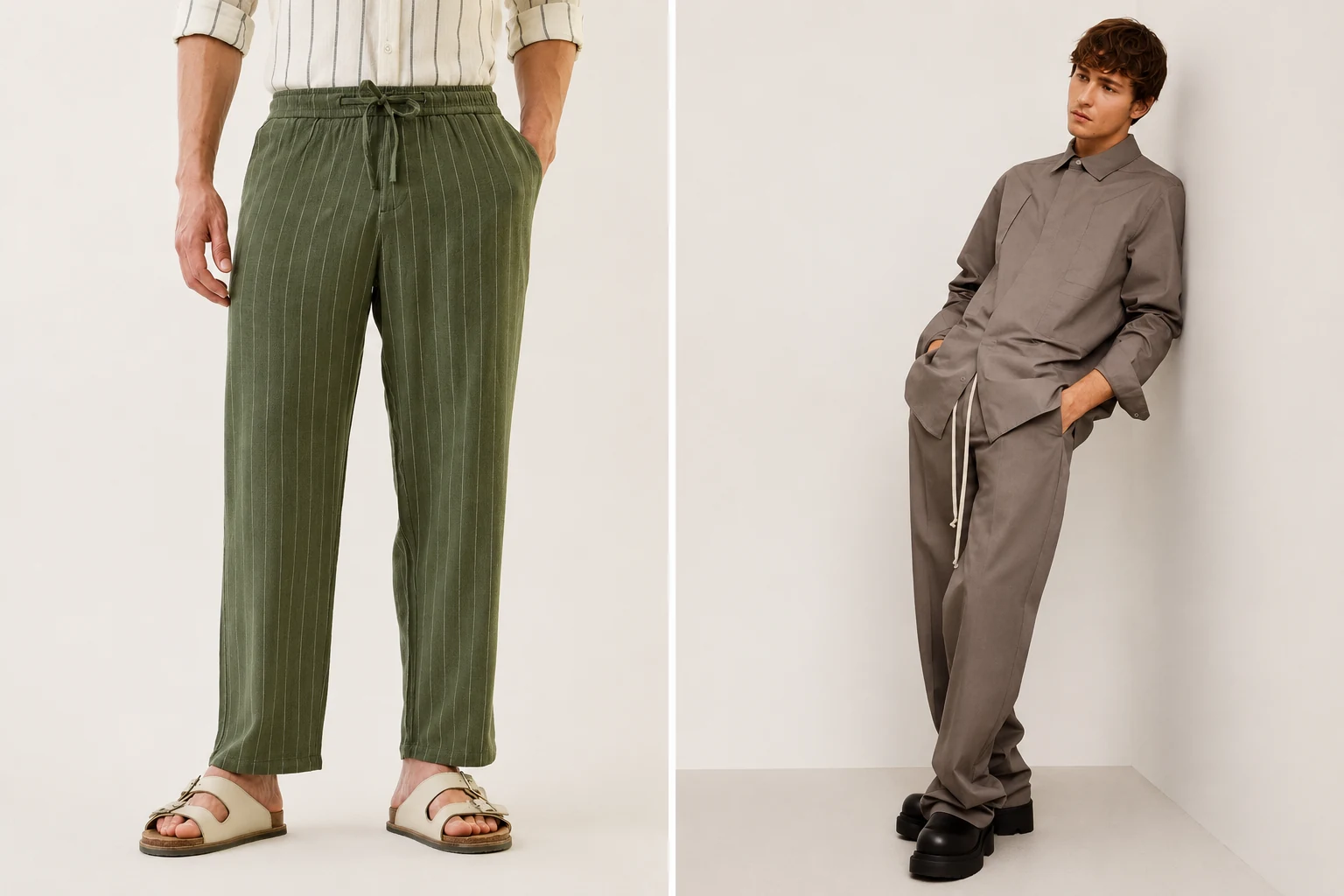
Cotton twill is where I’d tell anyone to start. It holds structure, works across most seasons and doesn’t scream “athleisure” the way a softer knit does.
Wool-linen and cotton-silk blends bring a bit more drape and a slightly dressier hand-feel, and I reach for these when I want something closer to business casual. Tropical weight wool is my warm weather answer for the same look with even more breathability, particularly on the days Delhi humidity makes anything heavier unbearable.
What I avoid entirely: anything that reads as sweatshirt material. French terry or heavy jersey pulls the whole trouser back into loungewear territory, and I learned this after one pair that looked sharp on the hanger and felt like pyjamas the second I stood up in a room full of people. Doesn’t matter how clean the cut is, the fabric gives it away first.
From the Airport to Smart Casual Nights
Travel is where these earn their keep for me more than anywhere else. They move like a sweatpant and look like a real trouser, which is the only combination I actually want on a flight.
Smart casual nights are close behind. A tucked white tee with navy drawstring trousers and clean white sneakers is close to a uniform for me at this point, easy to repeat without ever looking like I put no effort in. Add an unstructured blazer over a Cuban collar shirt and the same trouser moves into dinner territory without me having to change anything below the waist.
Office wear is the trickiest one, and honestly it depends entirely on where you work. In a genuinely relaxed business casual office, a structured cotton twill pair in a neutral tone can work paired with a blazer. Anywhere more traditional, I’d keep these as a weekend piece, not a Monday one.
What’s Driving Their Comeback
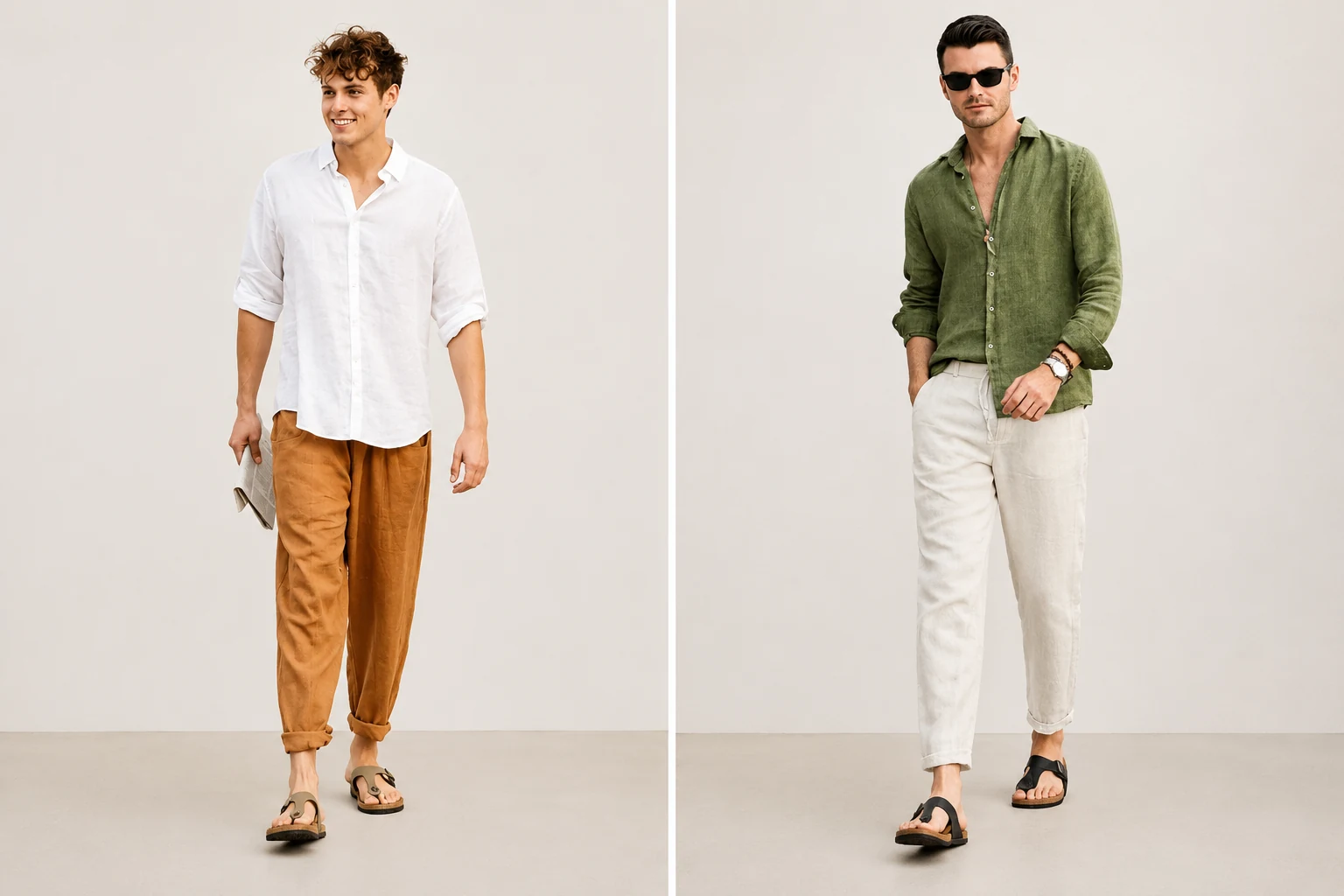
This isn’t a quiet trend, and I’ve watched it happen firsthand over the last year or so. Fashion coverage has called drawstring trousers one of the most debated styles in recent seasons, and honestly I get why. They solve a real problem. I want the comfort of a sweatpant without giving up the look of actually being dressed.
Earth tone colourways, particularly sand, khaki and deep brown, are leading the wave right now, and that’s mostly what’s in my own rotation too. A cropped, cuffed silhouette worn with sneakers and nothing else competing for attention sits right alongside them. The style’s moved well past the single “vacation pant” reputation it had a few years back. I wear mine from spring through summer now, in linen heavy blends and lighter colourways specifically.
Building the Color Rotation
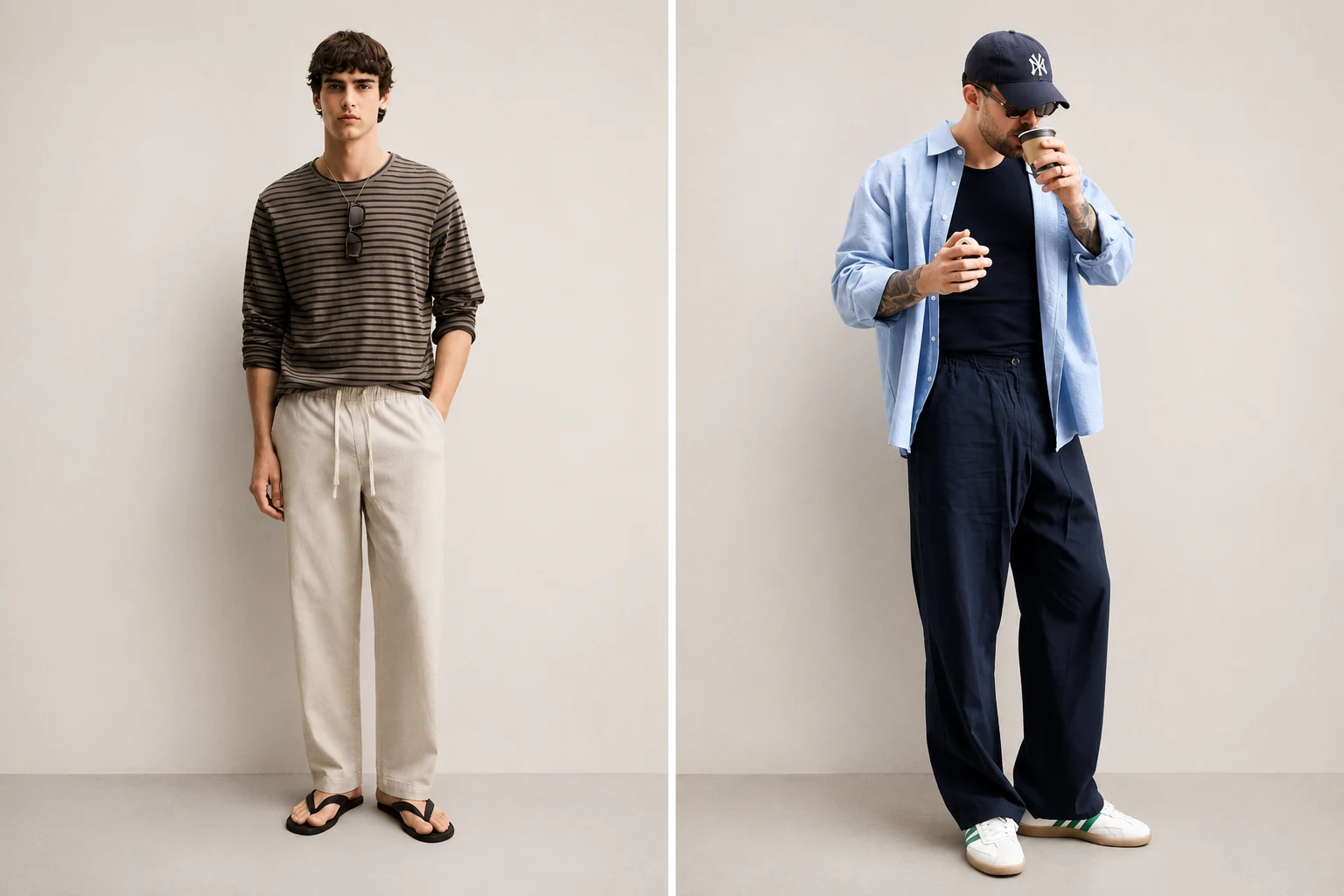
Navy was my first pair, and I’d still tell anyone to start there. It pairs with nearly any shirt and reads smart casual with almost no effort on my end.
Sand and stone tones are what I’ve been reaching for as the current trend’s pulled me in. They work particularly well in lighter cotton or linen blends once the weather warms up. Deep brown is a strong third option in my closet, especially in a heavier twill for the cooler months. Black works but leans more casual than most people expect, better suited to a t-shirt and sneakers than anything I’d wear somewhere dressier.
A short reference for building a rotation:
- Navy for the most versatile, easiest first pair
- Khaki for warm-weather, trend forward styling
- Deep brown for a cooler weather alternative
- Black for the most casual end of the range
Shirts and Shoes That Hold It Together
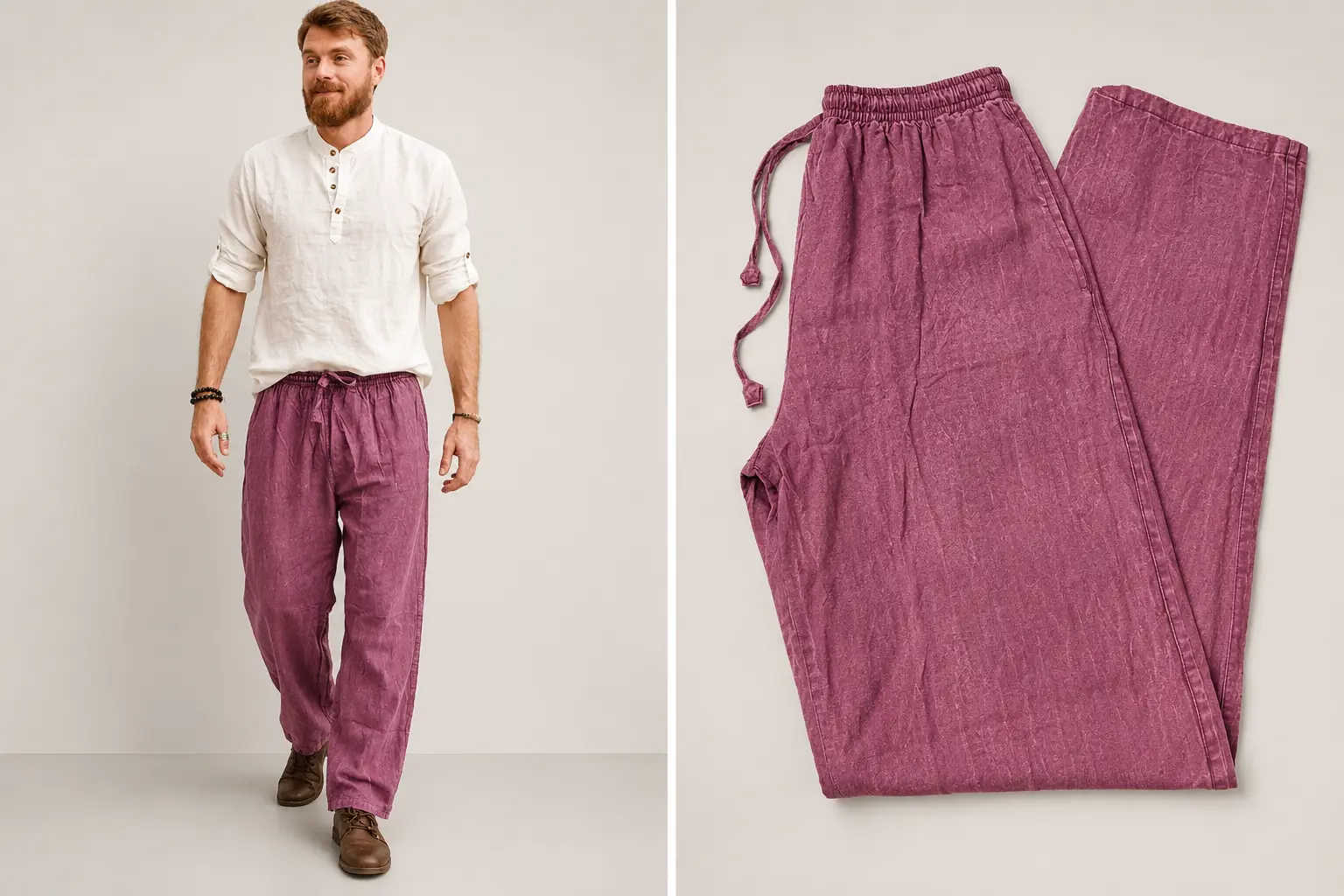
A chambray shirt is close to my go-to pairing for drawstring trousers, particularly in warmer months. It matches the relaxed, unstructured mood of the trouser without either piece fighting for attention.
A plain white tee, tucked, works just as well when I want something simpler. For anything dressier, a button-down under a blazer takes the same trouser into smart casual without much effort on my part.
Footwear decides more than I expected when I first started wearing these. Loafers, with or without socks, sharpen the whole look instantly. Clean leather or canvas sneakers keep things relaxed without undercutting the effort. What doesn’t work, and I learned this one the hard way: chunky athletic sneakers or anything overtly sporty. That pushes the whole outfit right back toward the loungewear image these pants are trying to move away from.
The full breakdown of which pairs are worth owning long-term is in the guide to the best shoes to wear with almost anything in rotation.
Washing Without Losing the Drape
I wash according to the fabric, not the waistband. A cotton twill pair handles a normal cold-water wash fine in my experience. Wool blends do better hand-washed or on a delicate cycle to protect the drape. I skip high heat in the dryer across the board, it’s the fastest way to shrink the waistband unevenly and throw off the fit the whole style depends on. Hang rather than fold to keep the crease clean through the leg.
Frequently Asked Questions
Are drawstring trousers appropriate for the office?
In a relaxed business casual office, yes, especially in a cotton twill paired with a blazer. In more traditional offices, save them for weekends.
What’s the difference between drawstring trousers and sweatpants?
Sweatpants are built purely for comfort in soft jersey or fleece, with no real tailoring. Drawstring trousers use structured fabric and a proper cut, which lets them work as a real outfit.
What shoes go with drawstring trousers?
Loafers for a sharper look, clean leather or canvas sneakers for something more relaxed. Chunky athletic sneakers undercut the effort.
Can drawstring trousers be worn in winter?
Yes, in a heavier fabric like wool-linen or thick cotton twill. Pair them with casual boots and a jacket rather than the lighter, warm-weather colourways.
Deciding If They Belong in Your Rotation
For me, drawstring trousers are one option among several for anyone who wants comfort without giving up a finished look. They sit close to chinos and the more relaxed end of baggy jeans in that respect. For the full picture of how every trouser style fits into a modern mens wardrobe, the guide to trouser styles for men covers where this one sits relative to everything else.
Get the fabric and cut right and the drawstring stops being something to hide. It becomes the reason the outfit works at all.
Deepak Bhandari has spent 10 years in personal styling, helping men dress with more confidence and less guesswork. He’s the founder of Deepu Fashion, where he writes about style, grooming and everyday outfit ideas that actually work in real life. Follow him on Instagram for daily style tips and inspiration.